The Pennsylvanian is an Amtrak train that runs daily between New York City, New York, and Pittsburgh, Pennsylvania. The full journey takes place during the day, covering 444 miles in about nine and a half hours.
It’s summer, which for most means summer vacations. Most of mine, unsurprisingly, involve an Amtrak trip. But PTO is limited, and I wanted to save it for later in the year around Christmas, when I’ve got a bigger train trip planned (you’ll have to stay tuned for that one). Since my job allows me to work remotely and from different offices, the obvious workaround was to take the train to Pittsburgh on a Sunday, work a couple of days from my company’s Pittsburgh office, and fly back. This allowed me to avoid using any vacation days while still getting a full trip out of it.
Before the Horseshoe Curve (and the Breakthrough That Followed)
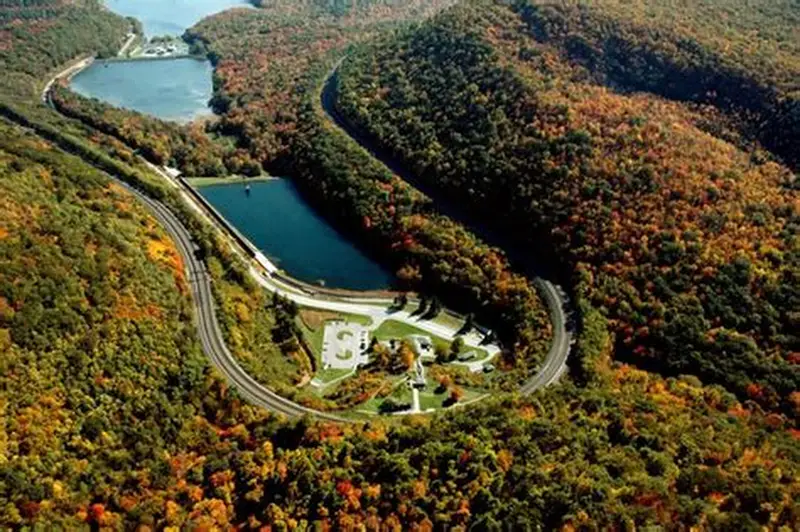
Just outside Altoona is the famous Horseshoe Curve, arguably one of the greatest feats of railroad engineering. Completed in 1854, the curve is about 1,300 feet across and today carries three tracks.
Crossing Pennsylvania has always been a challenge because of the Allegheny Mountains. Before a single, connected railroad, people and freight traveled on a combination of canals and railroads. While this system connected Philadelphia and Pittsburgh, it was slow and unreliable. Canal traffic often backed up at locks, waterways froze in the winter, flooding was common in the spring, and the route was overall a downright dangerous hassle.
In 1838, engineer Charles Schlatter was sent to survey a more practical railroad route between Philadelphia and Pittsburgh. He recommended following the Juniata River on the eastern side of the mountains and the Conemaugh River on the western side. Although an improvement, the route still relied on the state-owned Allegheny Portage Railroad, meaning there was no continuous railroad crossing over the mountains. Instead, the journey was broken in the middle, where trains were unloaded, pulled up and over the Alleghenies on inclined planes using cables and stationary engines, and then reassembled on the other side. This break in the journey was the main reason travel times stretched to multiple days.
The Pennsylvania Railroad wanted a faster route. Under the leadership of Chief Engineer (and later company president) John Edgar Thomson, engineers designed a new line that could climb the eastern slope of the Alleghenies using a broad, sweeping curve. By bending the track nearly 220 degrees, the railroad gained elevation gradually enough for trains to make the climb without excessively steep grades. This engineering solution became known as the Horseshoe Curve.
When the line opened in 1854, it eliminated the need for the Allegheny Portage Railroad and dramatically reduced travel time between Philadelphia and Pittsburgh from about four days to roughly 15 hours.
Over the years, the Horseshoe curve evolved into one of the busiest and most important rail links in the United States, carrying passengers, coal, steel, military equipment, and other goods between the East Coast and the Midwest. Its significance also made it a popular tourist attraction, drawing visitors from around the world.
Its strategic importance even attracted international attention during World War II. The Horseshoe Curve was identified by Nazi Germany as a potential sabotage target because disrupting it could have severely impacted the movement of troops and supplies across the country. Although no attack was ever carried out, it’s remarkable that what appears today to be just another stretch of railroad track was once considered important enough to draw the attention of an enemy half a world away.
Below is an arial view of the curve:
Of course, there’s much more to this route than the Horseshoe Curve, the rest of which can only be fully experienced on the train itself.
The Ride
Because of the Pennsylvanian’s departure time from New York City, I was able to catch the first Northeast Regional out of Washington that morning, which saved me from needing a hotel the night before. However, when I booked the trip, I hadn’t realized two things: it was the World Cup Final, and it was being held in New York City. That Northeast Regional was already packed, so I can only imagine what the later departures looked like. I suppose this is your lesson to never ignore the sometimes endless stream of trip updates you can get from Amtrak.
After arriving in New York, I had a couple of hours to wait before boarding the Pennsylvanian. I expected it to be similar to the Palmetto, where there was plenty of room because there were multiple Northeast Regional trips leaving around the same time. Instead, the train was surprisingly full. In hindsight, it made sense since it still serves the busy corridor through Philadelphia, where most of the passengers eventually got off.
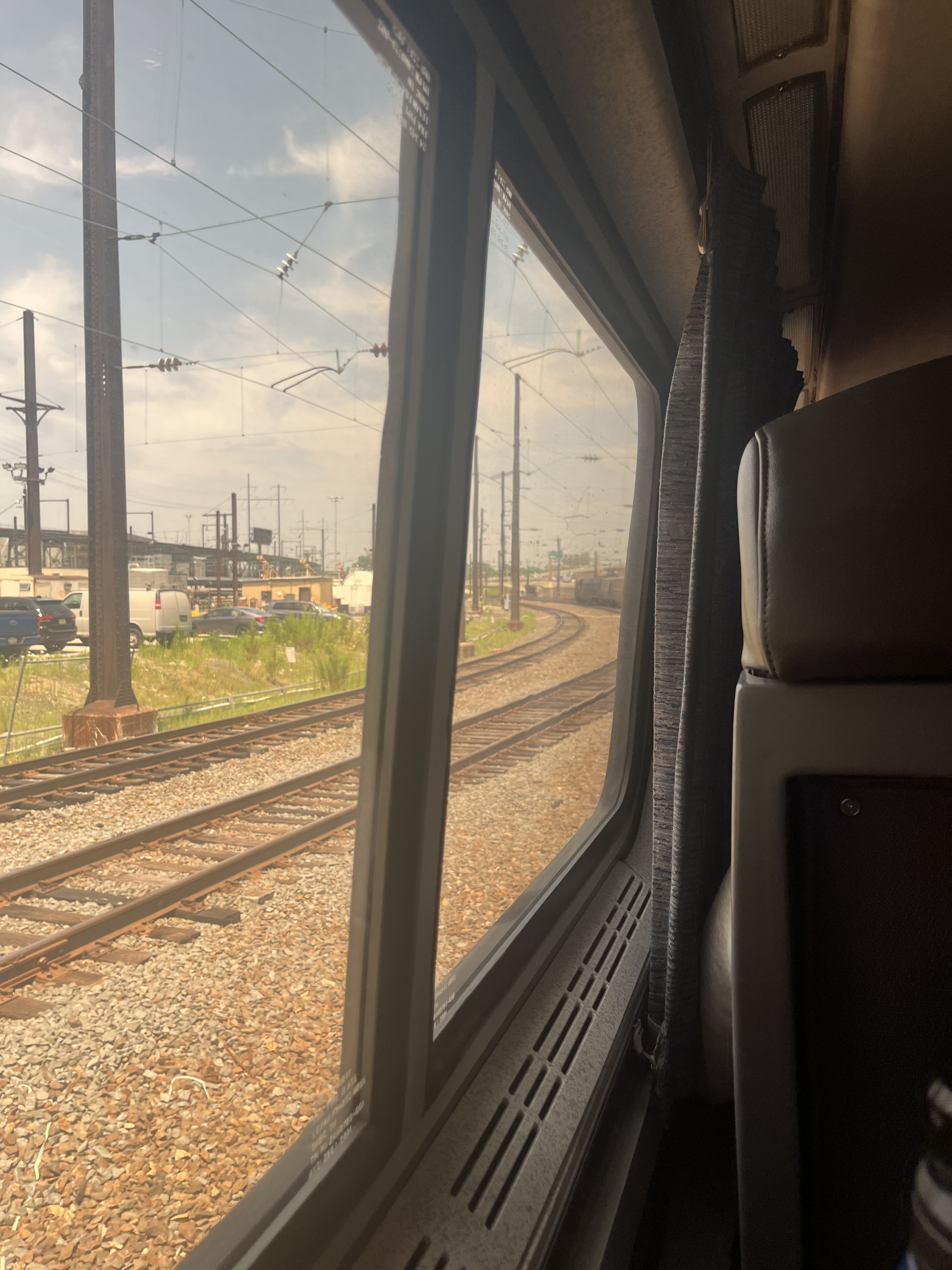
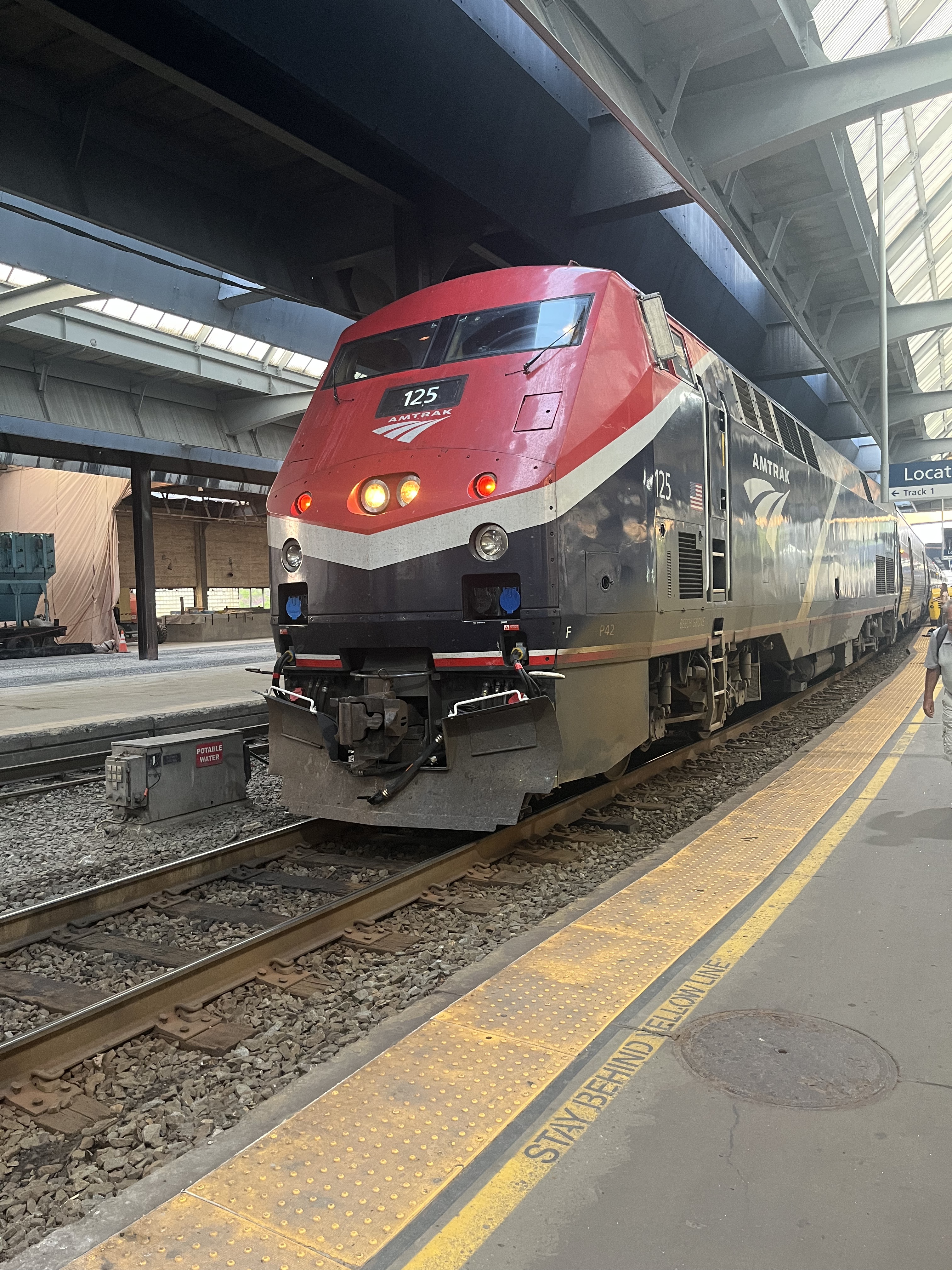
One thing to know about the Pennsylvanian is that it leaves New York City backwards. I normally try to choose a seat that faces the direction of travel, so I was happy to see that every seat pointed the same way. Unfortunately, once we pulled out of Penn Station, I realized that meant all of us were facing backward for the first part of the trip.
The reason is a little complicated (if you’re curious, MSN has a good video explaining it), but it ultimately comes down to the engine change from electric to diesel and a reversal of direction in Philadelphia.
One kind of funny moment happened before we even left New York. A fellow passenger looked around and wondered aloud if she had accidentally gotten on in the Business Class car because the seats were “much nicer than usual.” After a bit of detective work, we realized she was used to riding the Northeast Regional. The Pennsylvanian uses Viewliner coaches, which have deeper recline, along with leg and footrests, making them noticeably more comfortable.
When we reached Philadelphia, the seat next to me filled. That was expected, although my new seatmate immediately developed an unfortunate habit of dozing off in my direction. More than once I was convinced he was about to fall asleep on my shoulder, and one time he practically did before waking himself up. Eventually the motion of the train nudged him the other way, and he found a more stable sleeping position.
He also boarded with an almost suspicious amount of enthusiasm compared to everyone else around him, which earned him the nickname “Chuckles.” The nickname existed only in my head, but it fit.
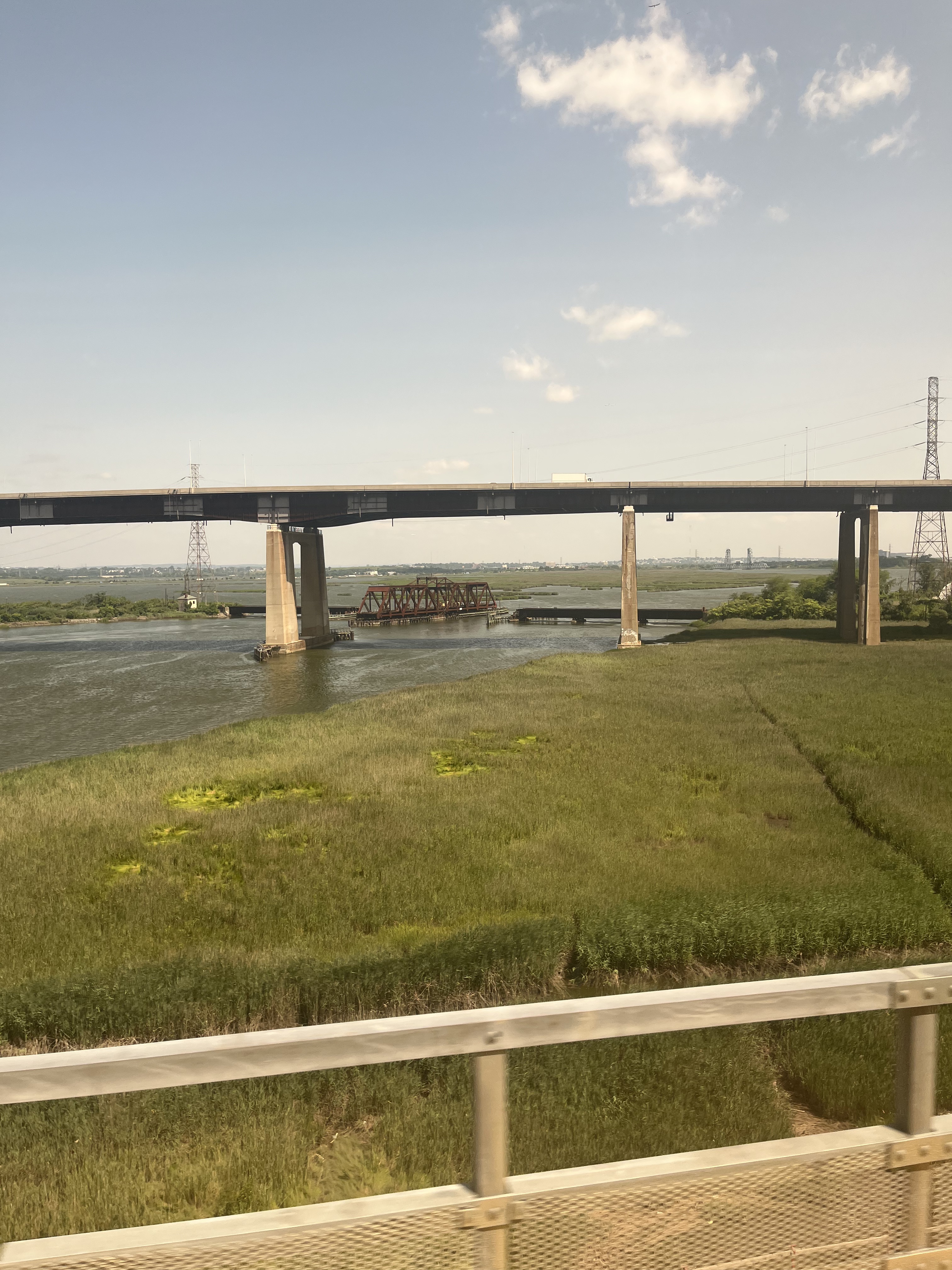
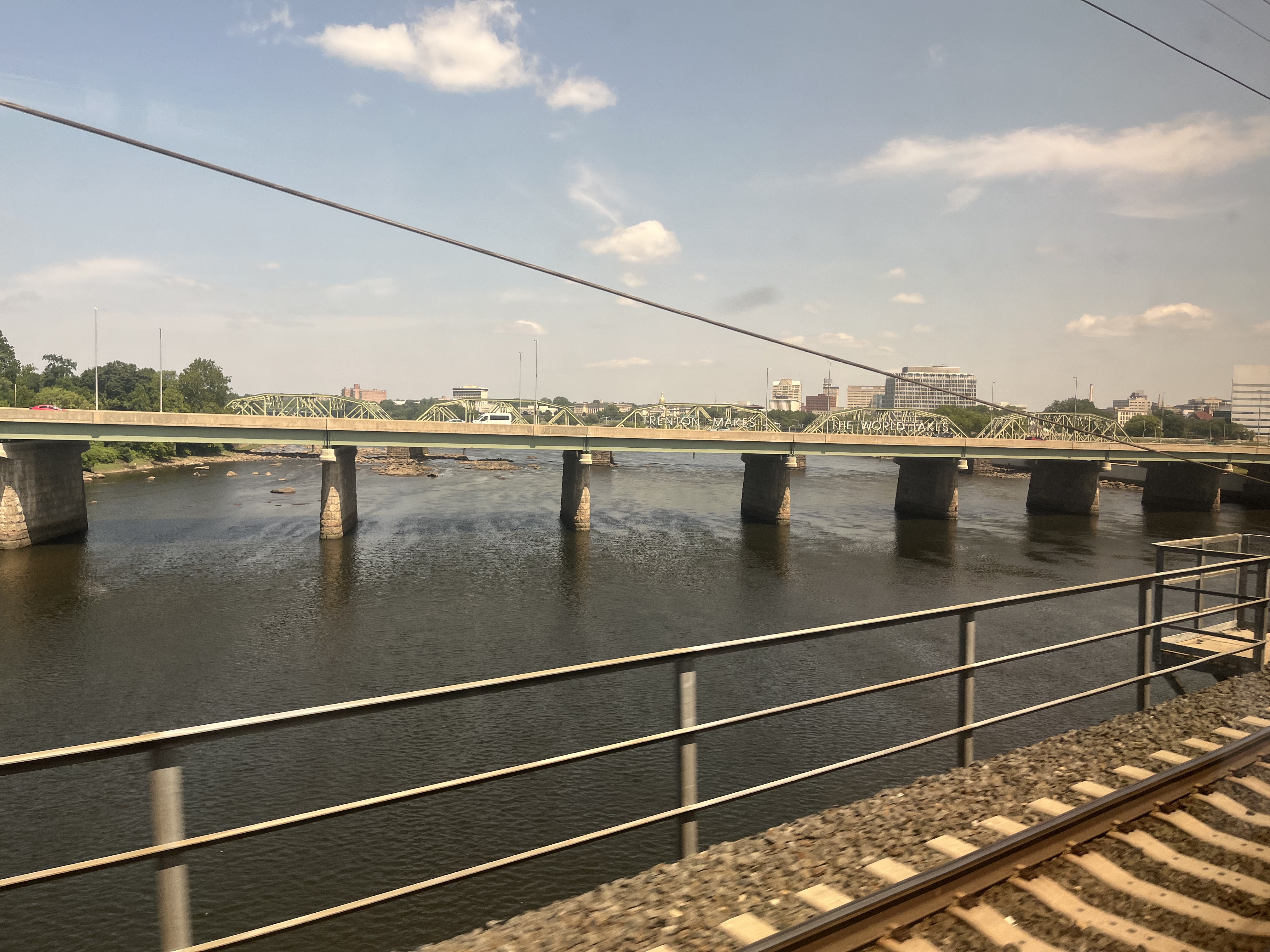
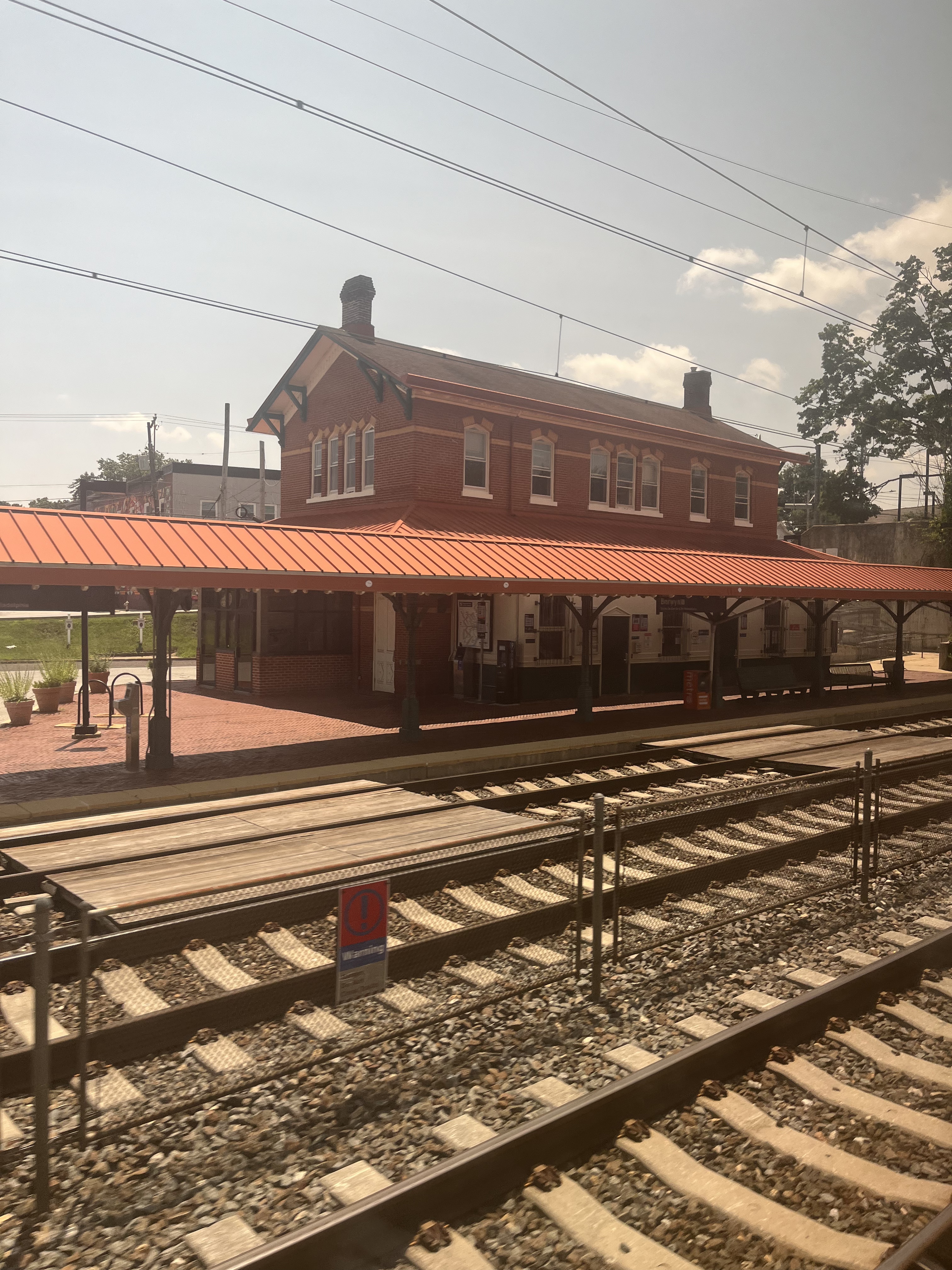
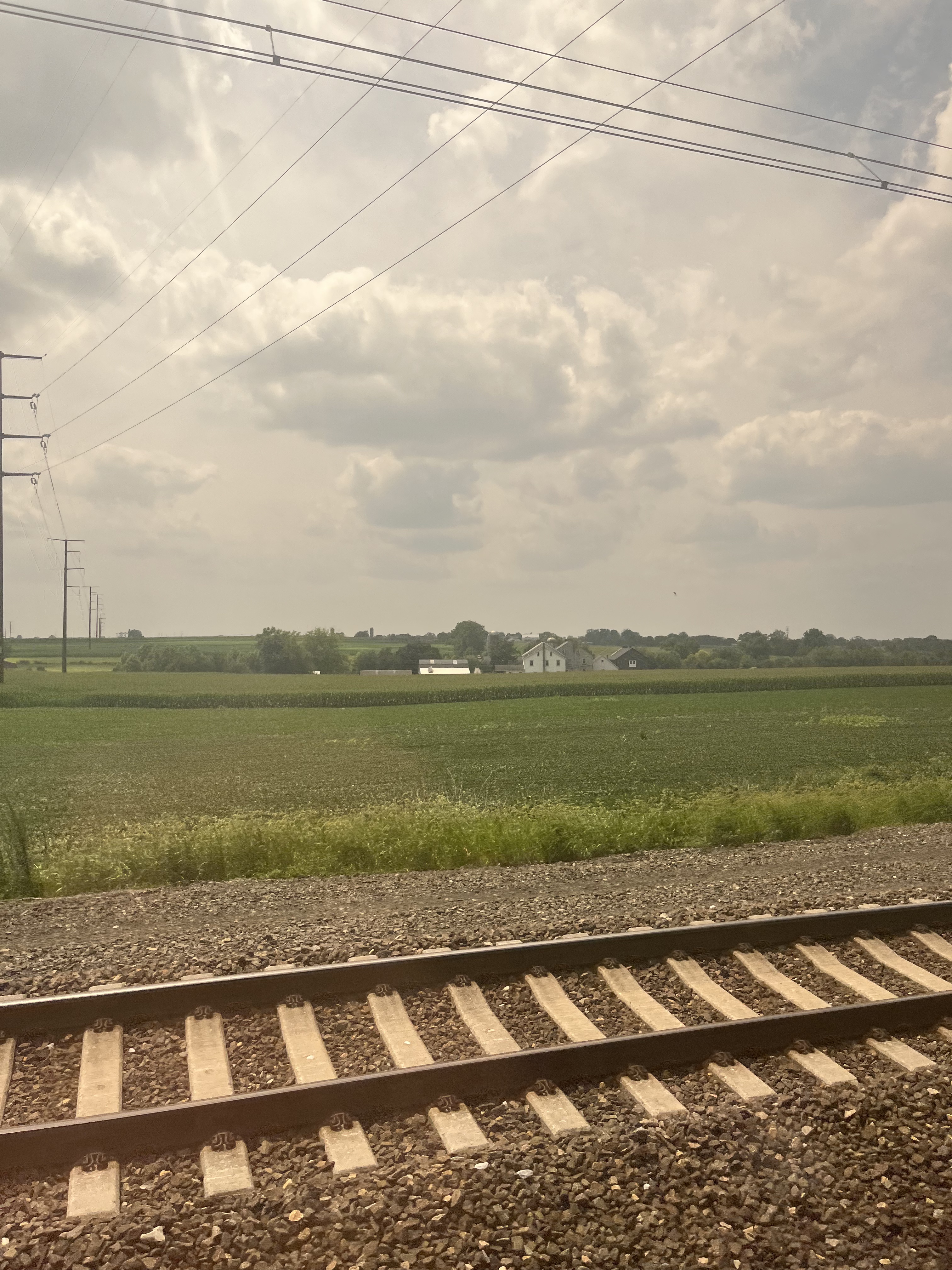
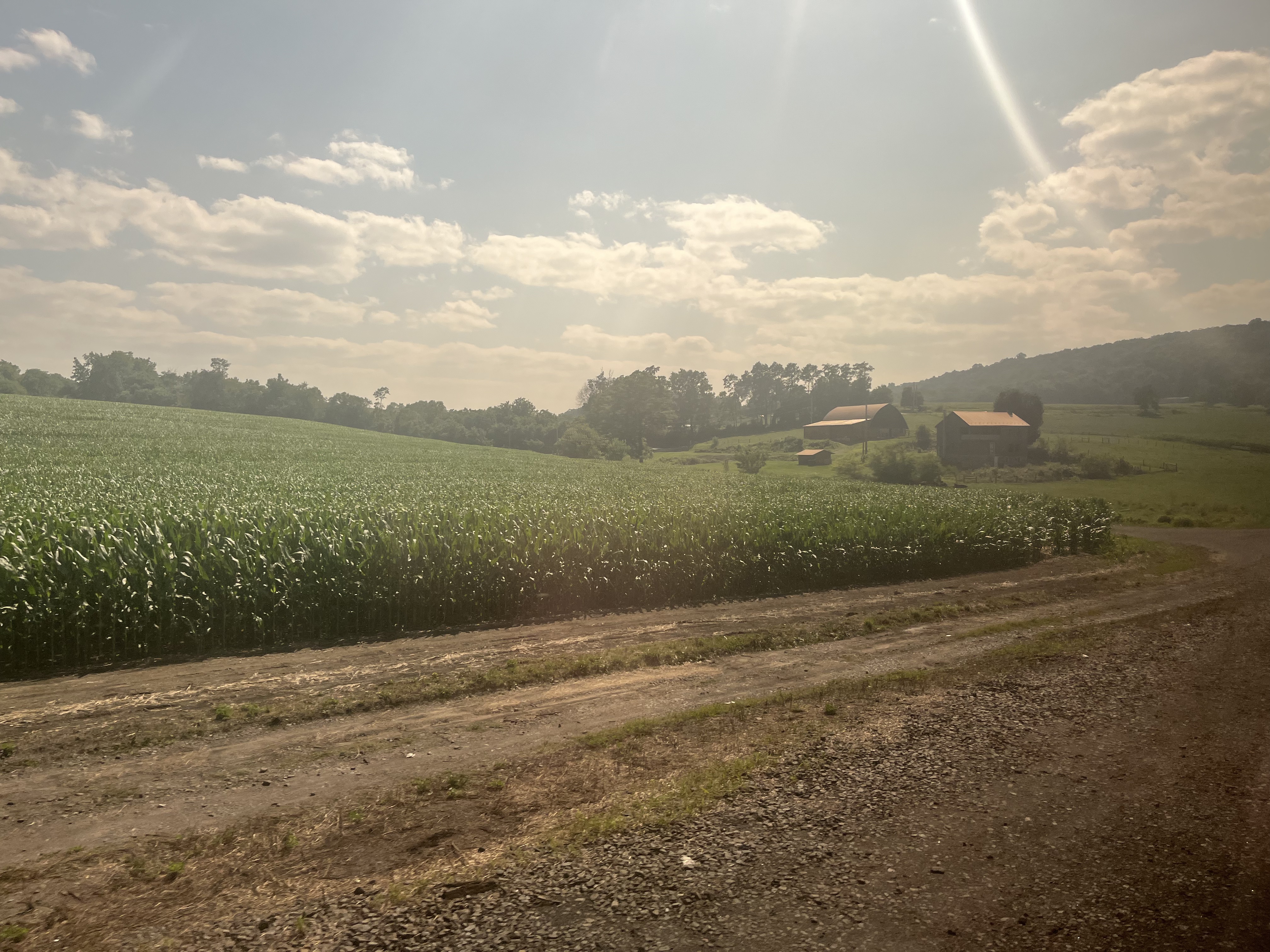
Leaving Philadelphia, I was immediately struck by the SEPTA stations. Each seemed to have its own personality and design, yet they still felt cohesive as a system. Before long, the city gave way to rolling hills, scattered neighborhoods, and rivers weaving through the valleys. It was one of those transitions where the urban landscape quickly disappears and suddenly you’re surrounded by Pennsylvania countryside.
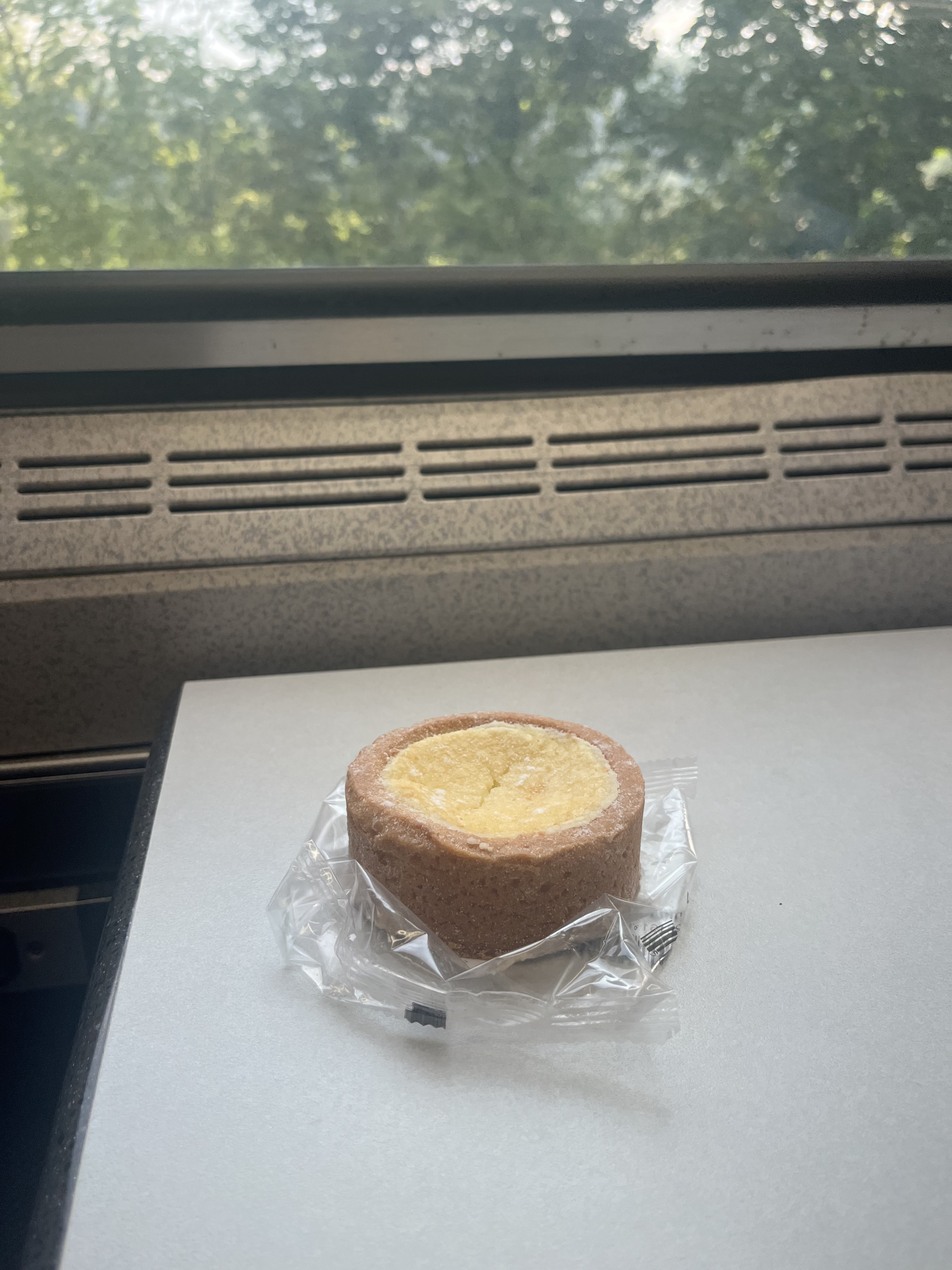
Several hours later, with Chuckles doing little more than peacefully existing beside me, I headed to the cafe car. I expected the usual menu, but to my surprise there were a few different options. The biggest surprise was finding butter cake for sale, something I had previously only seen in the dining cars on overnight trains. Obviously, I had to order it.
Finding an actual dinner proved more difficult. By that point in the trip, many of the more popular items had already sold out, so I settled on a hot dog. I’ll admit I was a little concerned when I saw it come out of the refrigerator in a plastic bag, but once the cafe car attendant pulled it out and heated it, it was just a perfectly normal hot dog. I guess my streak of avoiding Amtrak food heated in bags is officially over.
After spending about 45 minutes in the cafe car, I returned to my seat knowing Chuckles would be getting off soon in Altoona. Apparently, though, I had been gone longer than he had expected, with him immediately saying “Oh my God, I thought something happened to you!”
That launched us into a mostly one-sided conversation about his life while I nodded along. It wasn’t all bad, though. At one point we discovered we had both been RAs in college. I told him about the time my residents somehow managed to stick a full-sized Christmas tree into a toilet, convinced that had to be an unbeatable story. Without hesitation, he responded that his residents had planted a palm tree in theirs, soil and all. I think the key takeaway from that part of the conversation was that college kids being dumb transcends state lines.
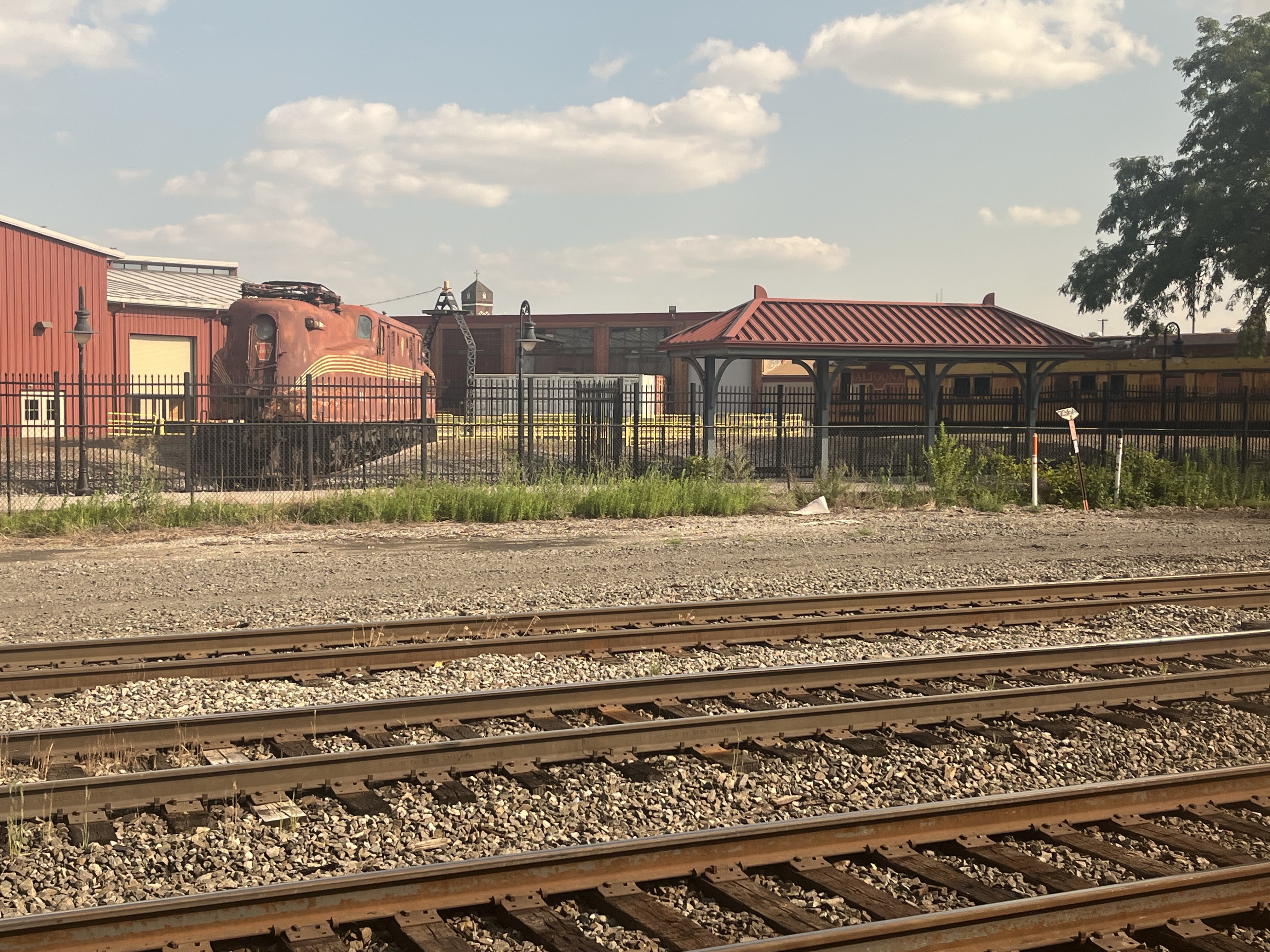
Before long, we reached Altoona, and Chuckles reluctantly gathered his things. He seemed genuinely disappointed our conversation was ending, and I did my best to look equally sad to see him go.
I was especially grateful to have my own space back because the highlight of the trip was just ahead: Horseshoe Curve.
The passenger across the aisle told me he rides this route regularly and that Horseshoe Curve is one of his favorite parts of the journey. Unfortunately, he added, the last several times he’d traveled, a freight train had blocked the view.
I think he spoke it into existence.
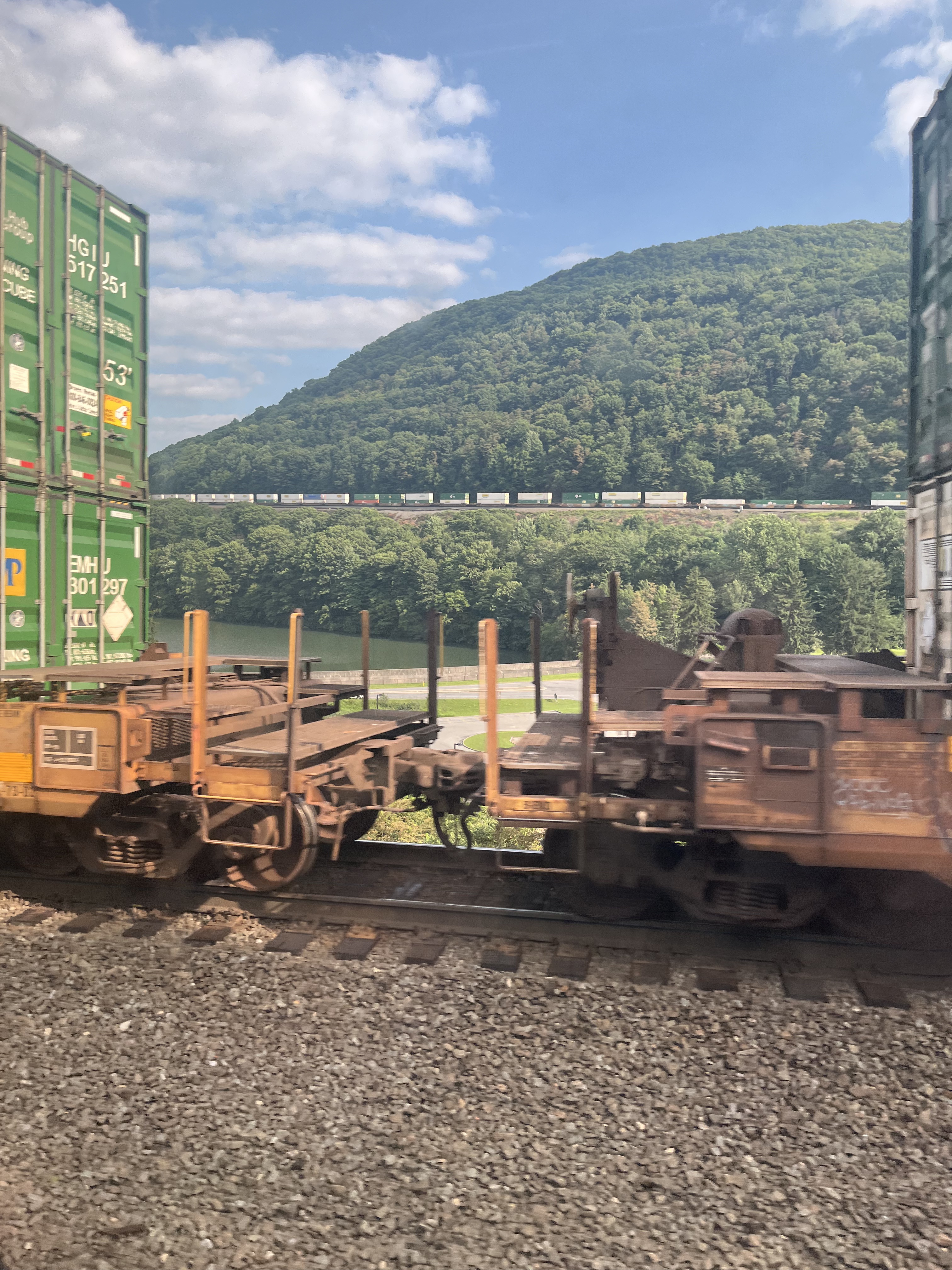
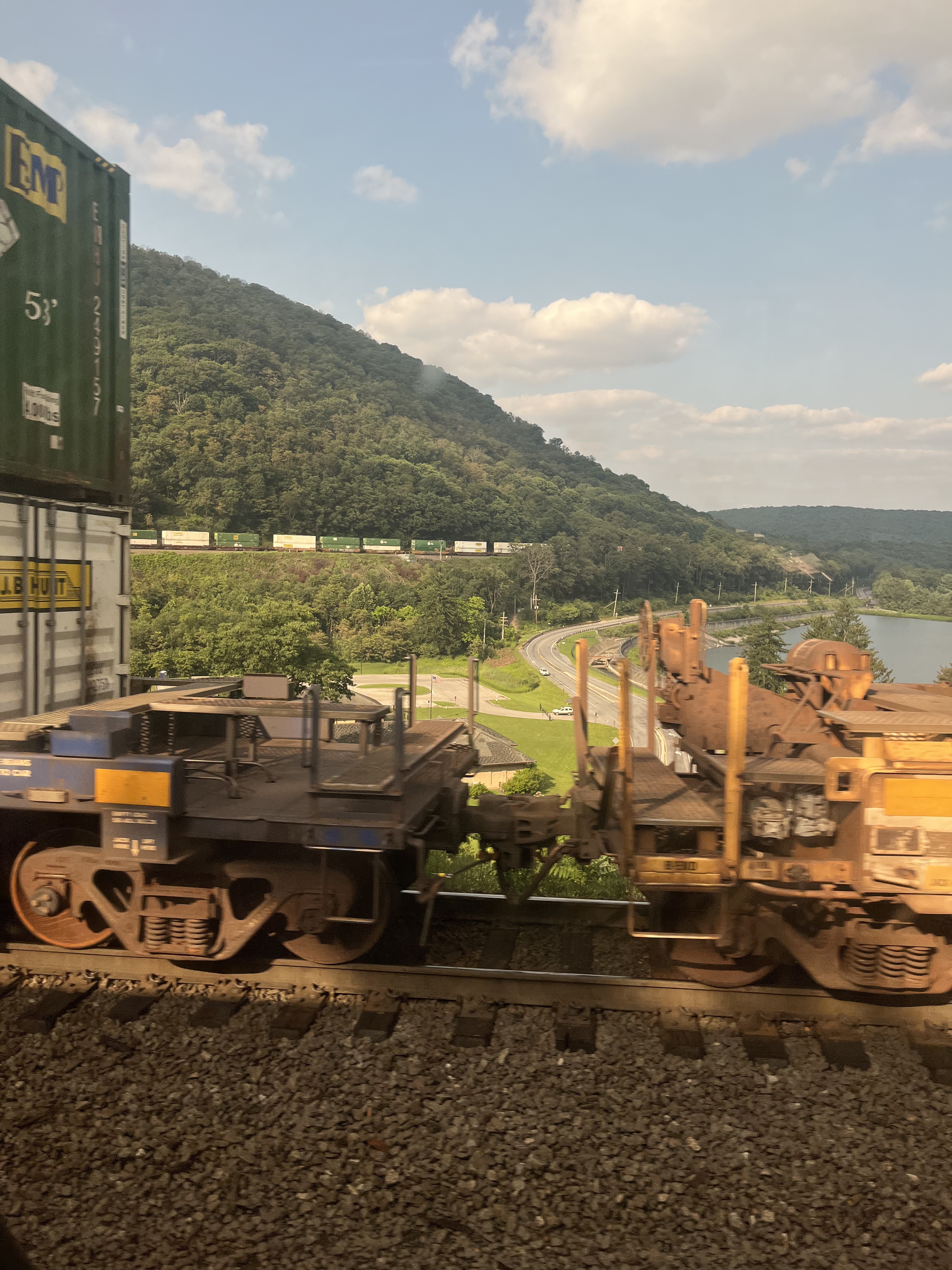
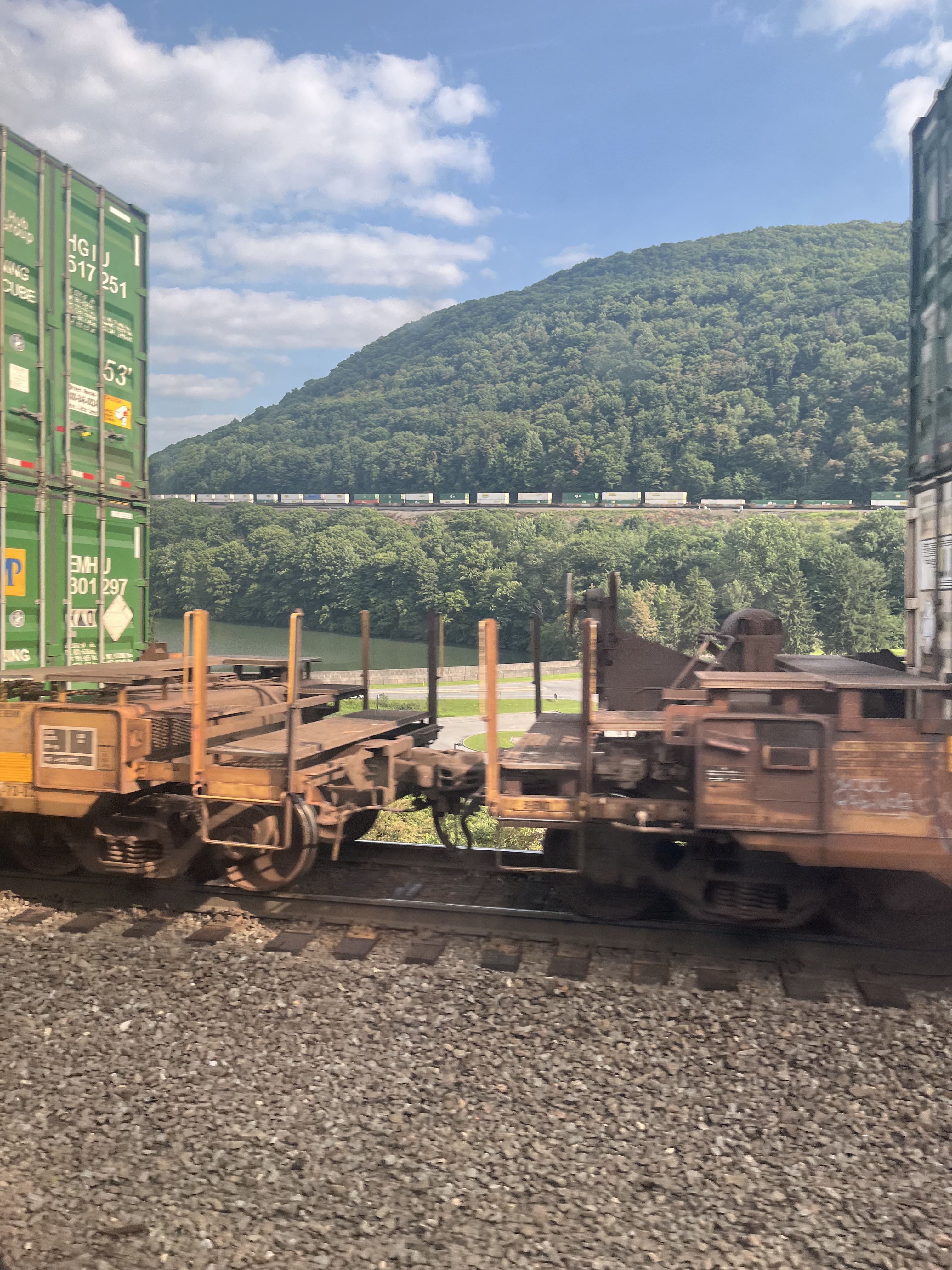
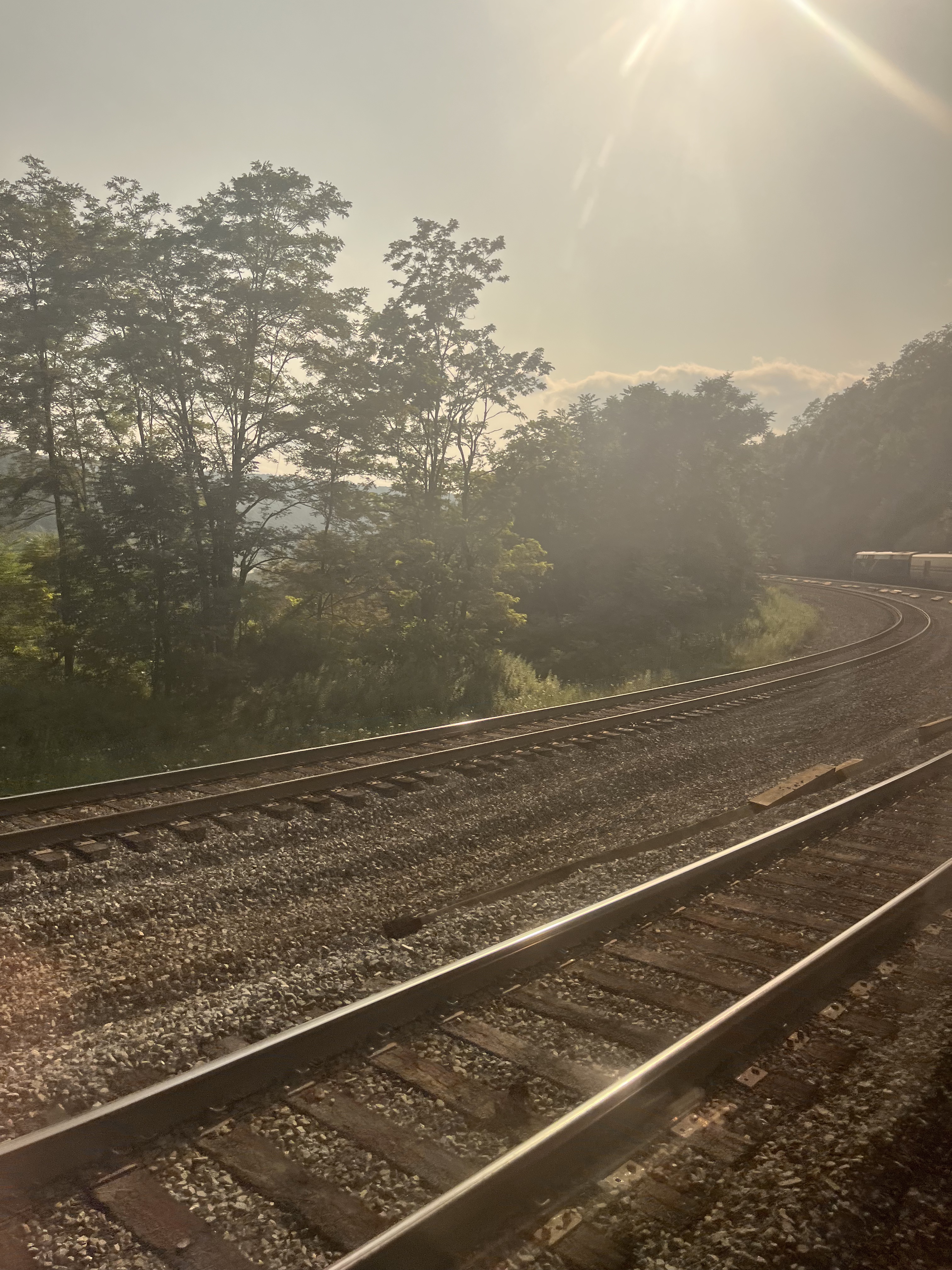
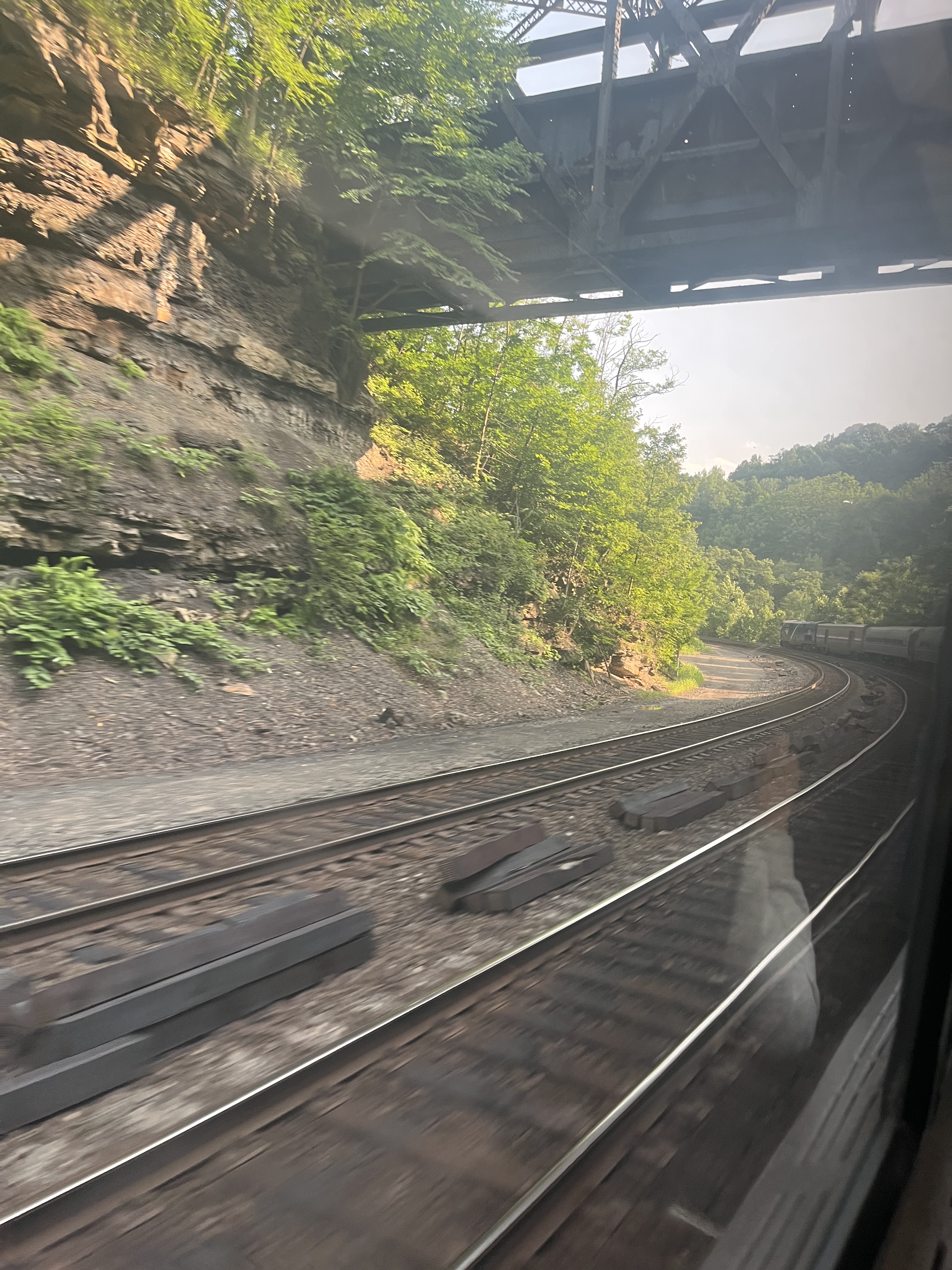
Just as we made our approach, a freight train appeared on the adjacent track. Fortunately, it wasn’t made up entirely of solid cars, so there were enough gaps to catch glimpses of the famous curve. In some ways, though, the freight train became part of the experience. It stretched around the entire bend, making it easy to appreciate just how dramatic the curve really is as both trains wrapped around the mountainside.
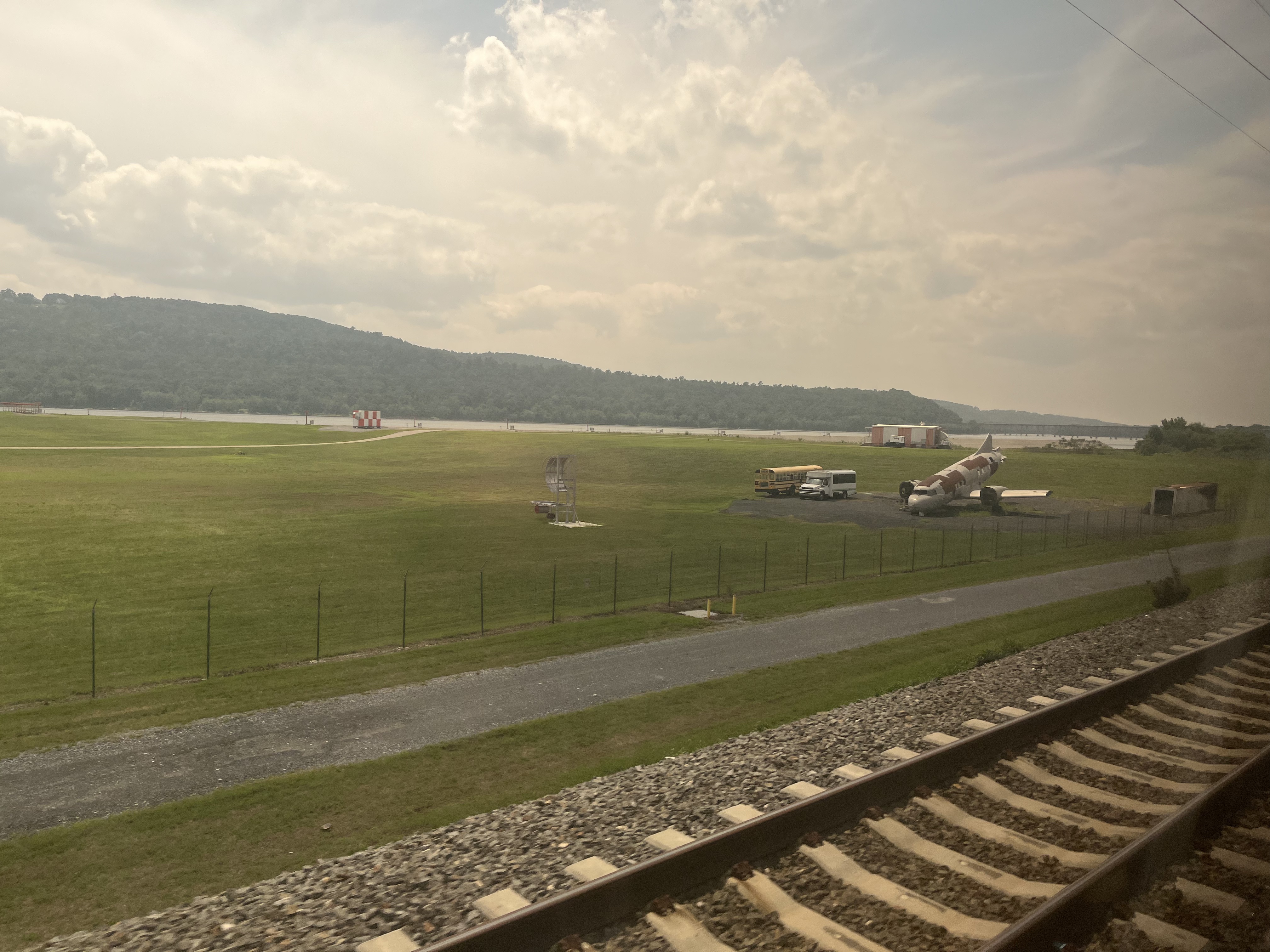
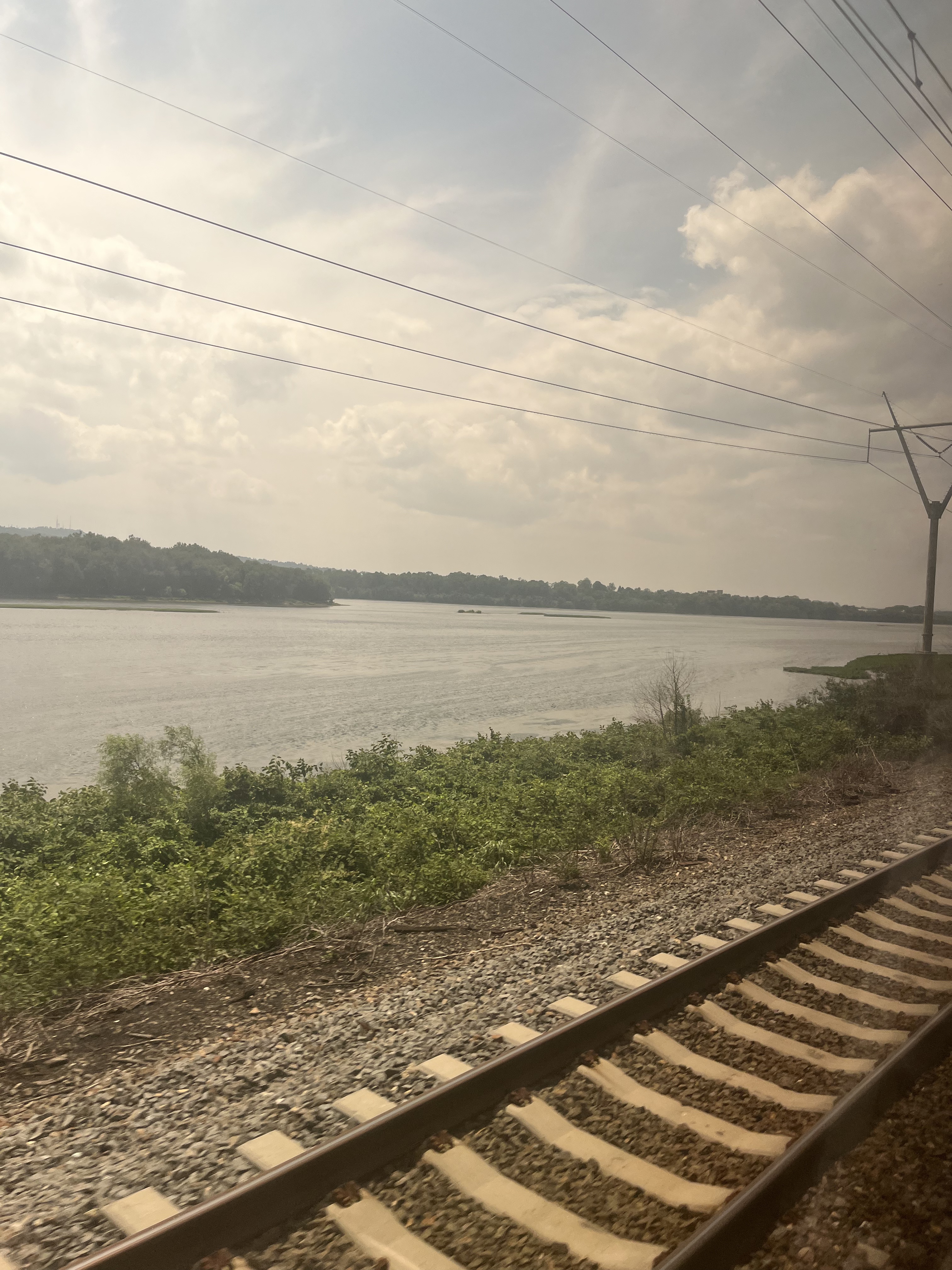
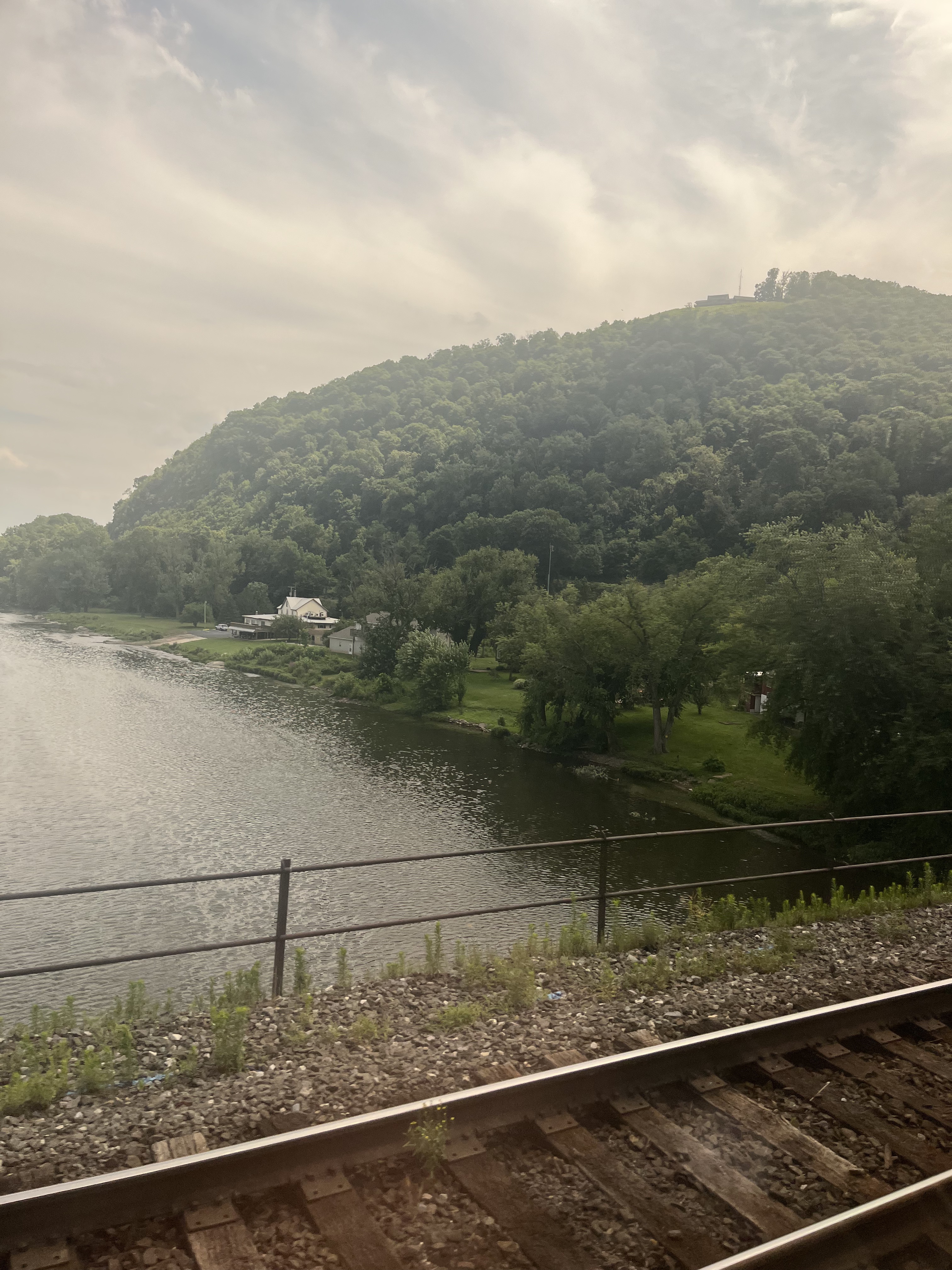
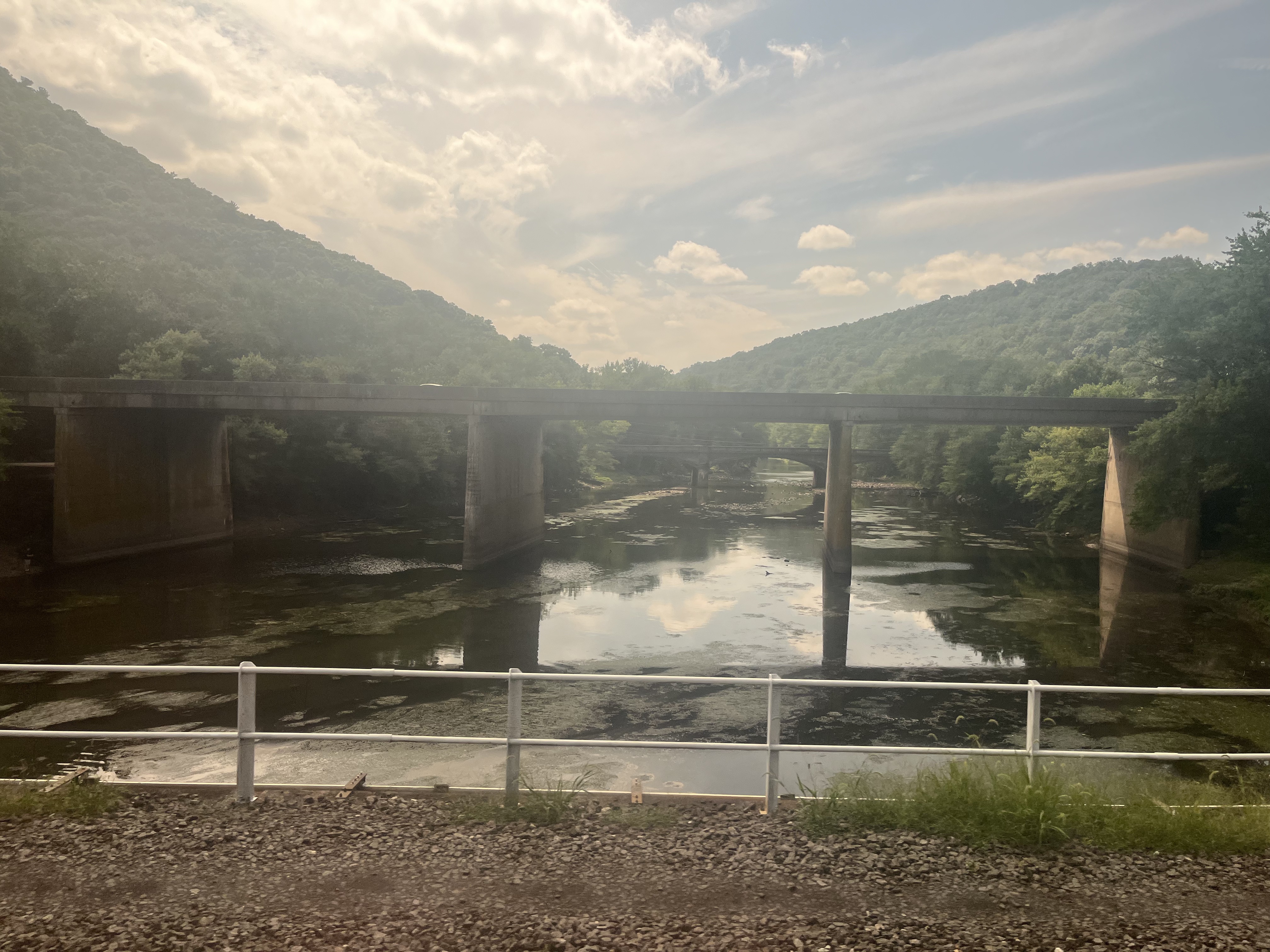
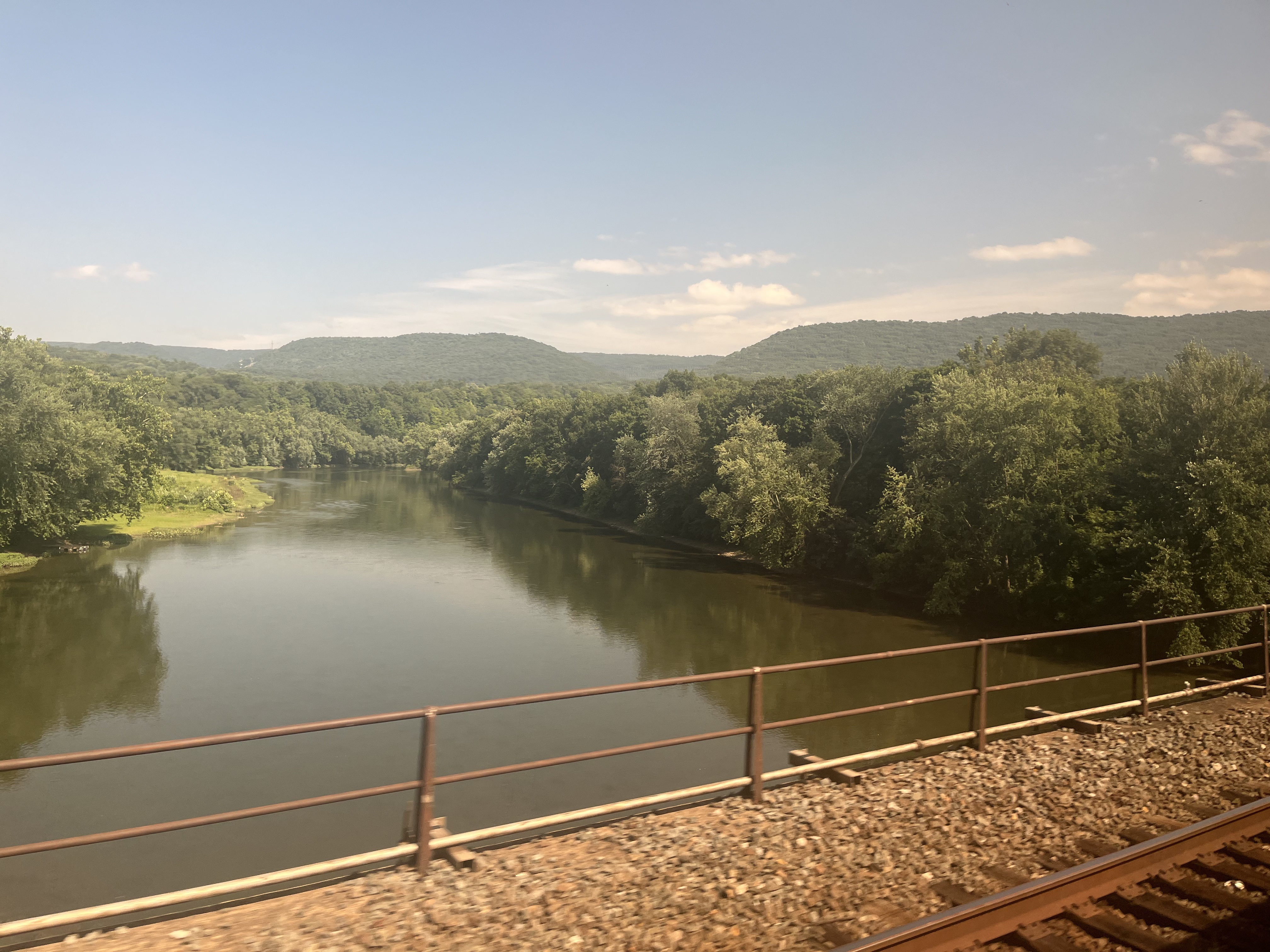
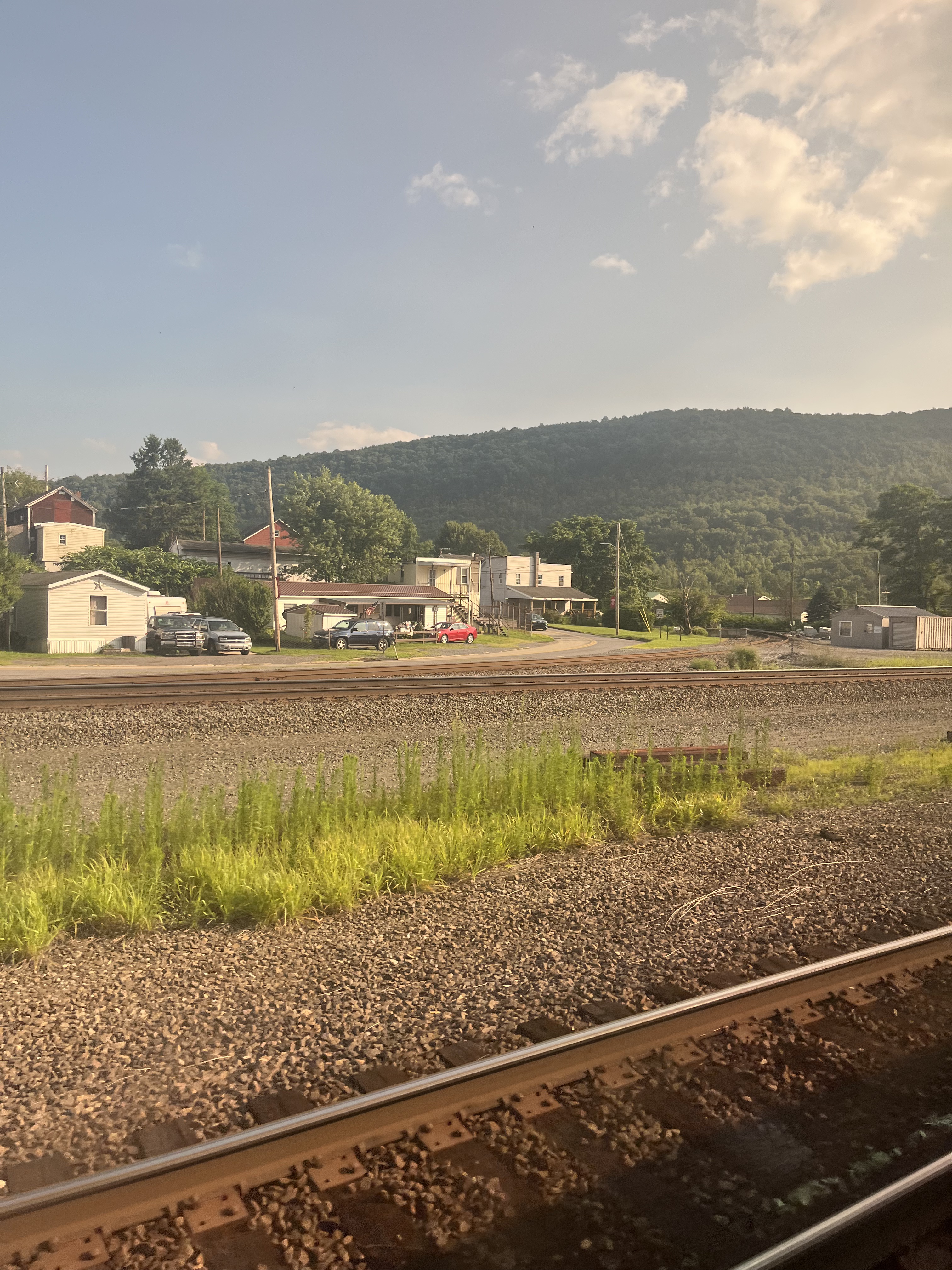
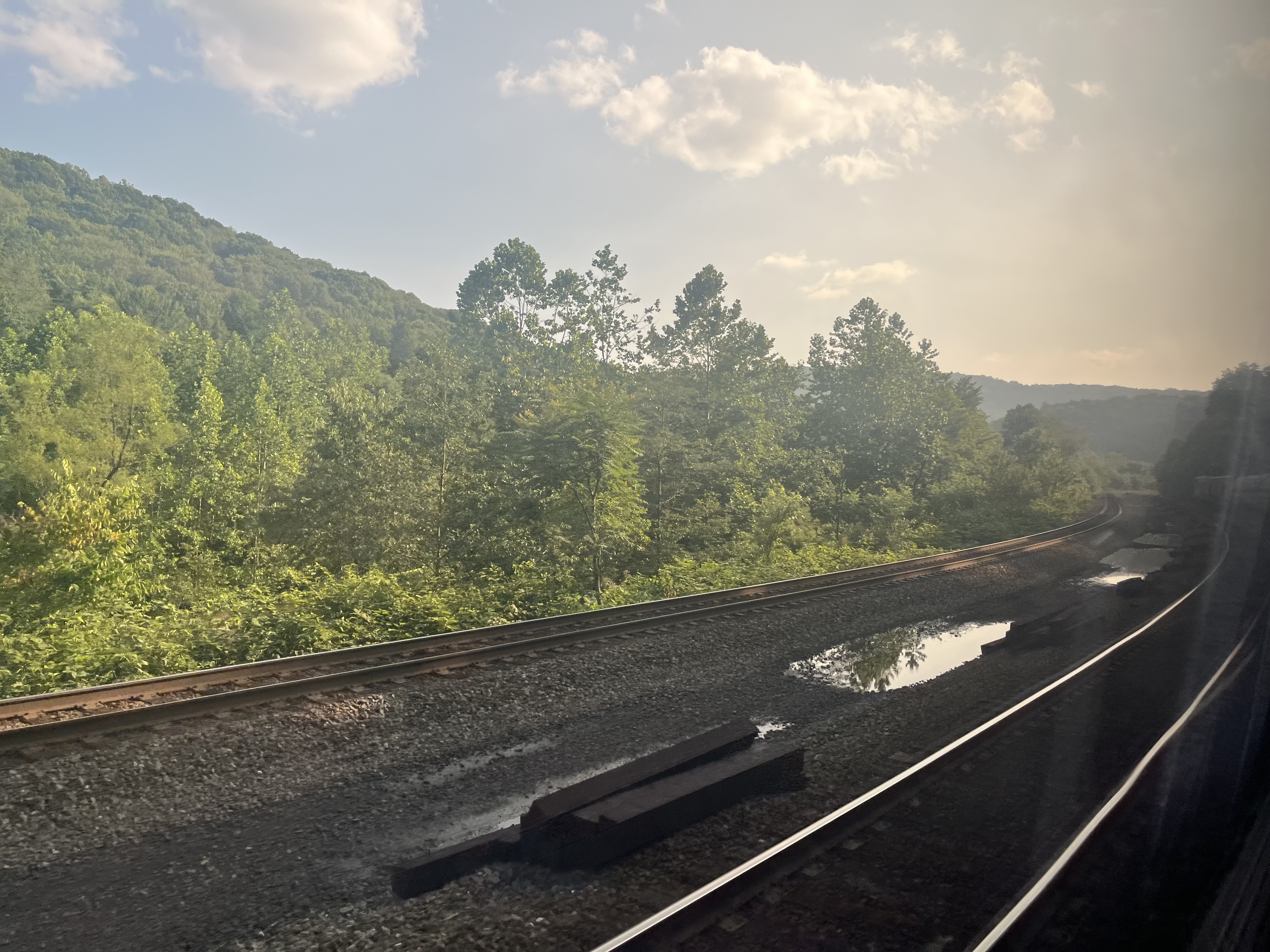
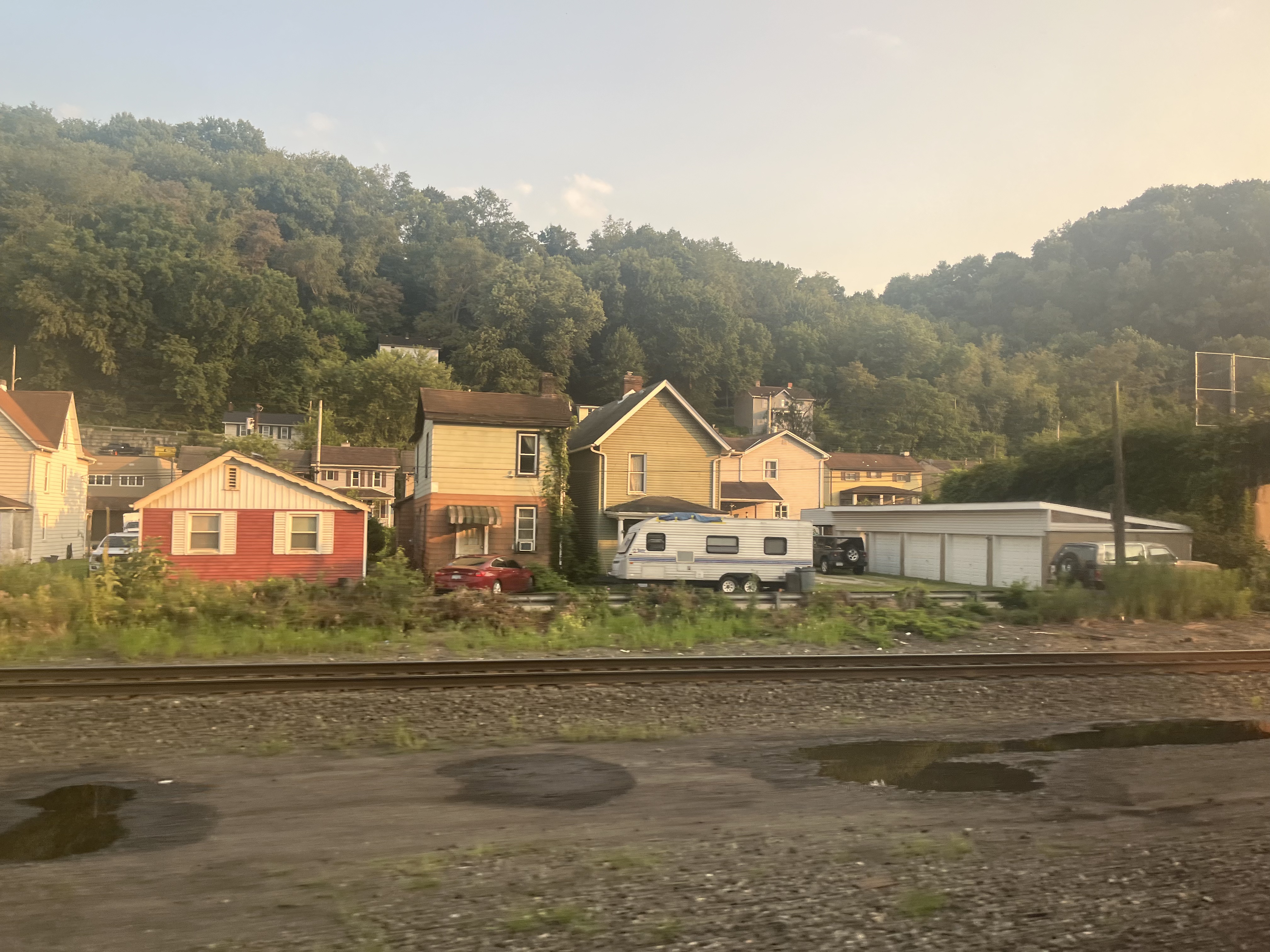
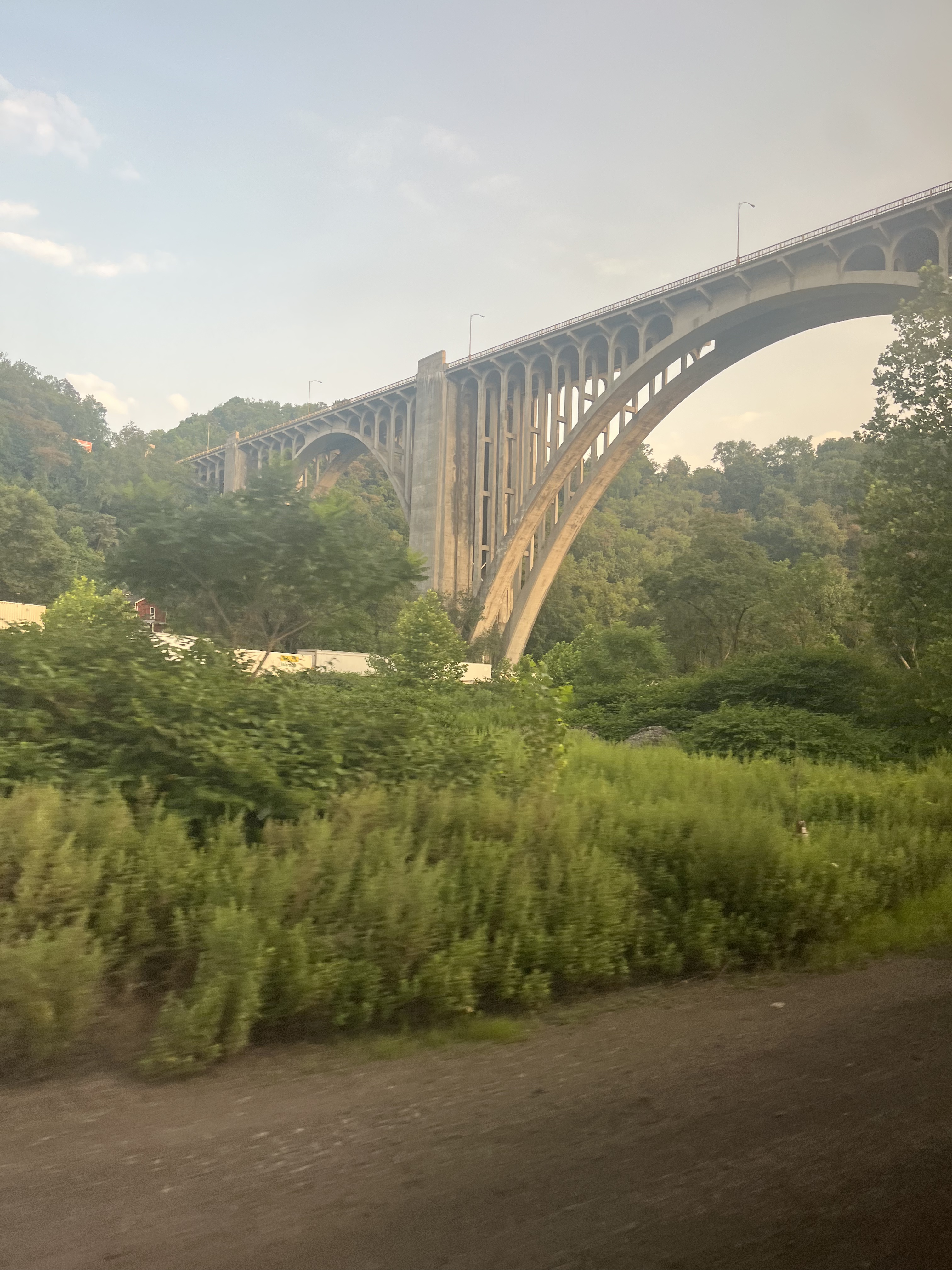
Beyond Horseshoe Curve, the landscape settled into long ridges, forested slopes, and winding river valleys as we continued west toward Pittsburgh. The scenery wasn’t dramatically different from earlier in the afternoon, but the mountains gradually softened as the railroad followed the valleys toward the city.
To cap off an already enjoyable trip, we actually rolled into Pittsburgh a few minutes early. That’s a sentence you don’t get to write about Amtrak very often.
Final Thoughts
Overall, I came away really impressed with the Pennsylvanian. Going into the trip, I knew Horseshoe Curve would be the headline attraction, but what surprised me was just how consistently beautiful the scenery was throughout the day. Unlike some routes where you spend hours waiting for a few specific stretches, the Pennsylvanian offers continuous rolling hills, rivers, forests, small towns, and valleys. The scenery changes gradually enough that it never feels repetitive, and before you know it, another great view is outside your window.
One thing I would do differently next time though is choose a seat on the right side of the train when departing New York. I sat on the left, which turned out to be excellent for viewing the Horseshoe Curve. However, I missed many of the river views that passengers on the opposite side were enjoying for much of the journey. Fortunately, the Horseshoe Curve is easy enough to plan around. If you’re seated on the right, you can simply head to the cafe car or find an open window on the left side of the train after you leave Altoona. That gives you the best of both worlds: the rivers for most of the trip and the iconic curve at the end. And in case you’re going east out of Pittsburgh, you’d want to sit on the right side for the curve and then the left side for the rest of the trip.
The ride also struck a nice balance between practicality and sightseeing. Unlike some scenic rail journeys that feel like they’re designed primarily for tourists, the Pennsylvanian is very much a working transportation route. People boarded to visit family, commute between cities, or simply get home, yet the landscapes outside the window rival some of Amtrak’s better-known scenic routes. Between the comfortable Viewliner seats, the constantly changing views, and a journey that never seemed to drag despite lasting more than nine hours, this is a route I would happily ride again.
If you’re working your way through Amtrak’s network like I am, the Pennsylvanian is absolutely one I would recommend keeping near the top of your list. It may not get the same attention as routes like the California Zephyr or Empire Builder, but it delivers a full day of beautiful scenery with very little downtime between highlights.
 Commute Curios
Leave a comment