The Heartland Flyer is an Amtrak train that runs from Oklahoma City, Oklahoma, to Fort Worth, Texas, spanning 206 miles through the Southern plains. The service began in June 1999 and was named by 11-year-old Katie Moore. She said that the name came naturally as she knew a lot of trains were named “flyers” and the train itself ran through the “heartland” of the United States.
Despite being one of Amtrak’s newer routes, the Heartland Flyer has built a loyal following over the past 25 years thanks to its role connecting North Texas and Oklahoma. However, the train has spent much of its relatively short existence under recurring financial threat and now faces arguably the most serious challenge in its history.
The opportunity to ride the Heartland Flyer admittedly came about in a somewhat unconventional way. My youngest brother was graduating from Baylor, and instead of flying directly into DFW and driving down to Waco with the rest of my family like a normal person, I decided to fly into Oklahoma City so I could take the train down to Fort Worth first.
Now, you may be wondering why I would intentionally make things more complicated for myself considering my family lives in the North Dallas suburbs and Fort Worth is very much not on the way. Fortunately, my middle brother (the same one I rode the Empire Builder with) now lives in Fort Worth, which meant I had a built-in ride from the station before we both headed over to Dallas to meet the rest of the family. Having family at a terminus station is an incredibly convenient thing.
While the Heartland Flyer’s future is uncertain (and we’ll get into that shortly), I didn’t panic buy this ticket because of that. This trip was more about finally taking a route I’d had on my list for a while and seeing what this part of the country that I’ve only experienced on I-35 had to offer.
Funding Fiasco
Unlike most of Amtrak’s long-distance trains, the Heartland Flyer is classified as a state-supported route, meaning its operating costs are primarily covered by the states of Oklahoma and Texas rather than the federal government. Since the train began service in 1999, the two states have jointly funded the route through their respective departments of transportation (after initial federal funds received by Oklahoma’s Department of Transportation).
In April 2025, the Texas Legislature approved a $337 billion state budget that removed the roughly $2.6 million annual contribution previously allocated to the train. Texas lawmakers never gave a single official reason for the cut, but the decision came during a budget cycle focused heavily on property tax relief, border security spending, and highway projects. During the same period, lawmakers approved nearly $40 billion in appropriations for the Texas Department of Transportation, while Governor Greg Abbott also approved an additional long-term roadway improvement program worth roughly $146 billion.
With Texas declining to provide its share, the train appeared headed toward discontinuation in 2025 despite Oklahoma approving its portion of the funding. In July 2025, however, the Regional Transportation Council of the North Central Texas Council of Governments stepped in with approximately $3.5 million in emergency funding to keep the train operating for another year. The money came from regional transportation funds originally tied to highway toll agreements.
This year, Texas again refused to fund its portion of the service, prompting Oklahoma lawmakers to remove their own contribution as well, arguing that Oklahoma should not be expected to support the route alone. However, Oklahoma officials indicated they would still consider restoring their share if Texas resumed participation before the funding deadline.
The timing was especially frustrating for supporters because the route had actually been seeing growing ridership and revenue. Around 80,000 passengers used the train in 2025, and advocates argued it provided an important alternative to driving on congested Interstate 35 while also supporting tourism and regional mobility.
The service was originally set to end on August 31, 2026 (the end of TxDOT’s fiscal year) but emergency funding from the Texas Regional Transportation Council is currently allowing the train to continue operating through the end of the calendar year.
Another casualty of the route’s uncertain future is the proposed extension of the Heartland Flyer north from Oklahoma City to Wichita and Newton, Kansas, where passengers would have been able to connect with Amtrak’s Southwest Chief. Planning for that expansion had been progressing for years, but the instability surrounding the existing service has placed the project in jeopardy. If the Heartland Flyer is ultimately discontinued, it would also mark the end of all Amtrak service in Oklahoma, as the state is currently served only by the route.
The Ride
I arrived in Oklahoma City the night before my trip since the train departed fairly early the next morning.
Even before boarding, it was clear how well-known the Heartland Flyer is around the area. My Uber driver from the airport to the hotel immediately recognized the train when I mentioned it. He hadn’t ridden it recently but had previously taken it from Ardmore to Fort Worth. Like nearly everyone else I spoke with during the trip, he was very aware of the service’s uncertain future. It really drove home the fact that while the Heartland Flyer is easy to dismiss as “just one train in a part of the country that is very car dependent,” it’s a key piece of transportation infrastructure that people in these communities genuinely use.
Boarding in Oklahoma City was also unlike anything I’d previously experienced on Amtrak. I don’t know whether it was because people here ride trains less frequently or if everyone had collectively decided there was simply no need for an organized process, but instead of the usual line forming at the gate, it was more of a loose cluster of passengers gradually making their way toward the platform whenever there was space to do so. Oddly enough, though, it never felt chaotic. Everyone was polite, nobody shoved, and the whole thing somehow worked despite appearing completely unstructured.
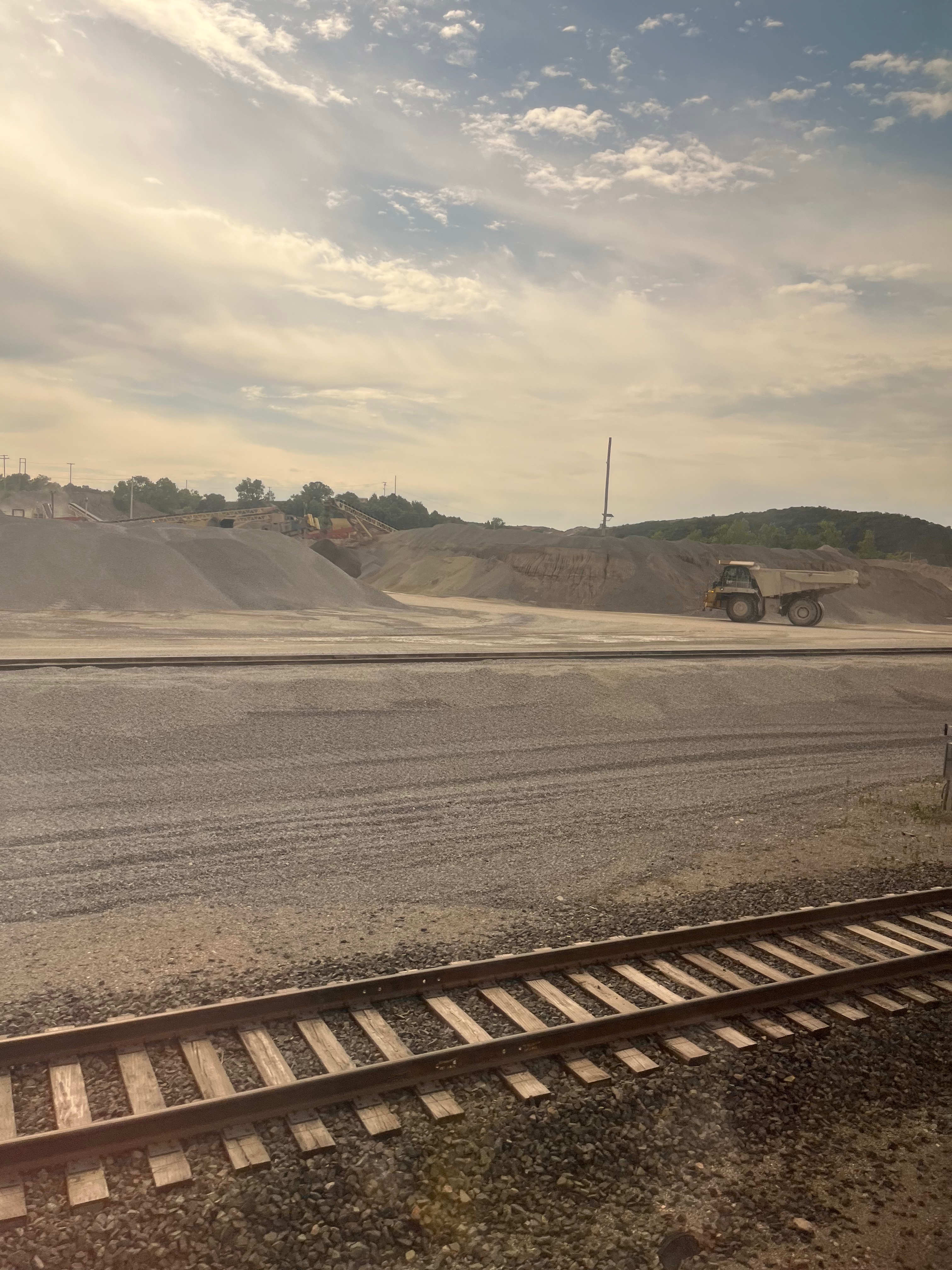
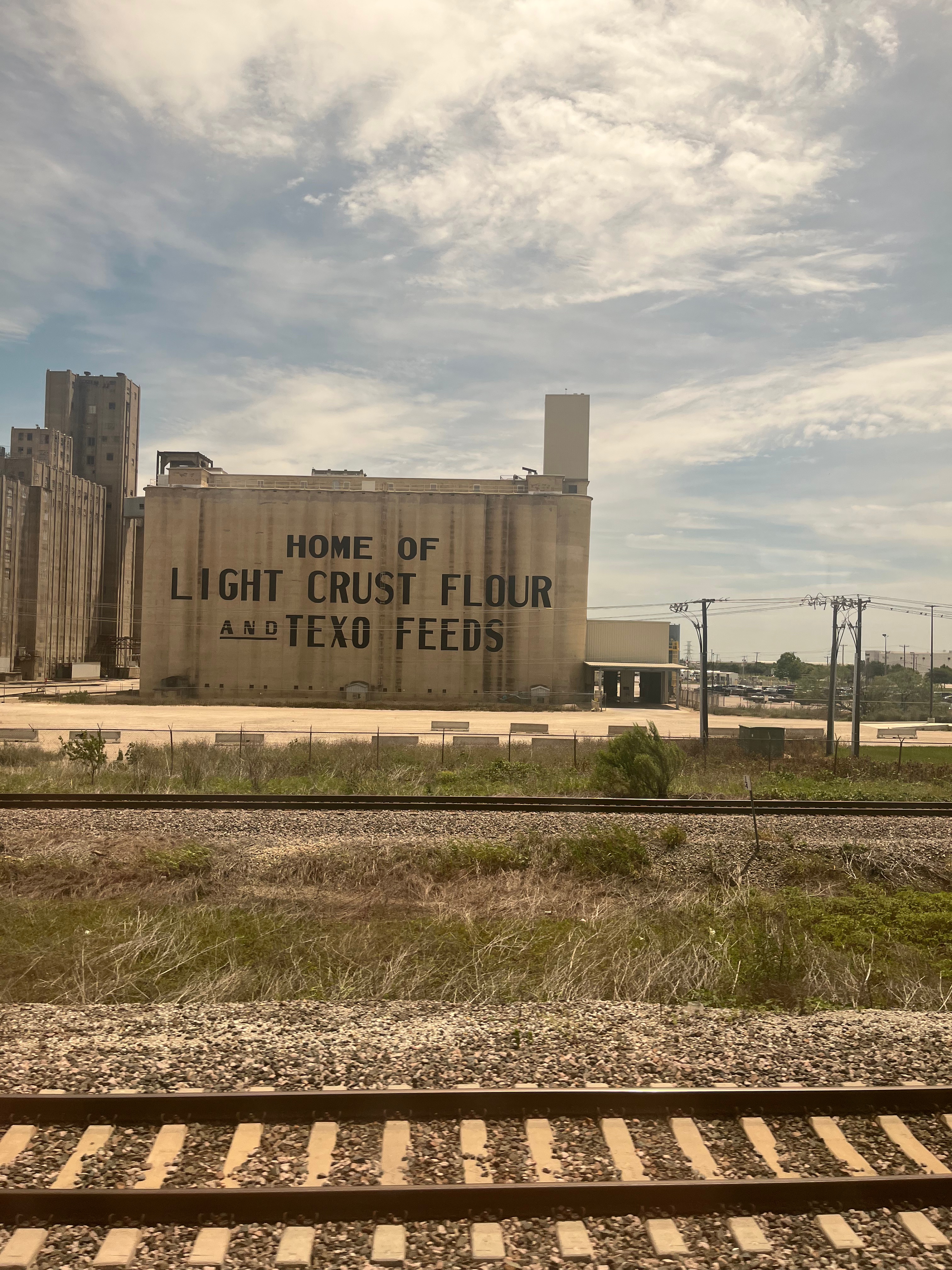
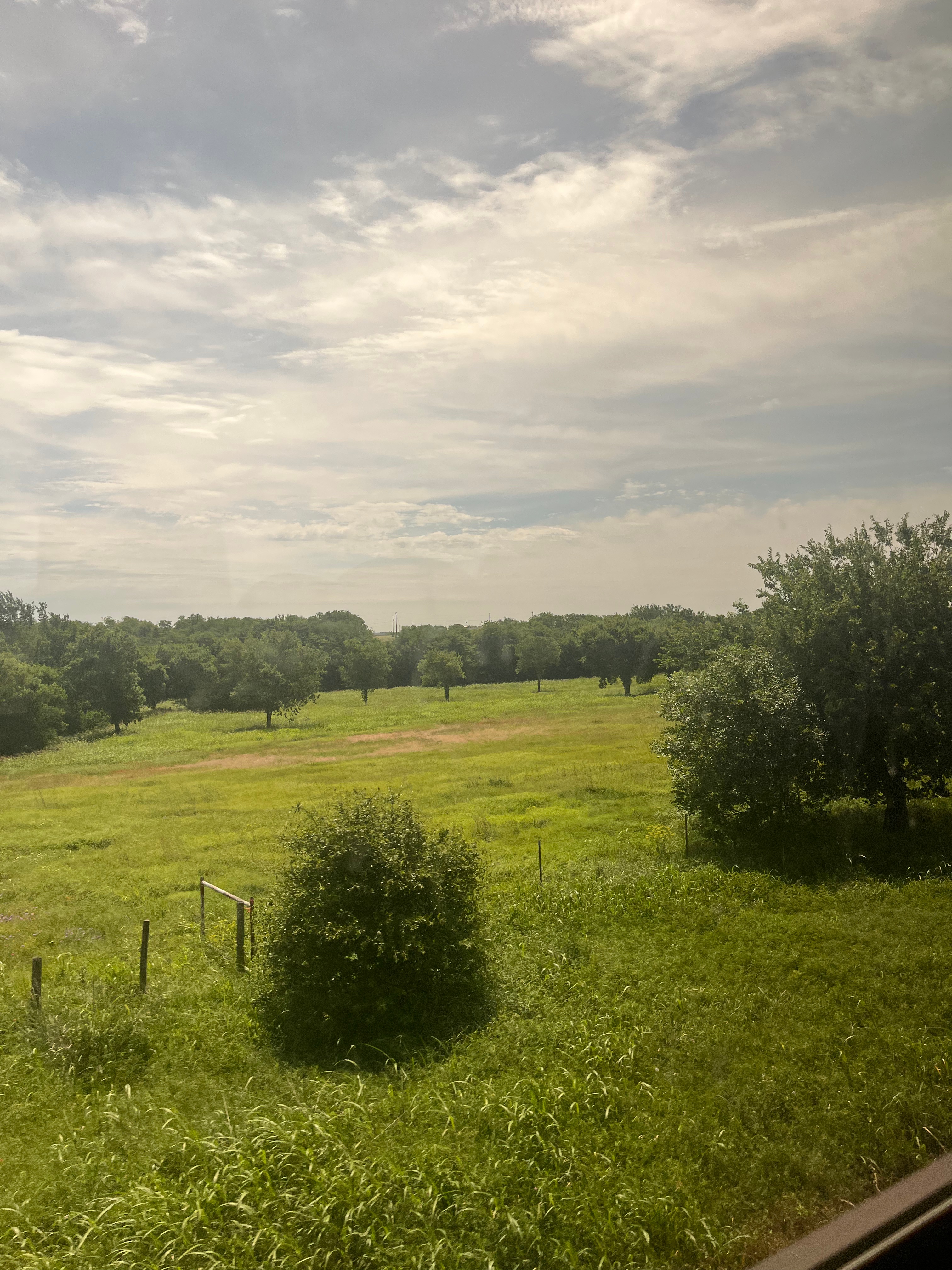
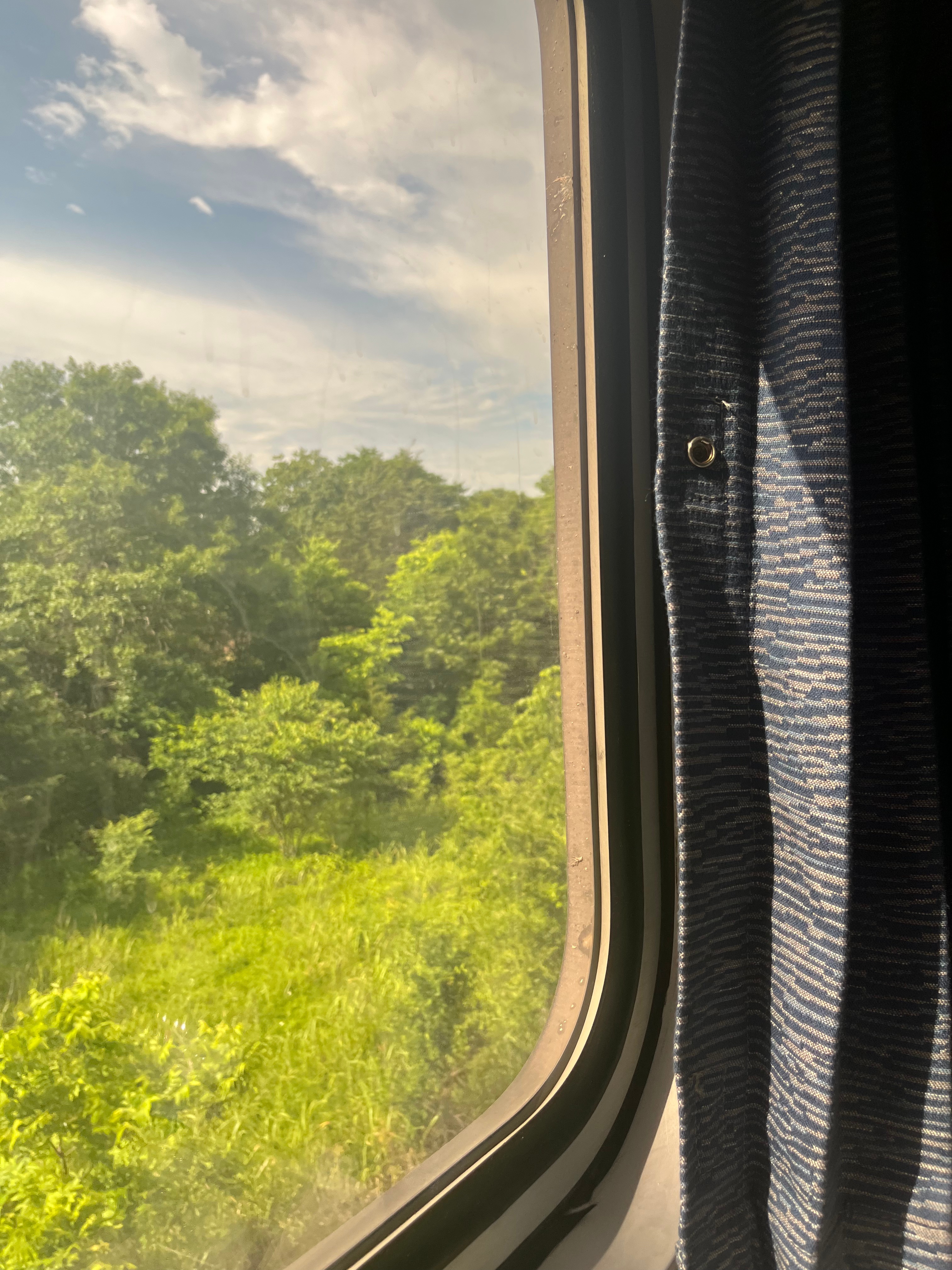
We rolled out of Oklahoma City right on time. The scenery initially consisted of industrial areas and outer suburbs before gradually opening into stretches of green trees, grassy fields, and small towns. If I had to compare it to other routes I’ve taken, I’d say it felt somewhere between the Vermonter and the Palmetto. I know that may seem like an odd comparison considering how geographically different those routes are, but somehow it captures the vibe surprisingly well.
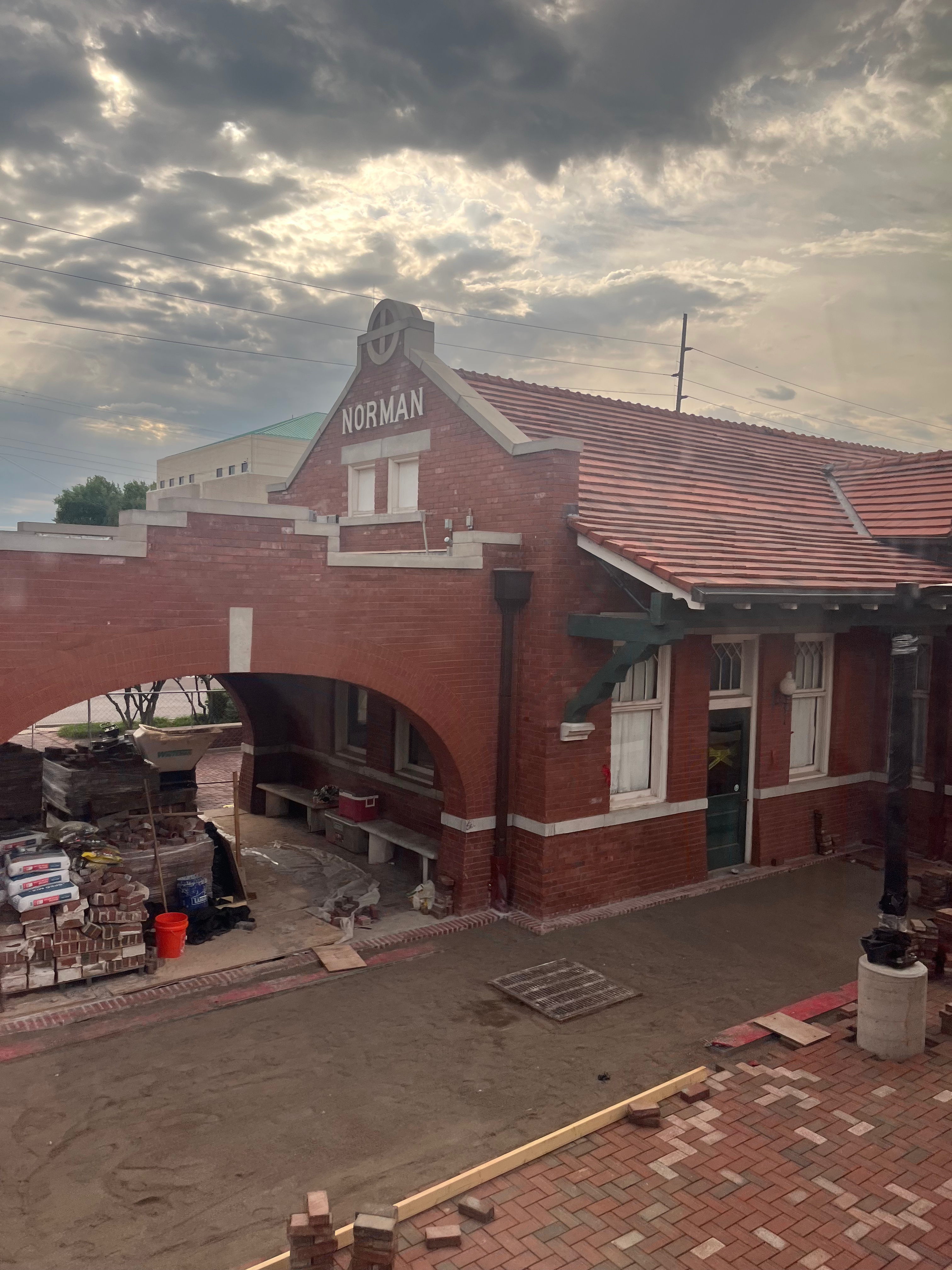
Our first stop was Norman, where the University of Oklahoma is located. The station appeared to be undergoing some kind of construction or renovation work, which felt odd given the ongoing uncertainty surrounding the route’s future.
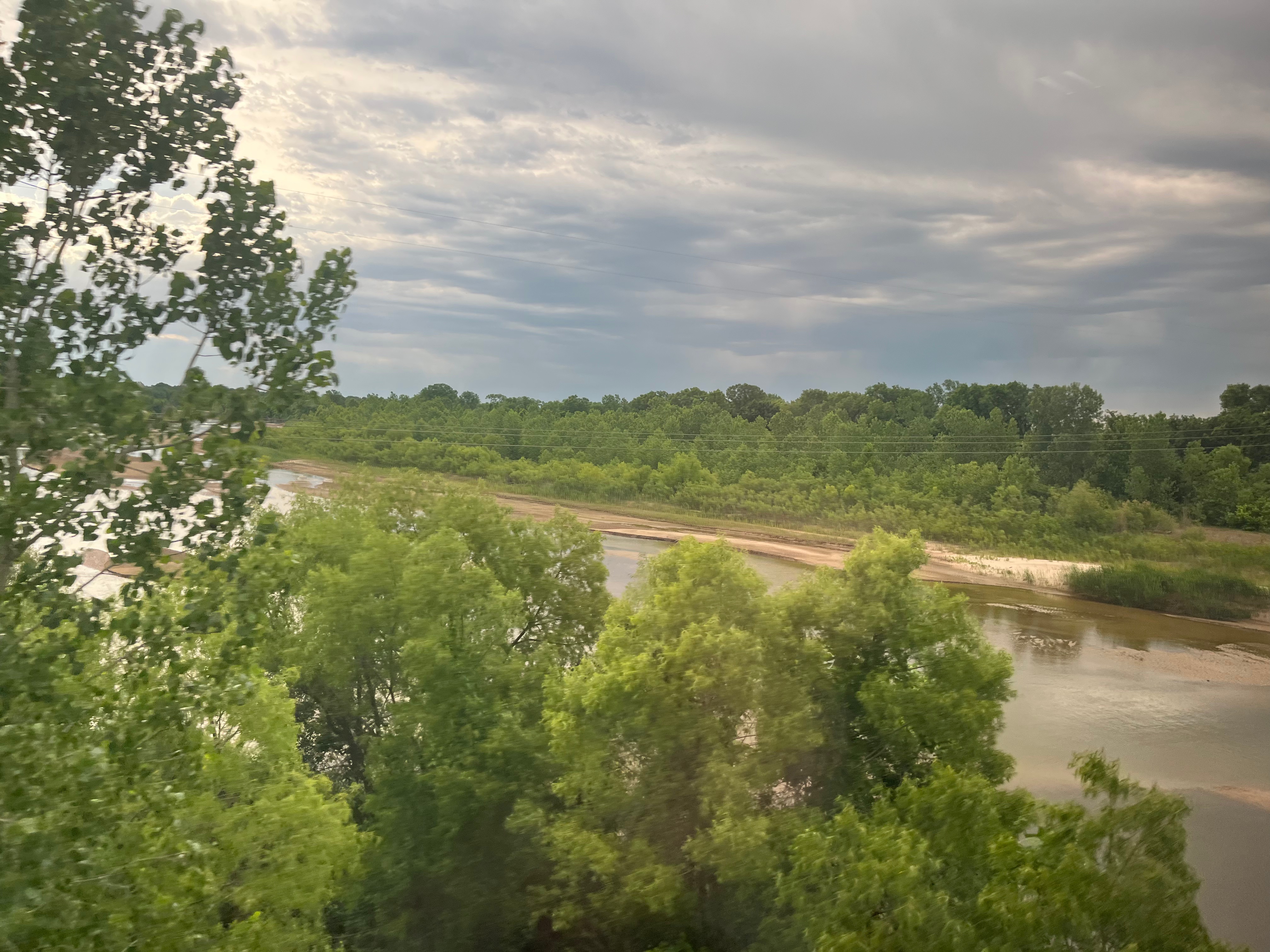
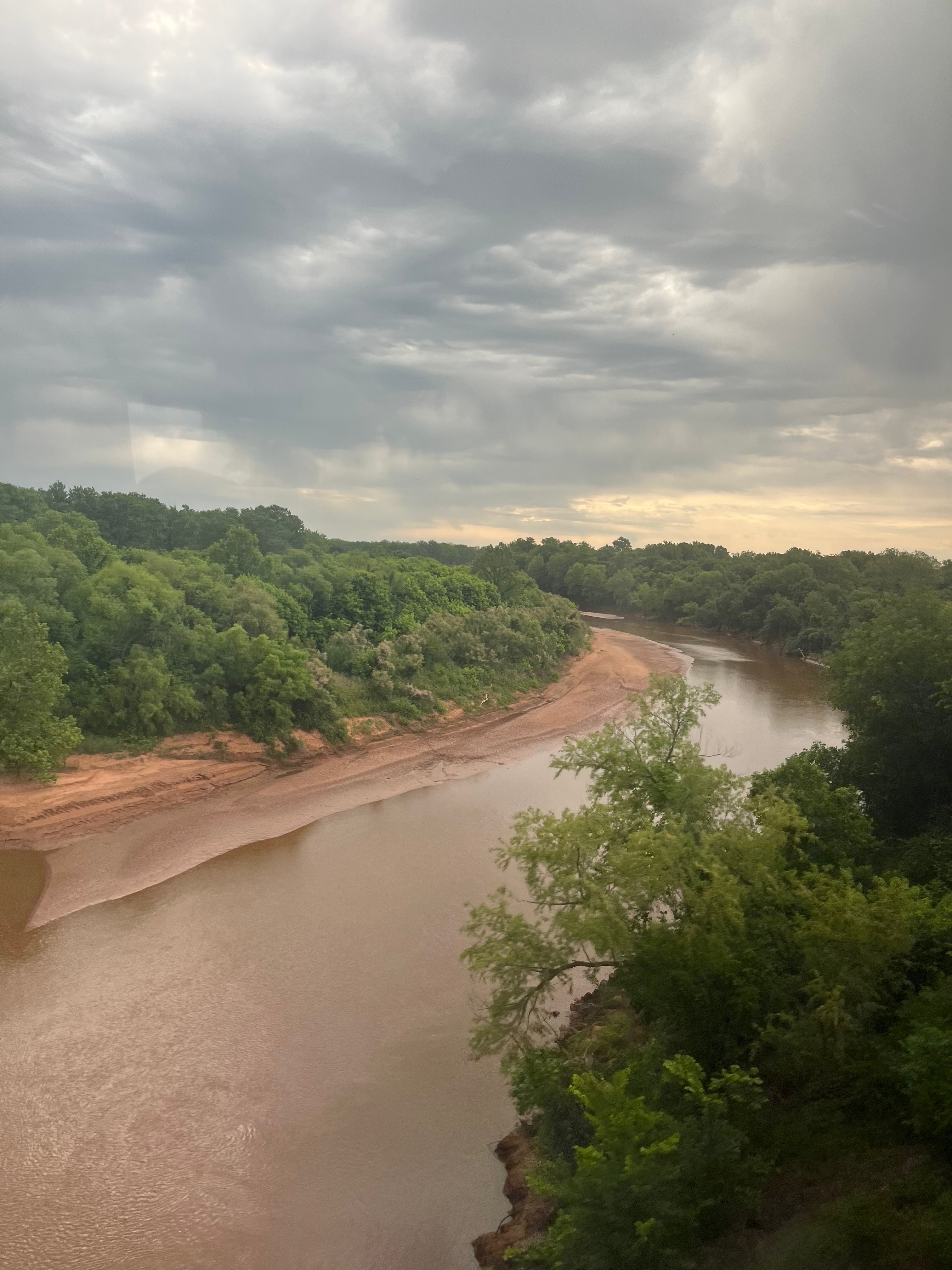
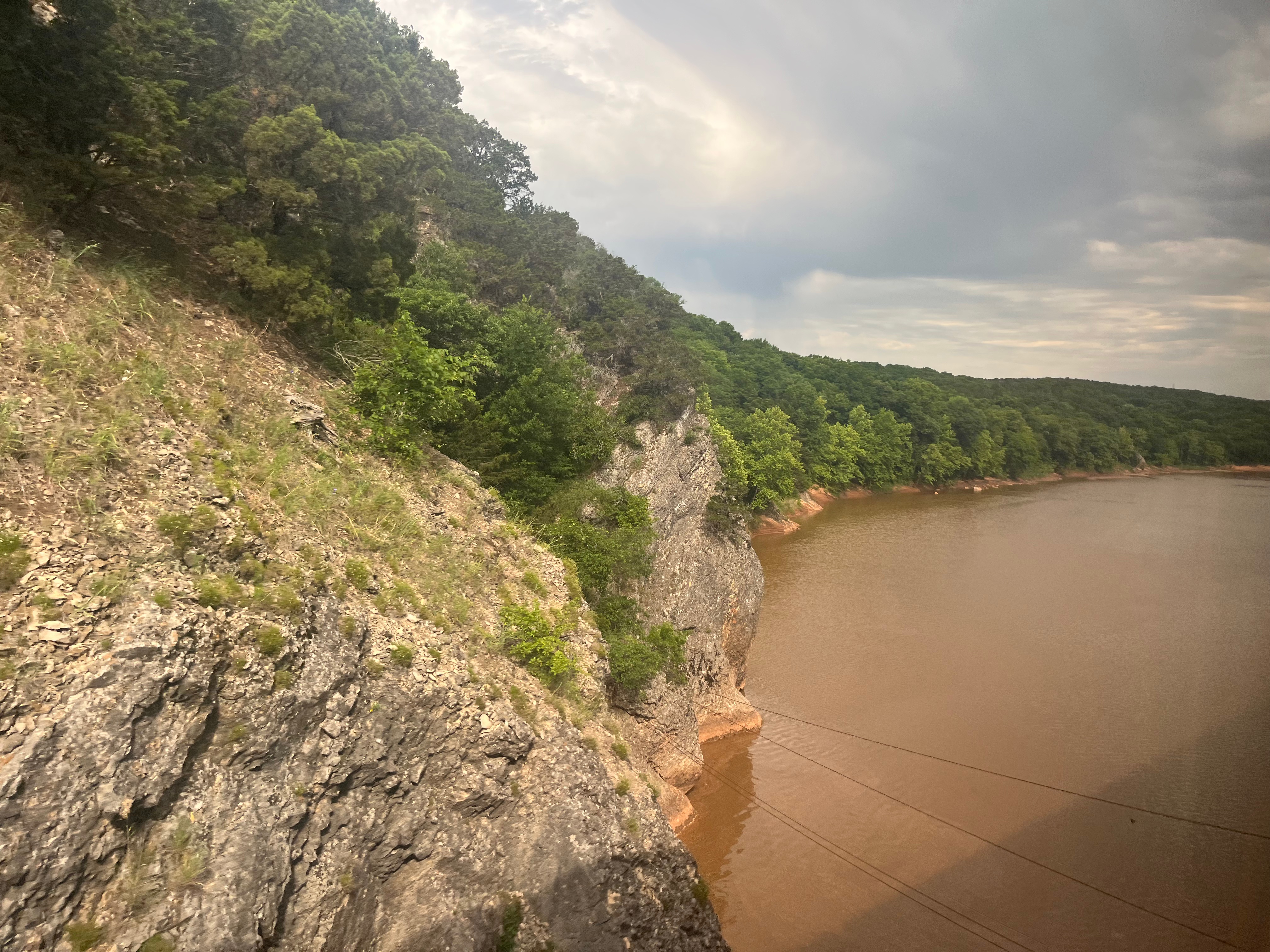
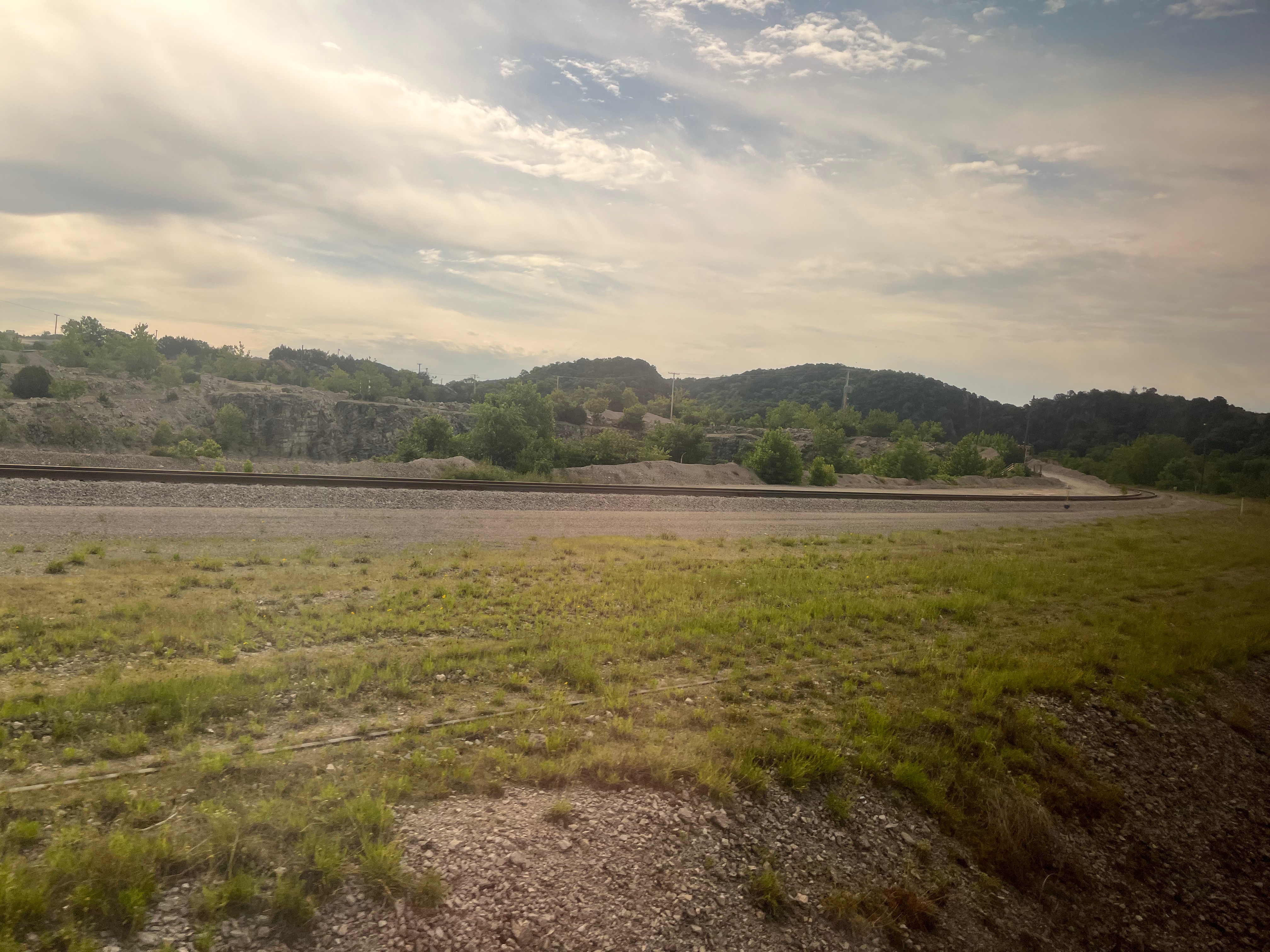
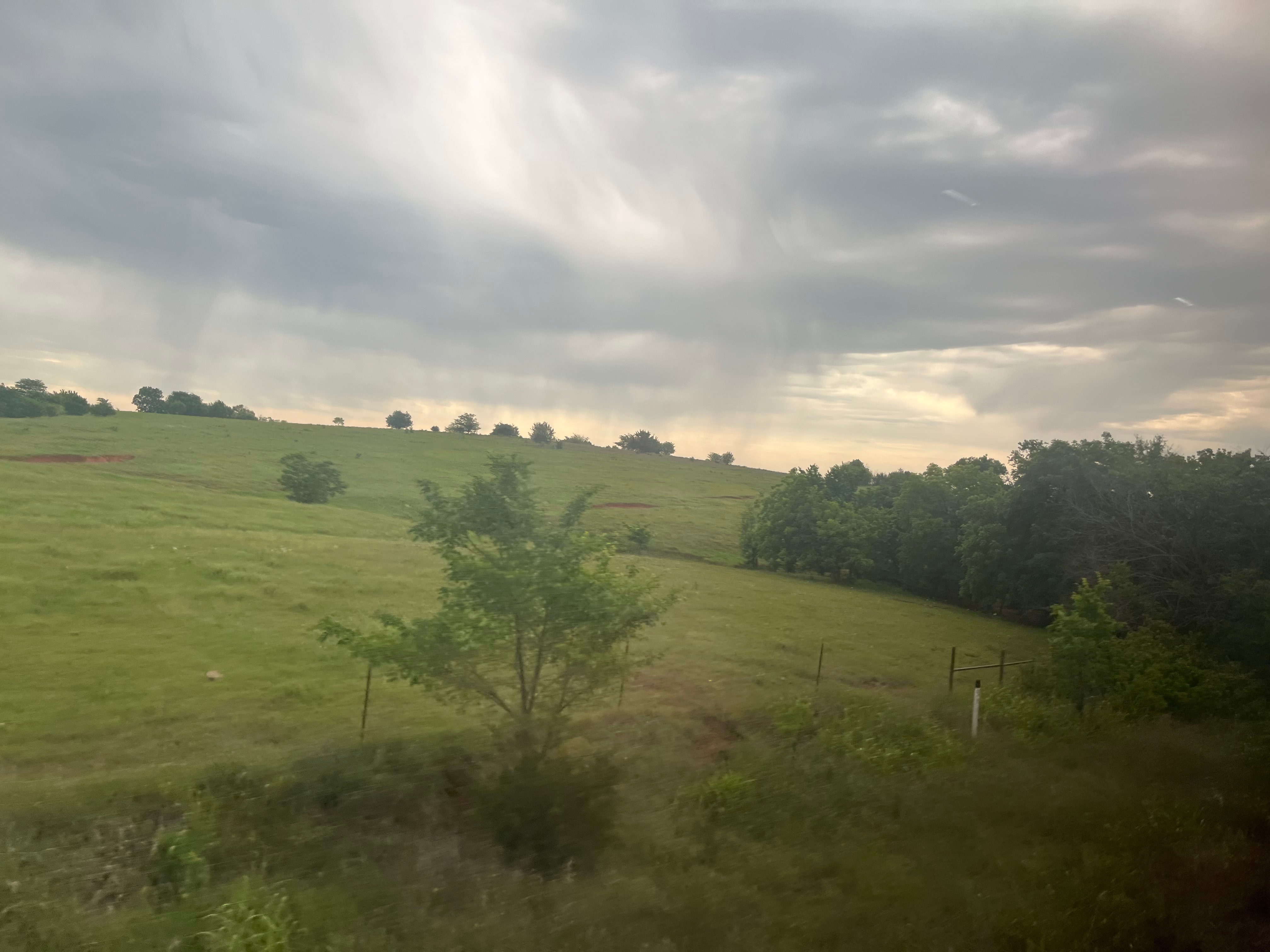
South of Norman, the train entered the Chickasaw Nation. The scenery remained consistently green, with long stretches of trees and open fields broken up by small rivers and creeks. It’s not the kind of dramatic scenery that immediately becomes famous on postcards, but it’s relaxing in a very understated way.
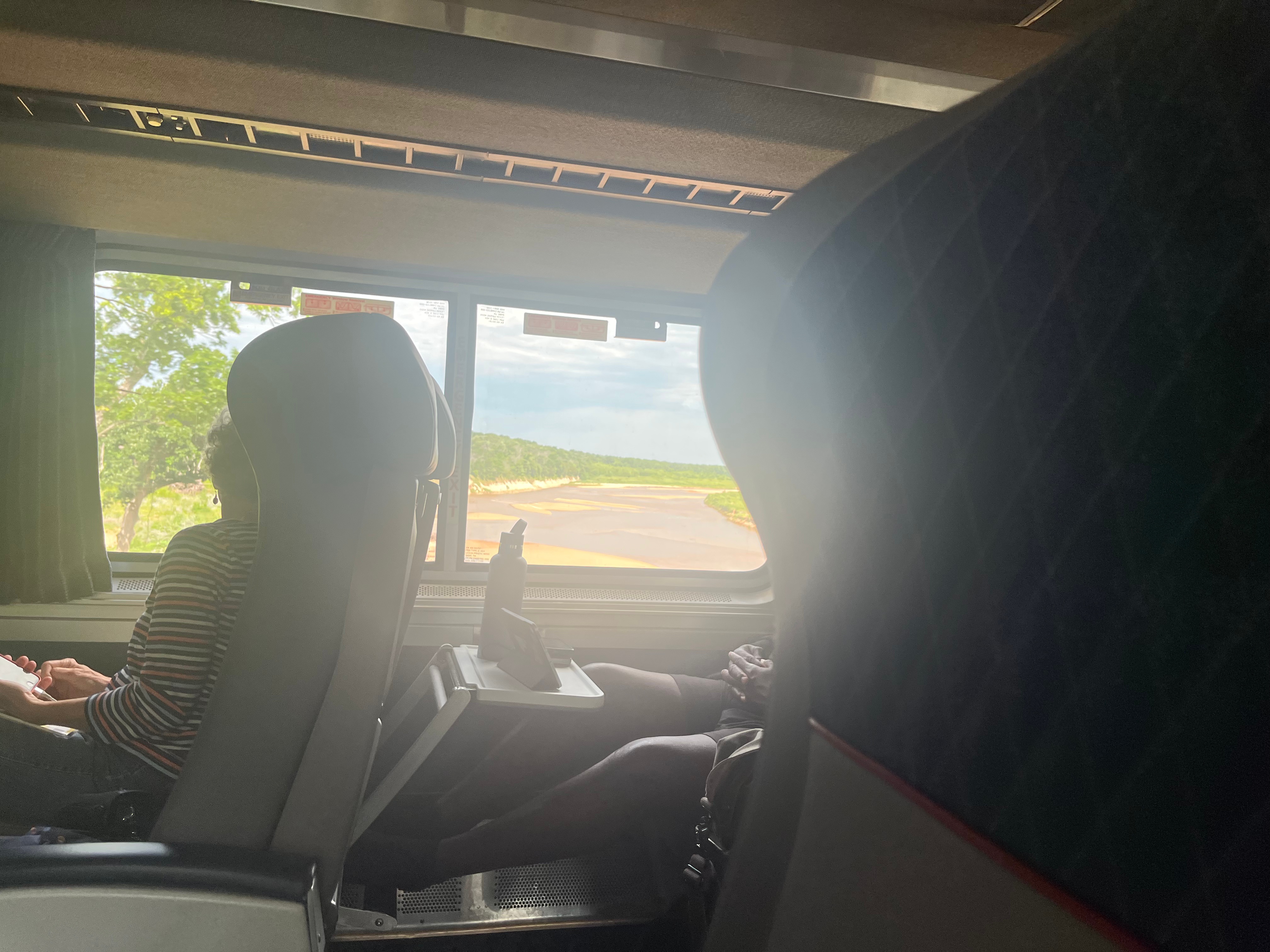
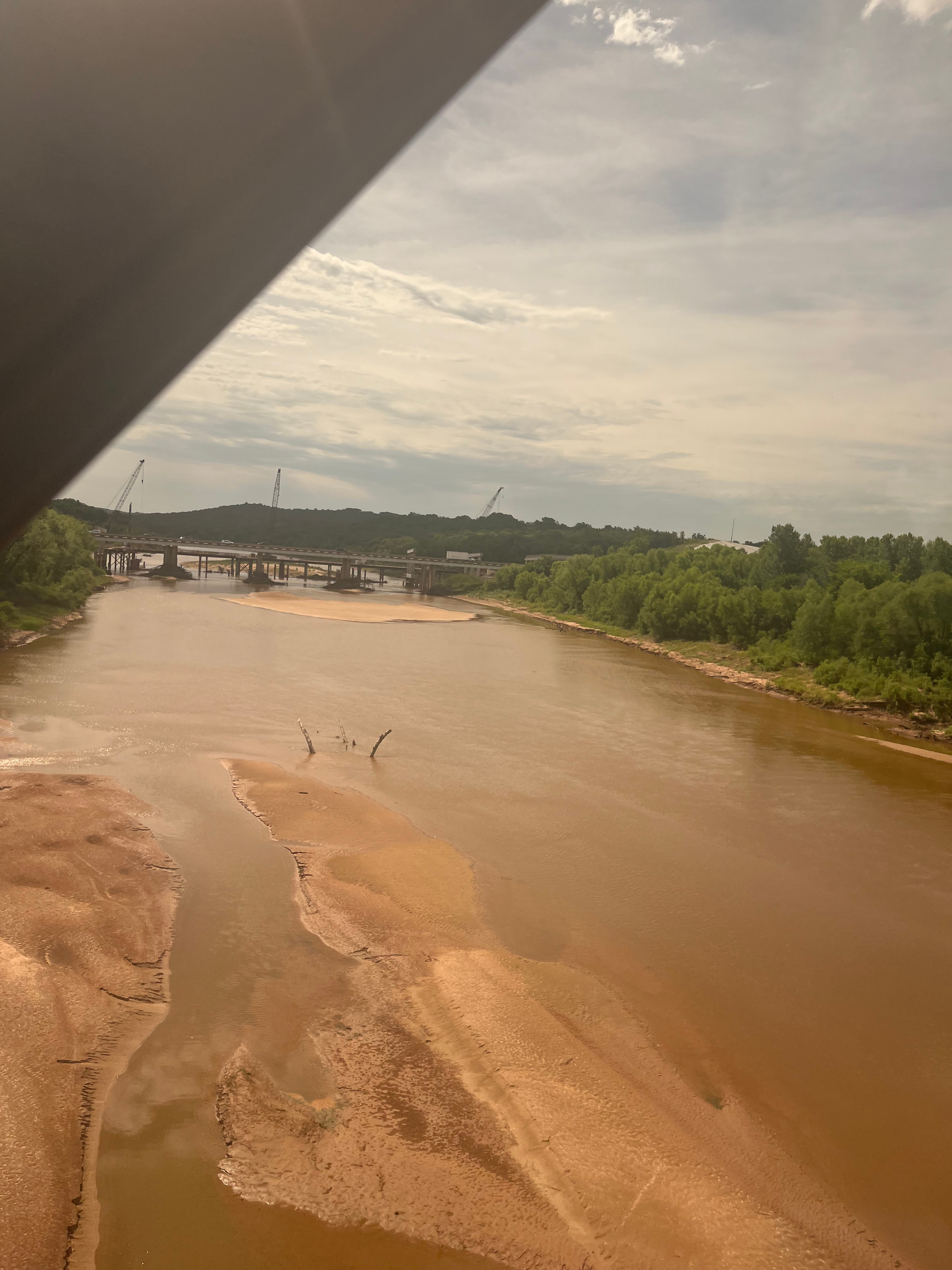
Before long, we crossed into Texas via the Red River, which forms much of the border between the two states and is often described as one of the highlights of the route. To be honest, though, the crossing happened so quickly that it was almost over before I fully registered it. It was pretty, but also not wildly different from some of the other rivers we had already passed earlier in the trip. If you’re going to choose a side to sit on to enjoy it the most though, I would sit on the right side of the train when going southbound and left when going northbound.
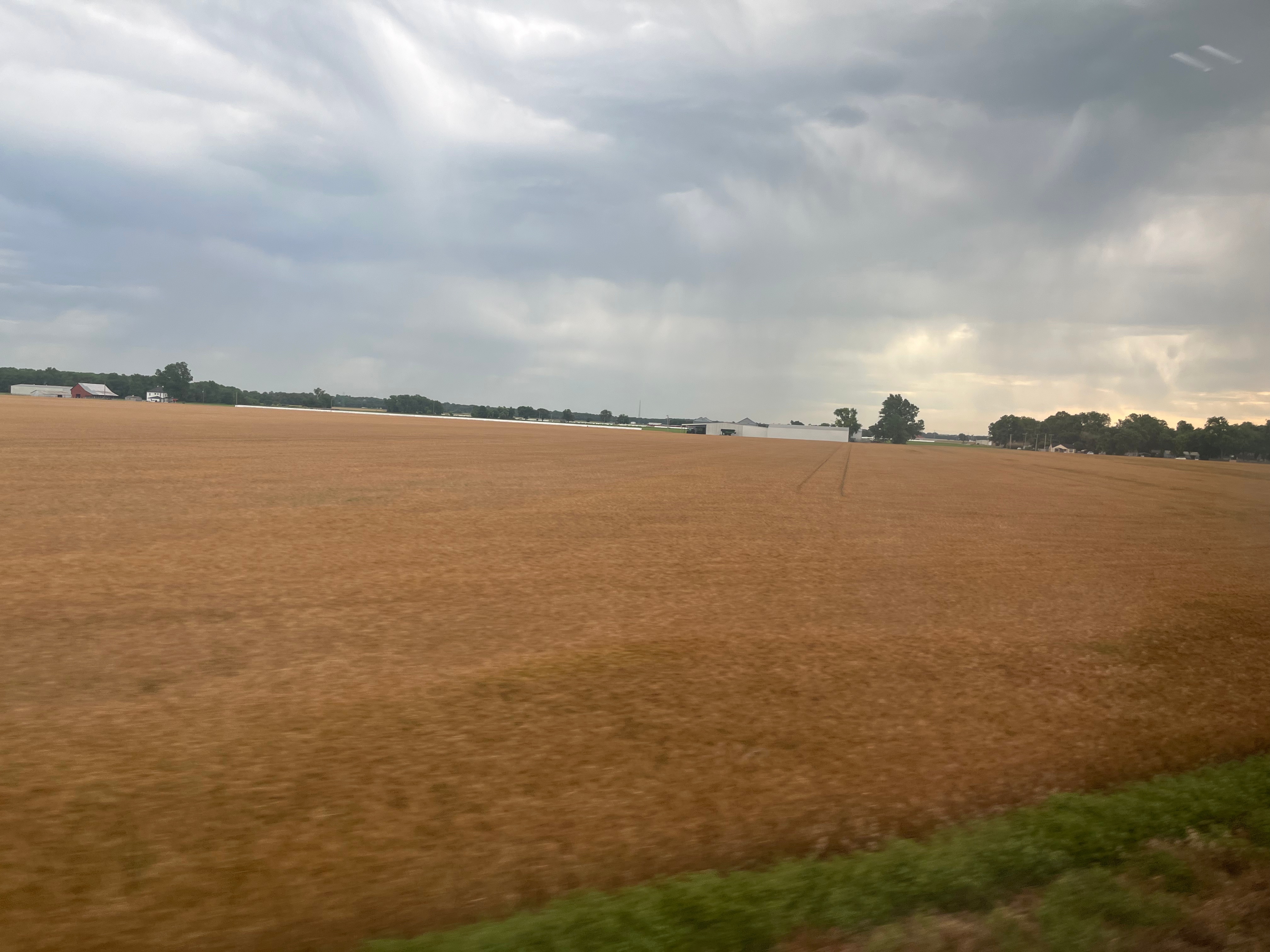
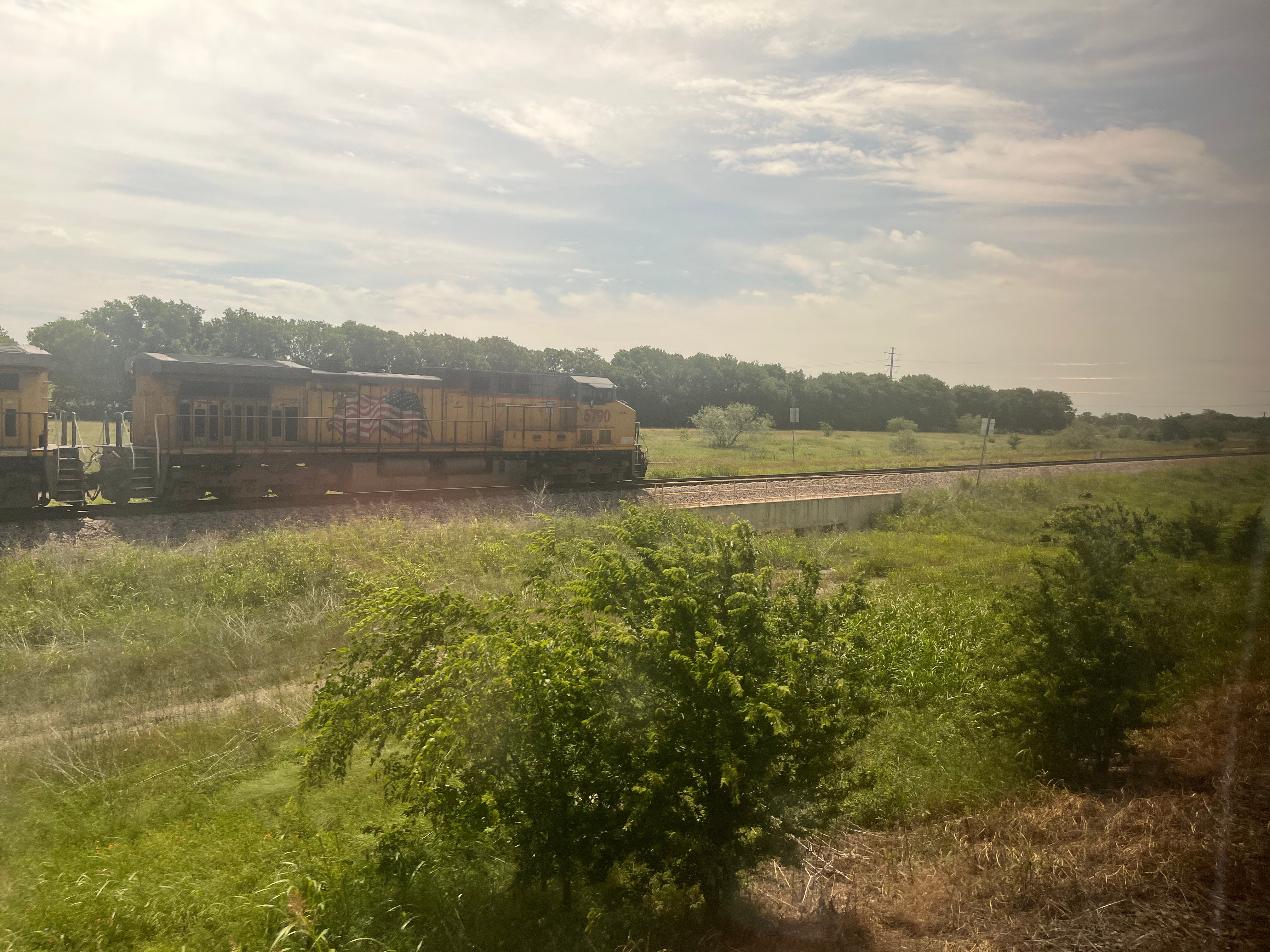
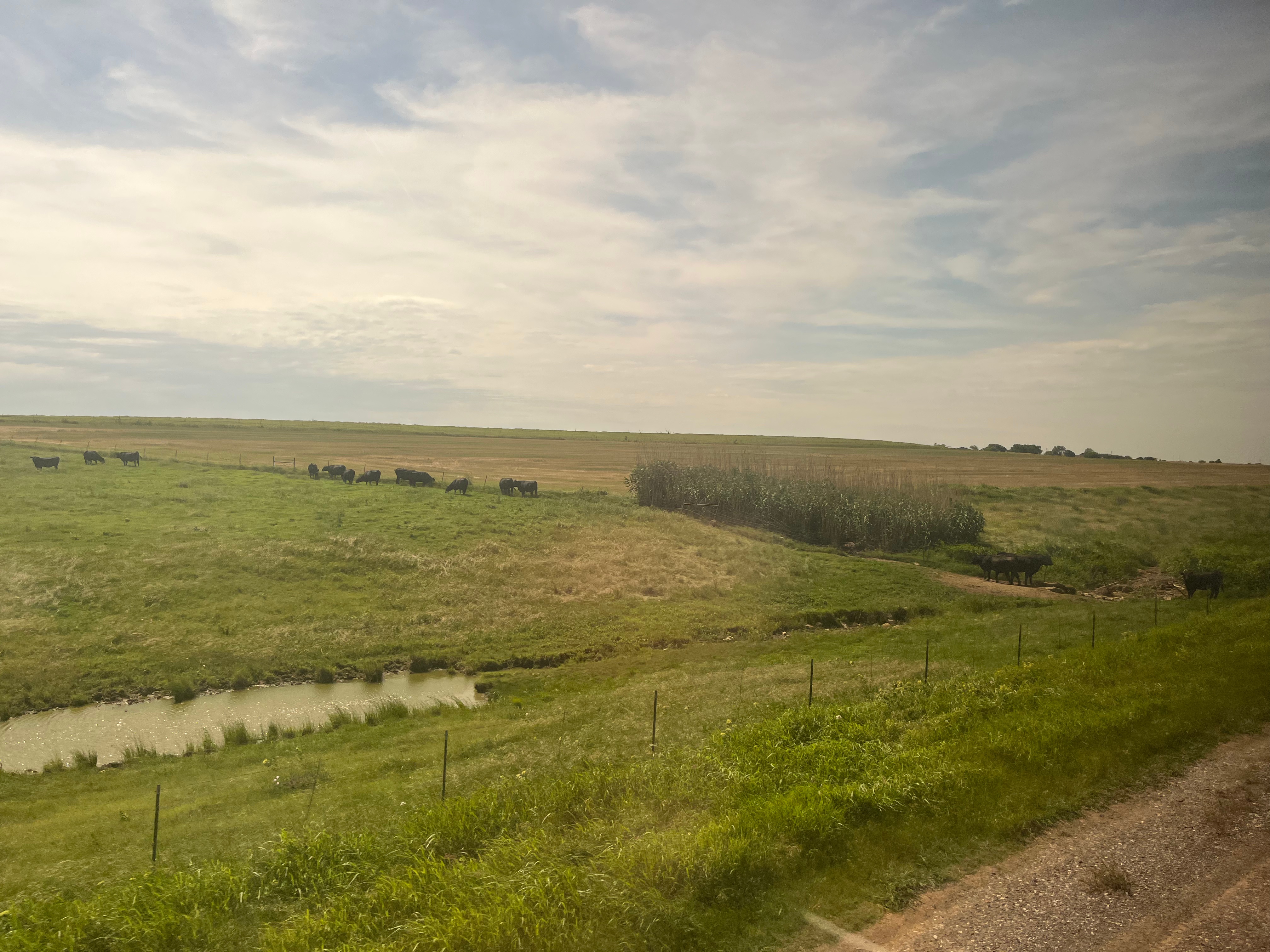
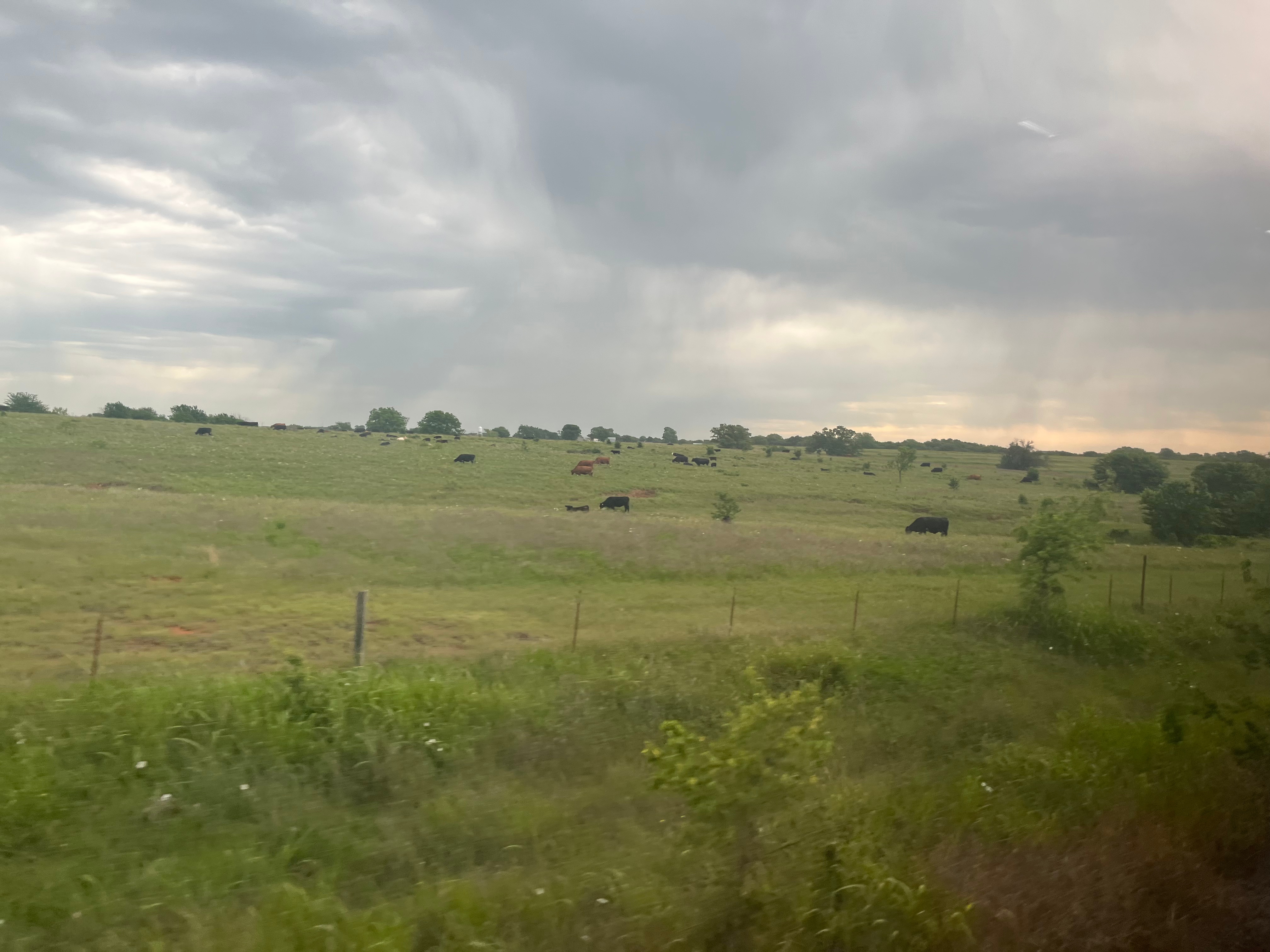
After crossing into Texas, the landscape became flatter and more open. At some point I briefly dozed off, though I did manage to notice the seemingly endless fields of cattle along the route. One thing I’ve always found funny about cows is that no matter how enormous the field is, they almost always seem determined to stand together in one small cluster.
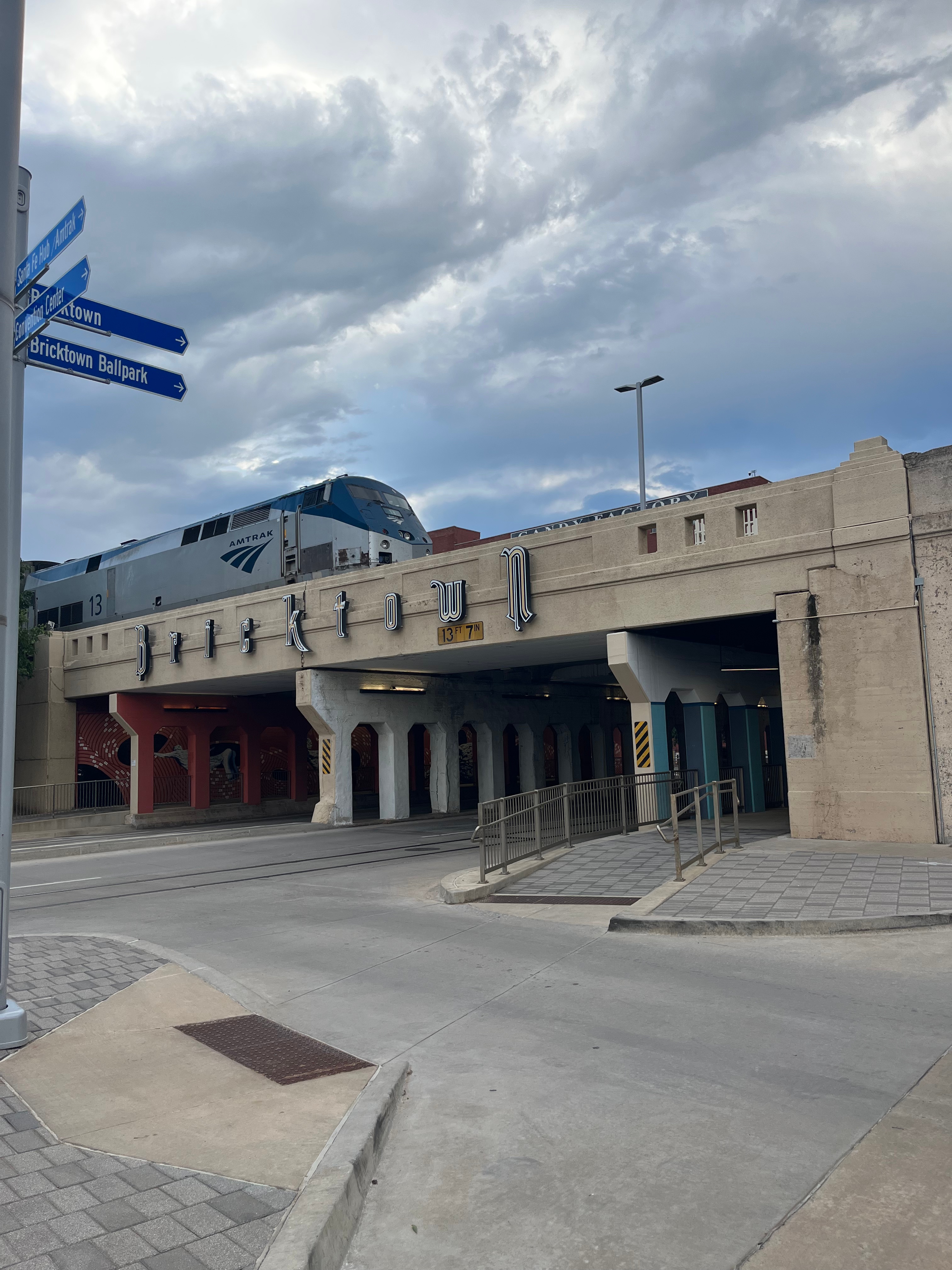
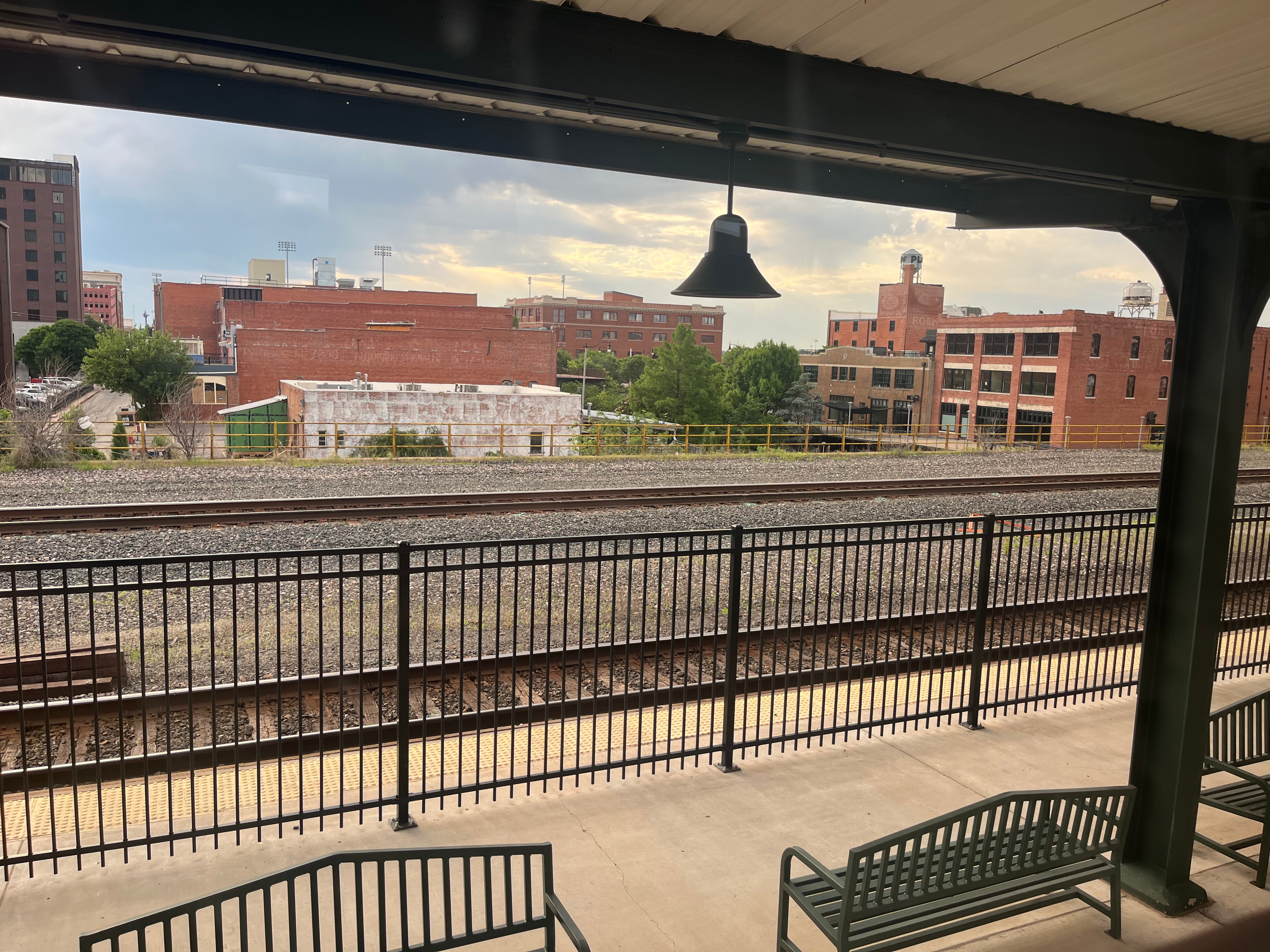
Not long after that, we arrived in Fort Worth right on schedule, which honestly might be a first for me on Amtrak
Final Thoughts
This hardly felt like a dying route. Plenty of passengers boarded in Oklahoma City, and we only picked up more as we rode south toward Fort Worth. It may have been helped by the fact that the train consist was only three cars, but as the conductor mentioned shortly after departure, the service was quite full for much of the trip.
From my perspective, the demand is clearly there. That’s part of what makes the funding situation so frustrating for supporters of the Heartland Flyer. Texas’ share of the operating costs was only around $2.6 million annually, which I’ve heard someone say is basically a rounding error in a state’s budget. Regardless of where one stands on passenger rail policy, it’s difficult to argue the route exists because nobody uses it or because it’s too expensive.
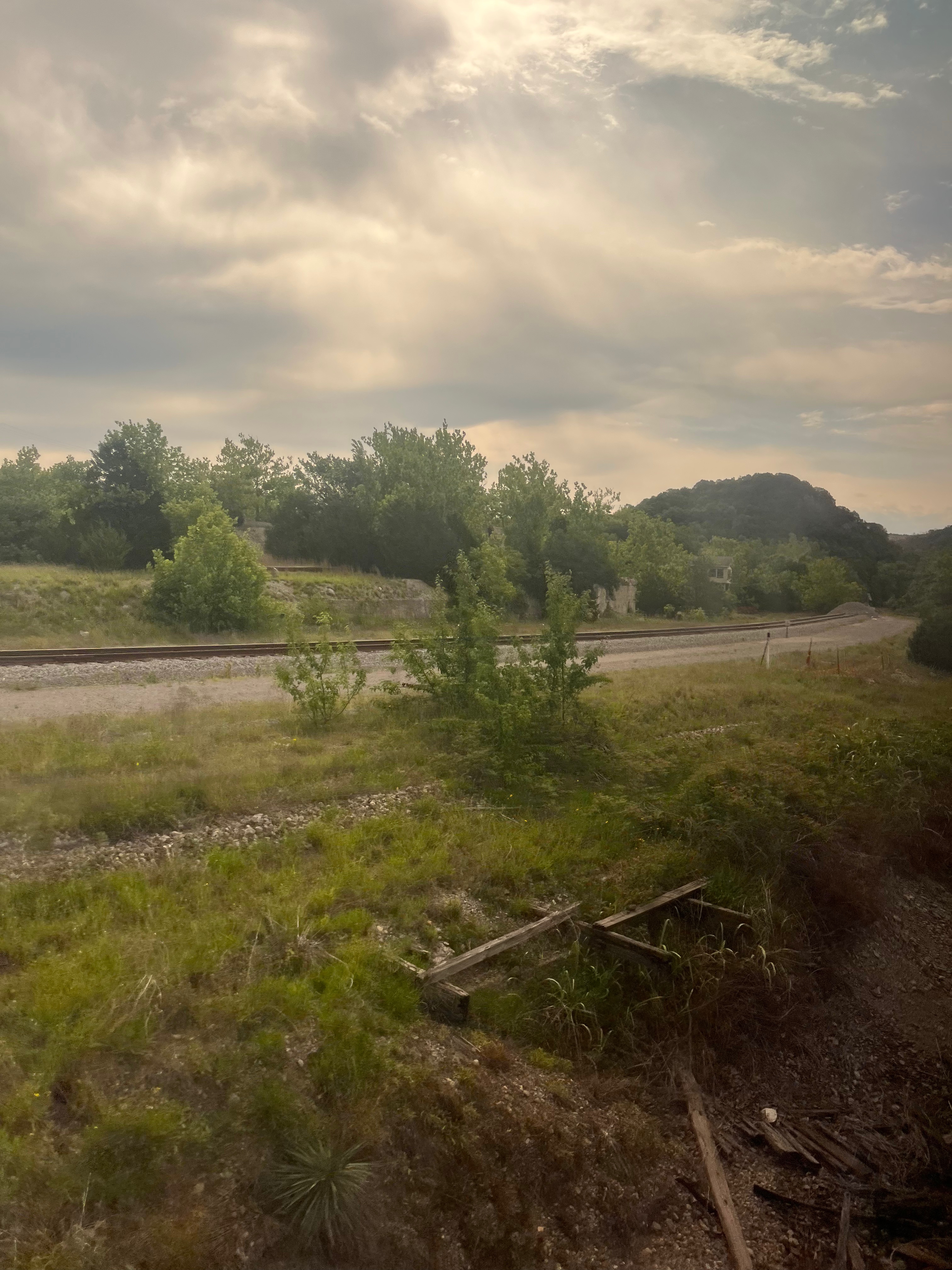
The route itself is also genuinely enjoyable. As mentioned earlier, the scenery is not necessarily jaw-dropping, but it’s consistently relaxing in a way that suits rail travel well. The open fields, scattered towns, and green stretches of Oklahoma and North Texas pair nicely with the Superliner equipment typically associated with Amtrak’s western long-distance trains. There’s also something satisfying about avoiding I-35 entirely. The scheduled travel time between Oklahoma City and Fort Worth is around four hours (only about an hour longer than driving under ideal conditions) and personally, I think the extra time is more than worth it.
Ironically, my biggest suggestion for the route would adding another daily round trip, which I know is the exact opposite of eliminating it. Right now, the schedule is set up to have southbound morning departures and northbound evening departures. That works well for Oklahoma-based passengers making day trips into Texas, but it’s much less convenient in the opposite direction unless Texans are willing to spend the night in Oklahoma. Those wanting to go to Fort Worth after work on the weekdays would also benefit as they wouldn’t have to take an extra day off. A second departure would make the route substantially more useful for regional travel in both directions.
But beyond all the talk of funding and schedules, as mentioned before, this trip ultimately happened because of a family member’s accomplishment. At the time of posting this, we’re getting ready for my brother’s graduation. It’s a bit strange to think my parents are fresh out of kids through Baylor (despite both of them going to Texas A&M). That’s probably on me for going first and not really accounting for the fact that my brothers would more or less follow the same path I did. My mom even got Grant, our academic advisor, a gift since he ended up advising all of us based on last name and major. In hindsight, we probably gave Grant much more than he originally bargained for.


Leave a Reply