The Amtrak Vermonter runs daily between Washington, D.C. and St. Albans, Vermont, just 14 miles shy of the Canadian border.
You may be wondering why anyone would voluntarily go to Vermont in mid-February. Fair question. But this trip was more about the route itself for me. After riding the Empire Builder, I wanted to check off another full Amtrak route without turning it into a major vacation or overnight sleeper experience. That meant finding something long, scenic, and with a terminus in Washington. The Vermonter fit perfectly.
In fact, Amtrak itself named the Vermonter one of its best routes for winter scenery. If there were ever a time to test that claim, mid-February seemed like it.
Northeast Amtrak Routes
While definitely not my first time riding an Amtrak train in the northeast, this is the first time I’ve written about it. As you may know, there are several routes that run in this region, making it a little confusing when trying to decide on which train to take. It’s especially confusing when you realize several of the routes hit similar stations. So, if you’re trying to get anywhere between D.C. and New York, you have a pretty good chance of making it if you jump on any train. If you need to get anywhere else though, below is a great map that clearly illustrates what routes run through the region and which stops are covered by which routes. The Vermonter is the green line, which is combined with several other routes that run basically the same route.
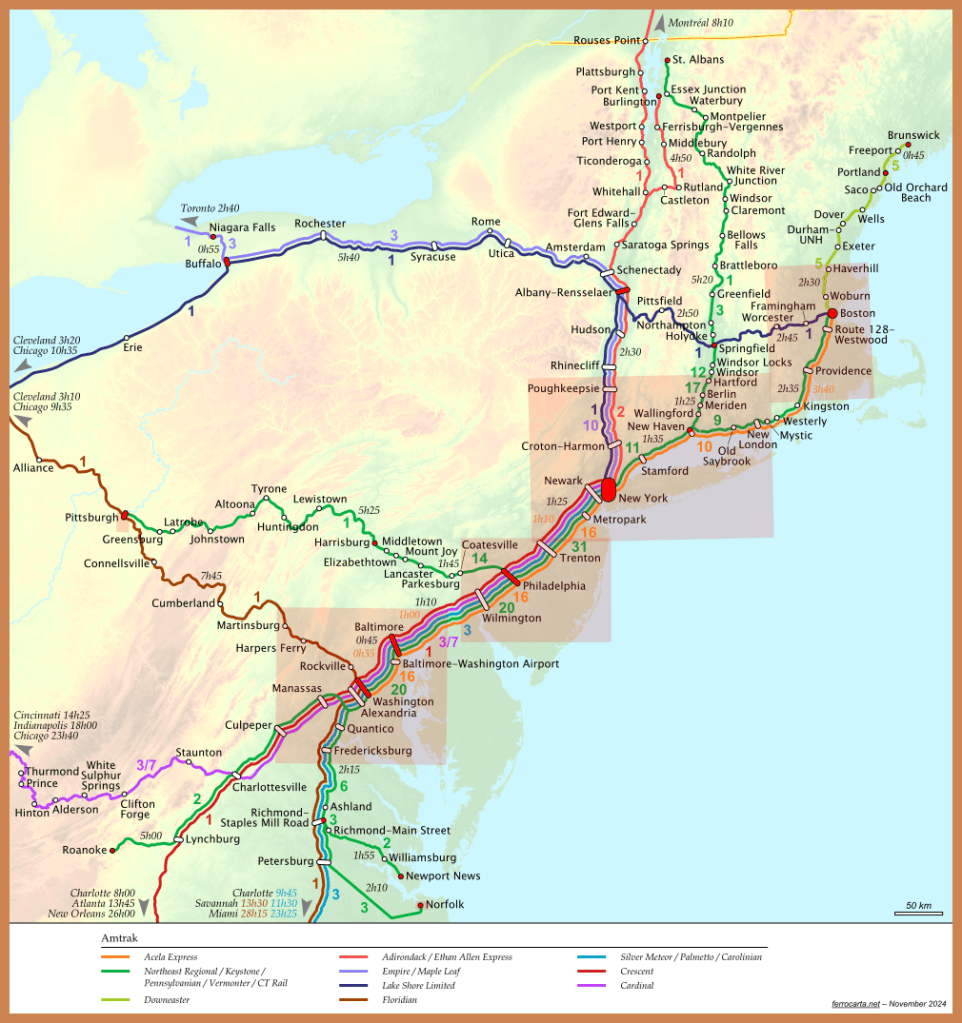
Don’t be confused though – the Northeast Regional and other listed routes are different services. Anything below D.C. and those offshoots from Philadelphia and New Haven are not part of the Vermonter. If you’re trying to figure out if the Vermonter goes to the city you’re trying to get to, I suggest looking at the train’s schedule on the Amtrak website.
Route History
Below are a few key dates and fun facts about this route. This is by no means a comprehensive history, but just a few things you can bring up to your fellow passengers if you take this ride.
June 1924 – The Montrealer/Washingtonian started service. This was an overnight service than ran between Washington, D.C. and Montreal. The northbound route was known as the Montrealer while the southbound route was known as the Washingtonian
1966 – The Montrealer discontinued service (for the same reasons most passenger trains wanted to end service around this time…)
1972 – Amtrak restarted Montrealer service almost a year after its creation
July 1984 – A derailment occurred near Essex Junction when severe flooding caused track washout, killing several passengers and crew and injuring many others
April 1995 – The Montrealer is discontinued and the Vermonter as we (mostly) know it begins
2010 – The Department of Transportation granted $50 million to the State of Vermont to improve 190 miles of track between St. Albans and Vernon
July 2021 – Amtrak restarted service on the Vermonter after a 16-month break due to Covid
April 2025 – The Vermonter celebrated its 30th anniversary
Route By the Numbers
Miles Covered: ~611
Hours: ~14 (without delays)
FY 2024 Ridership: 132,601
2024 On Time Rate: 68.2%
2024 Average Minutes Late per Customer: (average late arrival for trains arriving late. Does not include on time trains): 31 minutes
Also, another numbers-based fun fact is that if you take this route the entire way, you’ll be part of the 0.4% that does!
Day 1 – Northbound from D.C.
I live about a mile and a half from Union Station, so my travel day began with a short ride through the quiet early-morning streets. There’s something to be said about being able to start a train journey at the very beginning of the route rather than having to fly or ride a train out to a terminus.
If you’ve never taken Amtrak before (like several people I met on my trip actually), boarding is usually chaotic, especially at large, popular stations such as D.C.’s Union Station or New York’s Moynihan Train Hall. Unlike air travel, you don’t know your track until about 15 minutes before departure and seats are first-come, first-served (unless you’re in business class or in a sleeper accommodation). At aforementioned big stations, that means a loose semicircle of passengers gathered under the departure board, all trying to look as nonchalant as possible. However, the moment the track number flashes on the screen, that nonchalant attitude quickly dissolves as everyone breaks into a brisk, but polite power-walk.
Fortunately, I out-power-walked most of the pack and got a good window seat. I was hoping to get my own row, but had someone sat next to me, which is honestly not surprising on a route that links major East Coast cities like Baltimore, Philadelphia, and New York. I had various seatmates up until Windsor Locks, which is a few stations after New Haven.
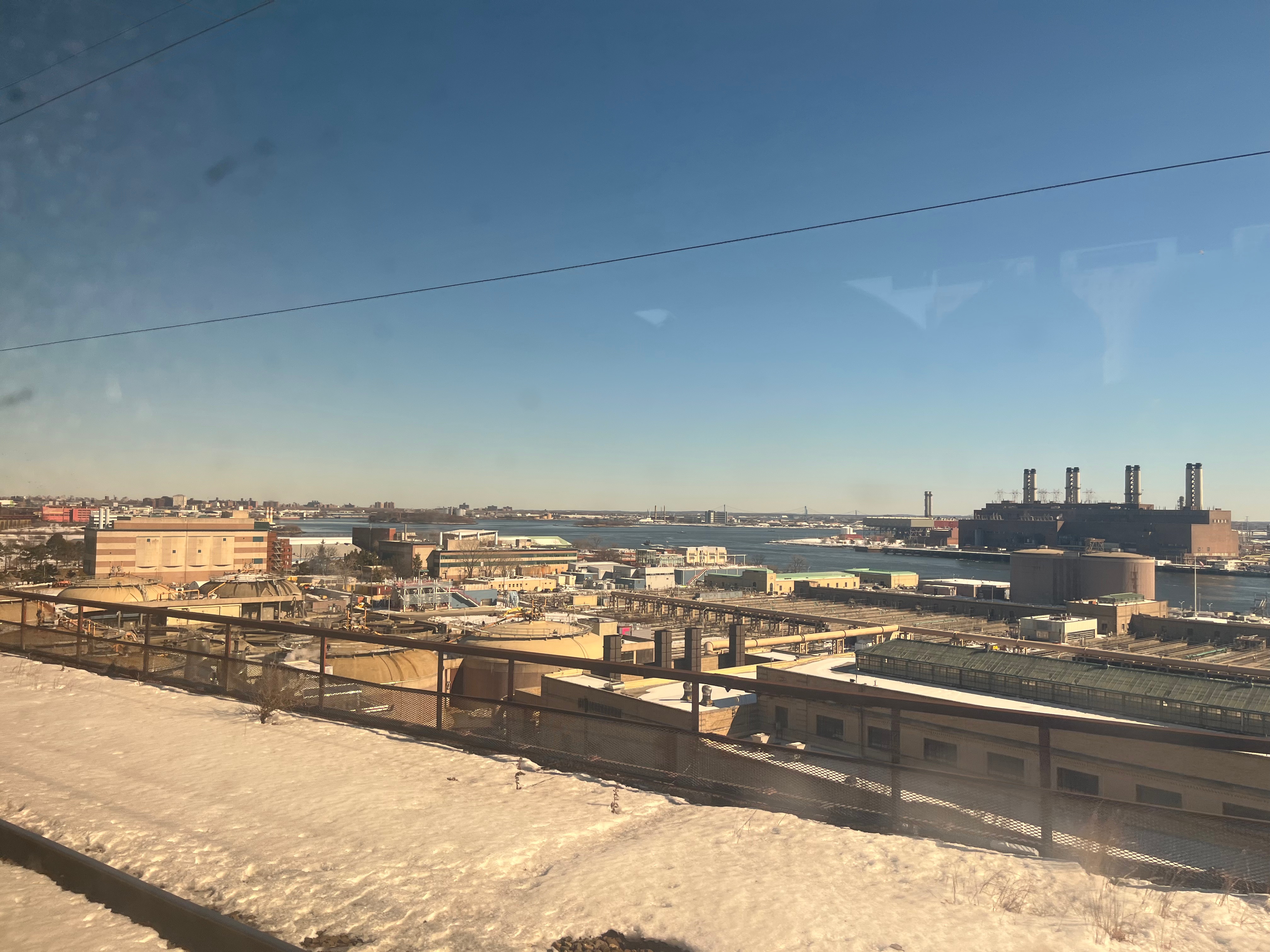
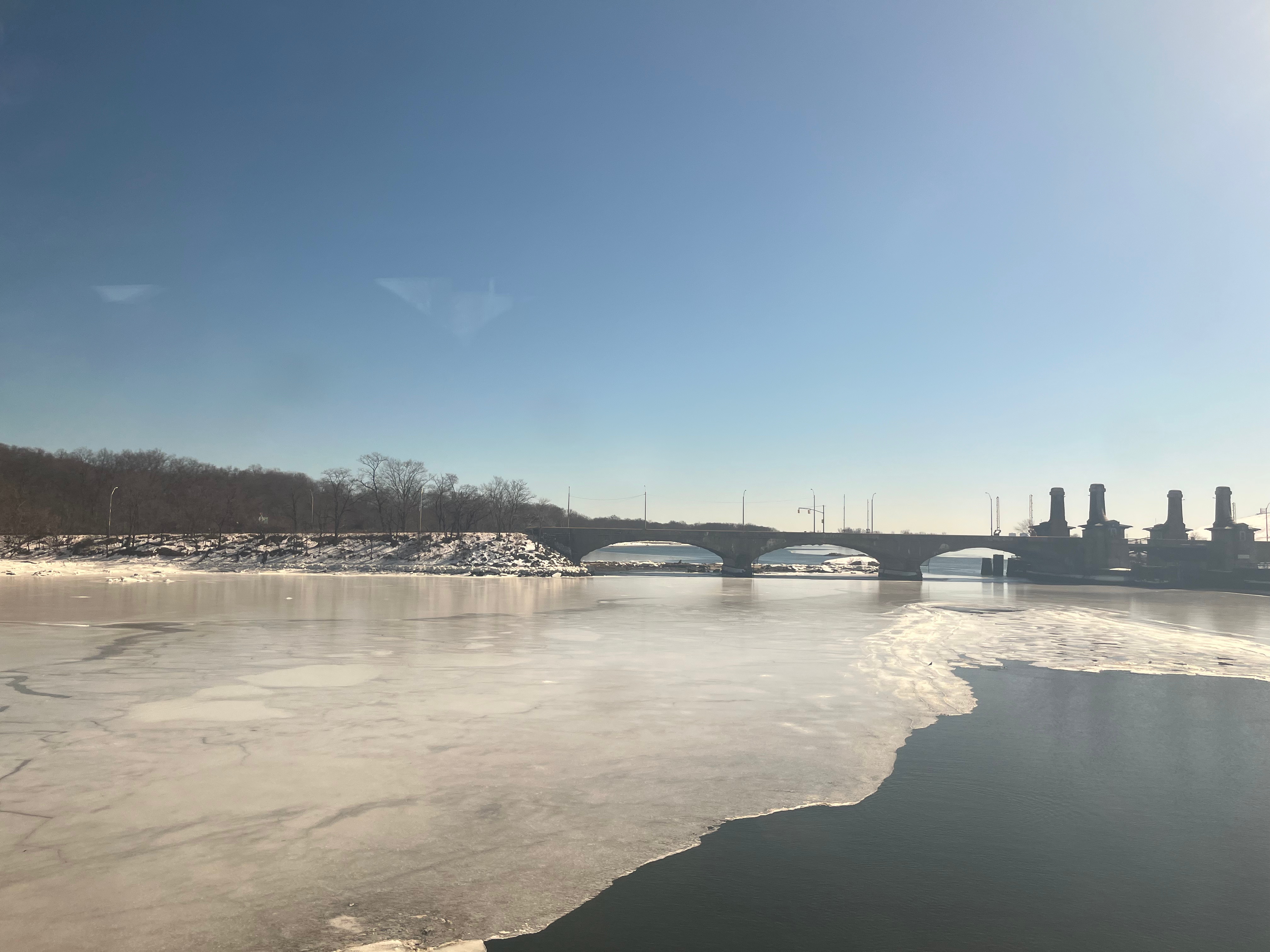
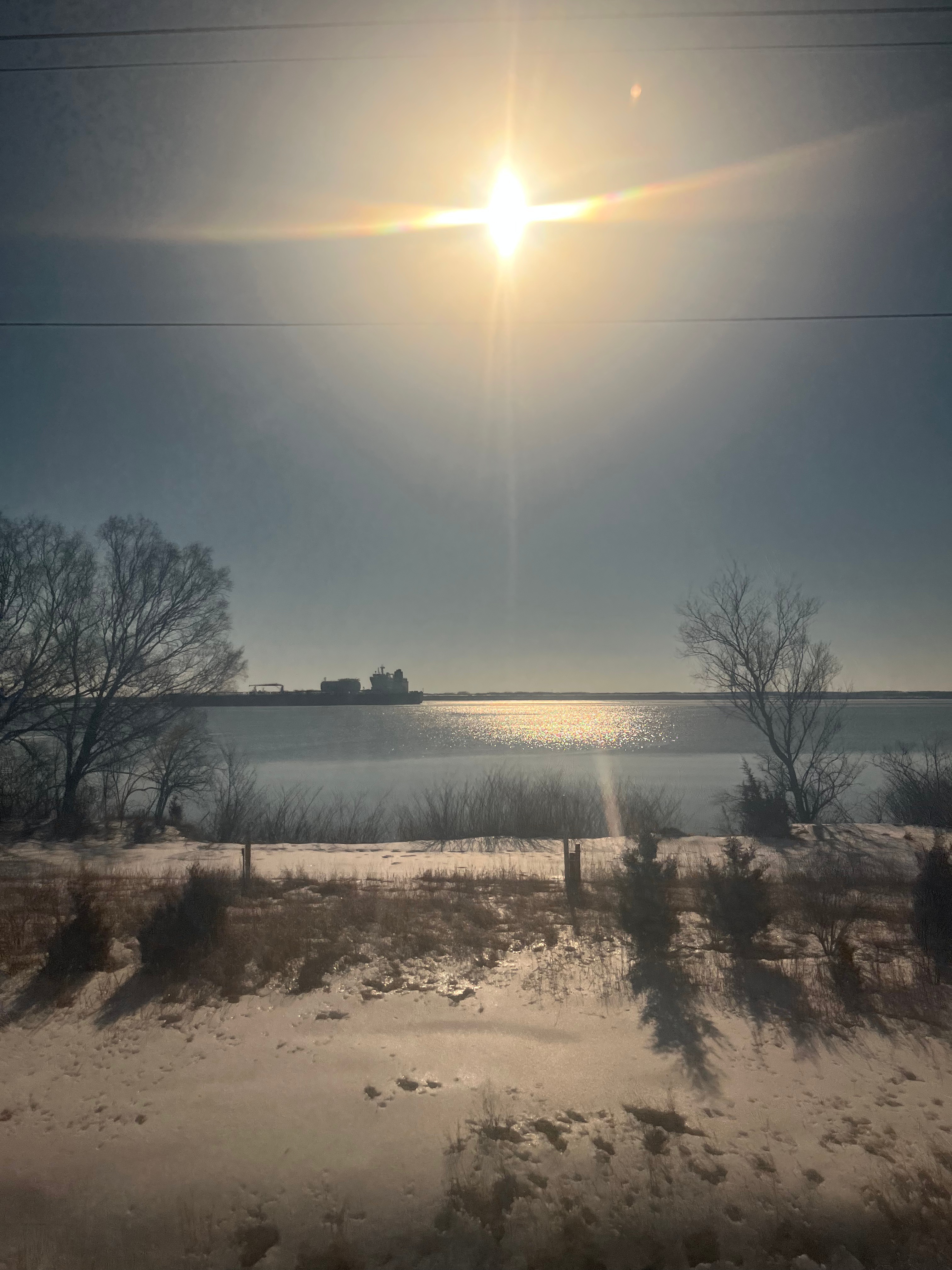
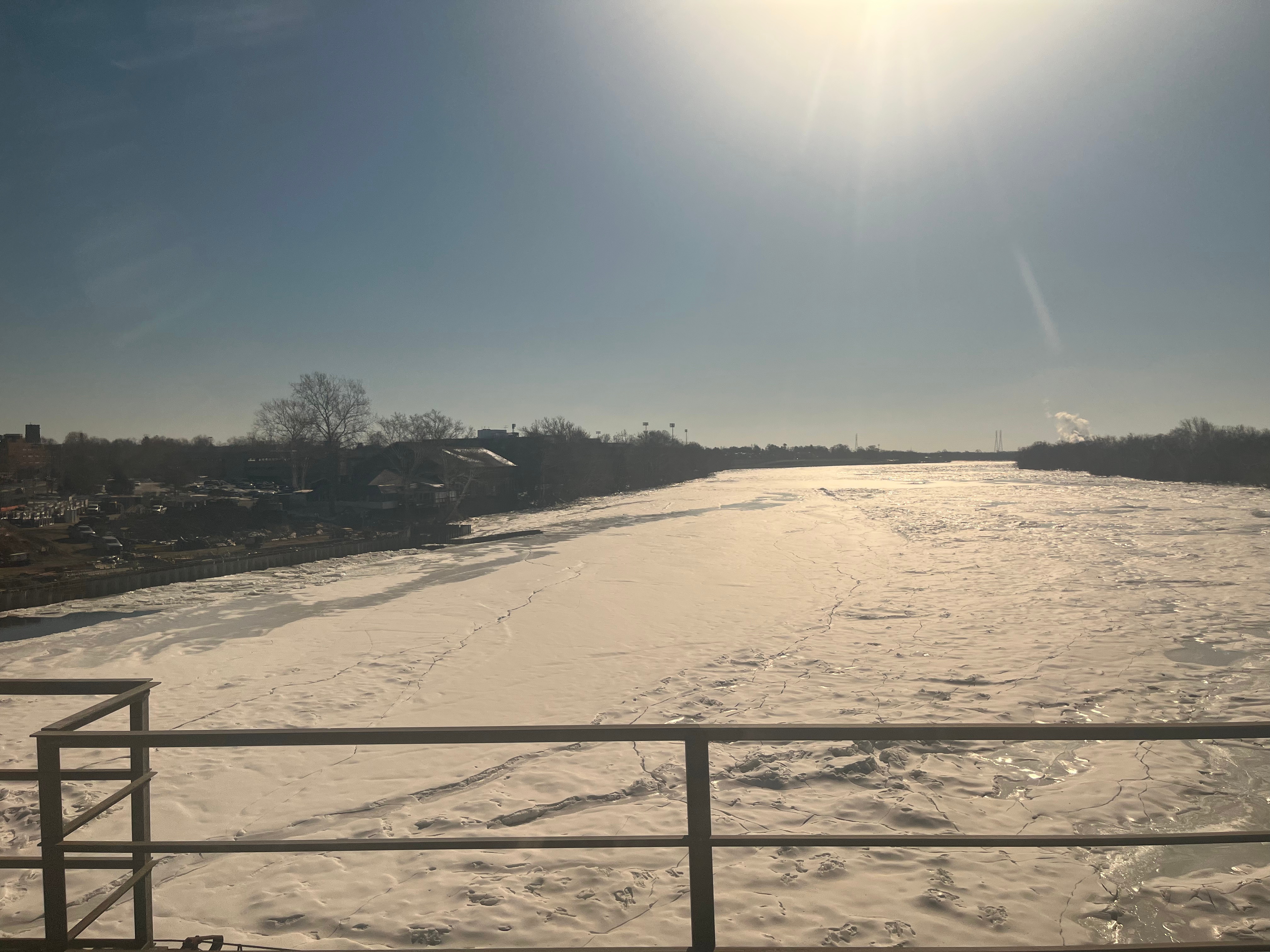
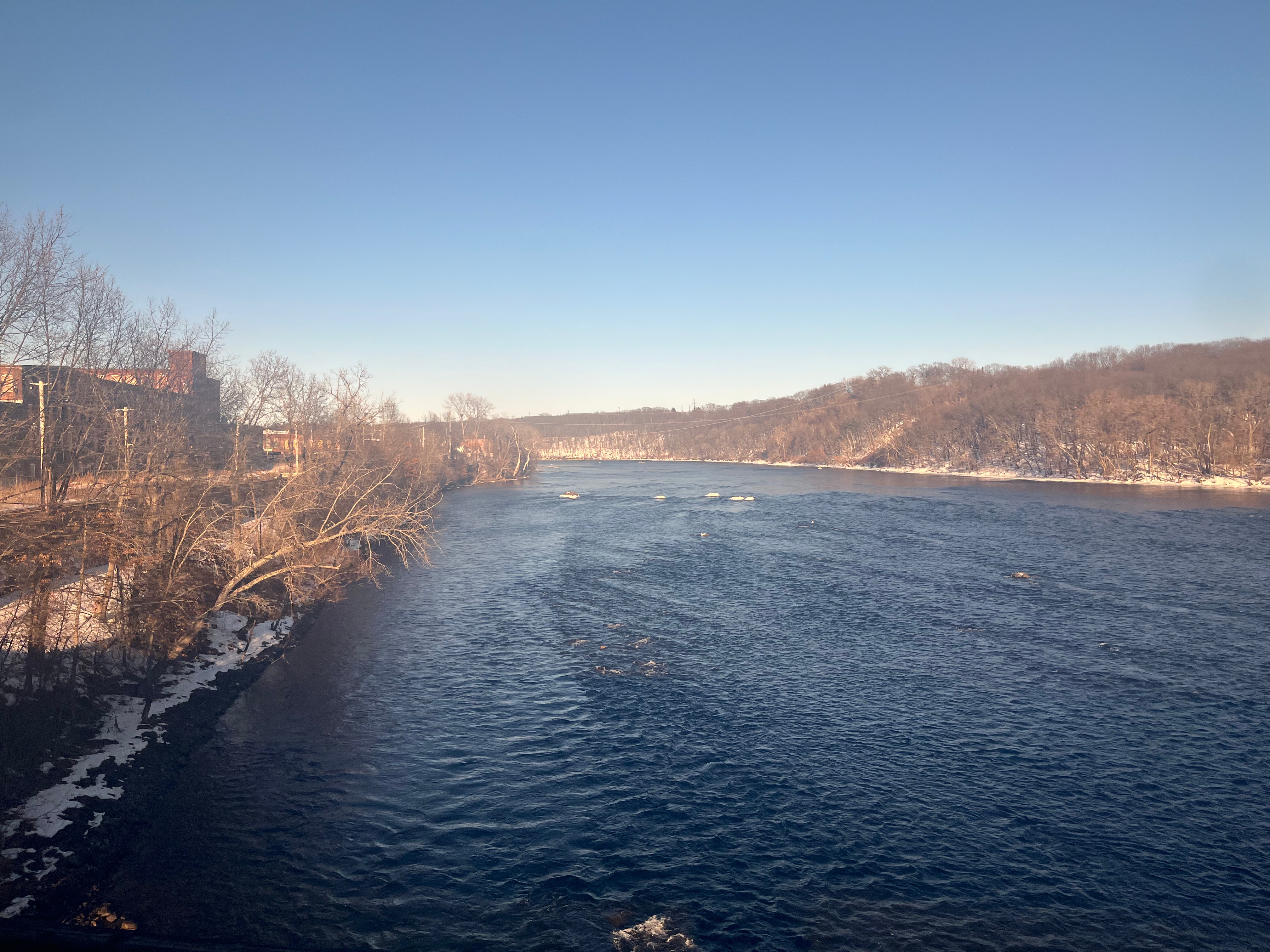
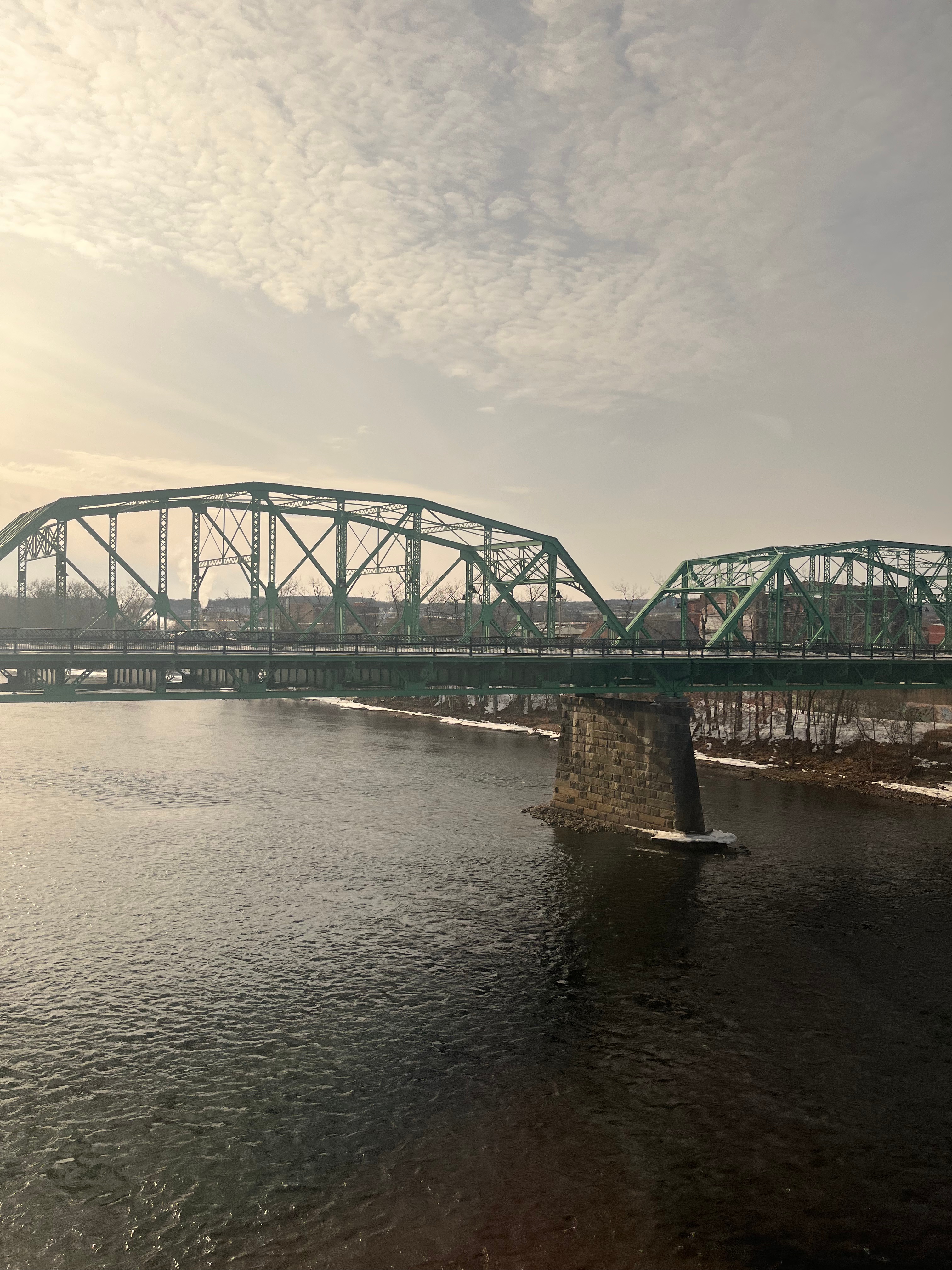
We pulled out right on time at 8:10 a.m. The D.C. to New York portion felt familiar to me as I’ve ridden it several times, but if this is your first trip, I’d suggest sitting on the right side heading north (toward St. Albans) and on the left heading south (toward D.C.). You’ll get amazing views of the Chesapeake Bay, stretches of Long Island Sound, and eventually the Connecticut River.
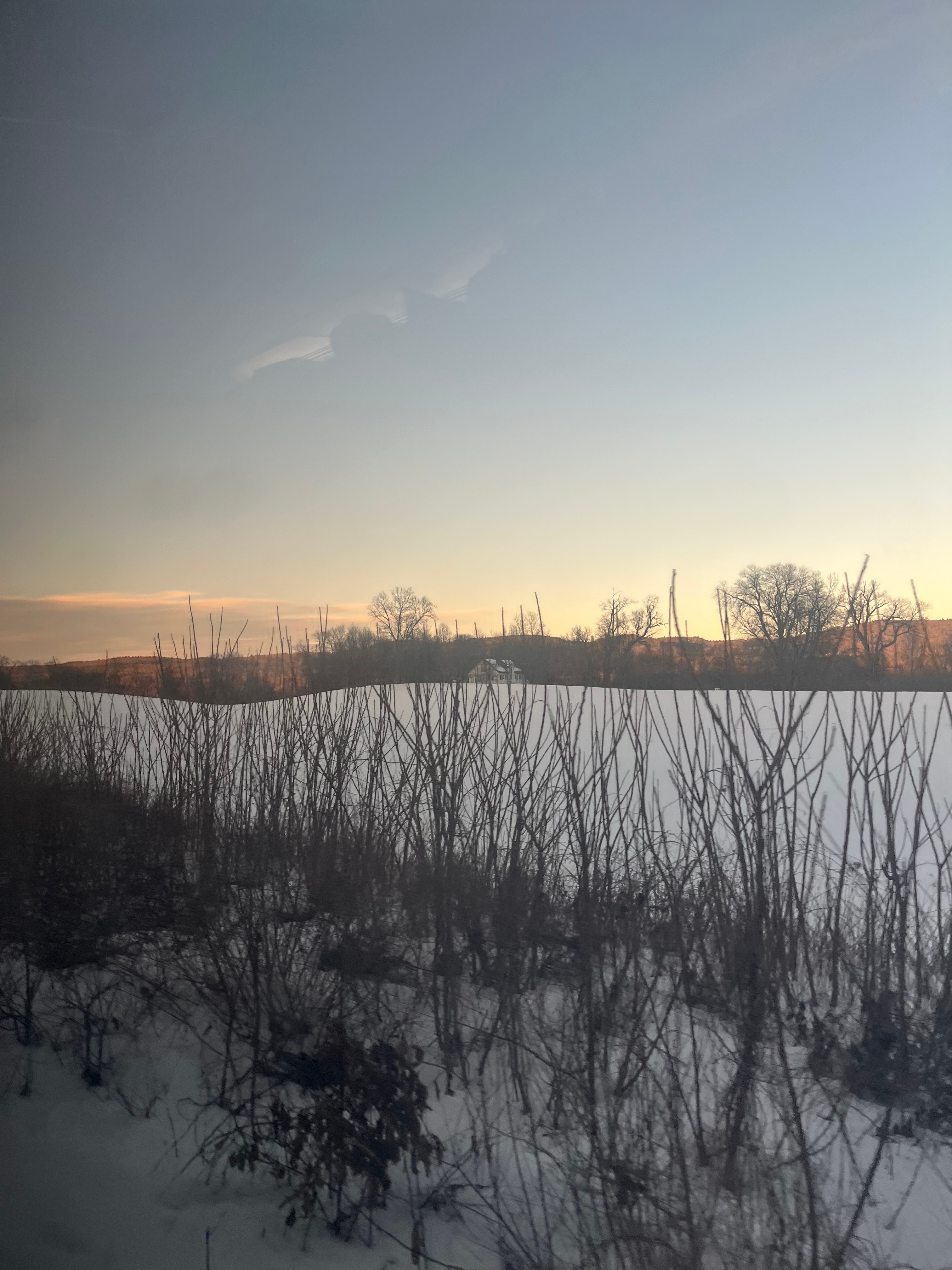
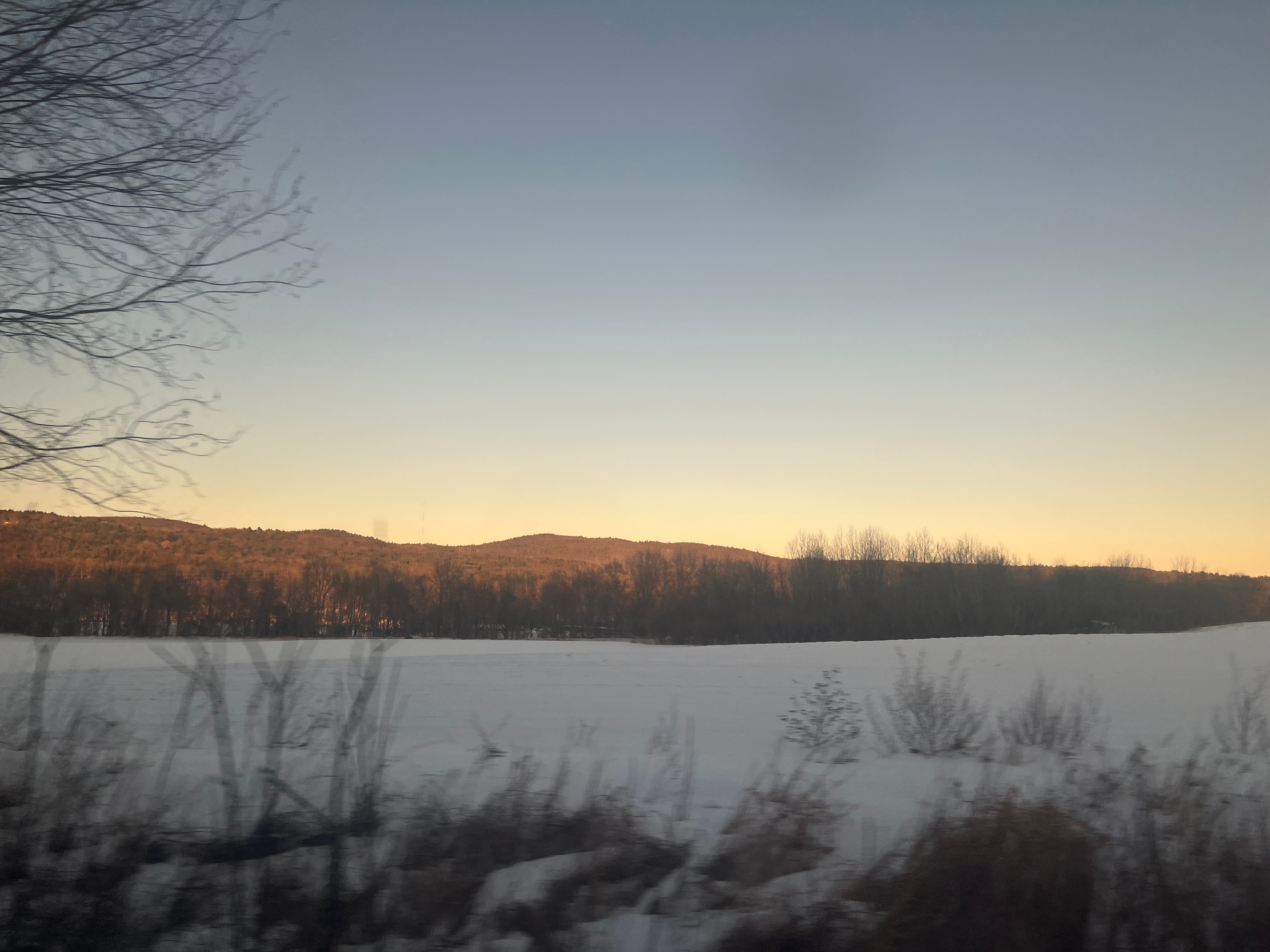
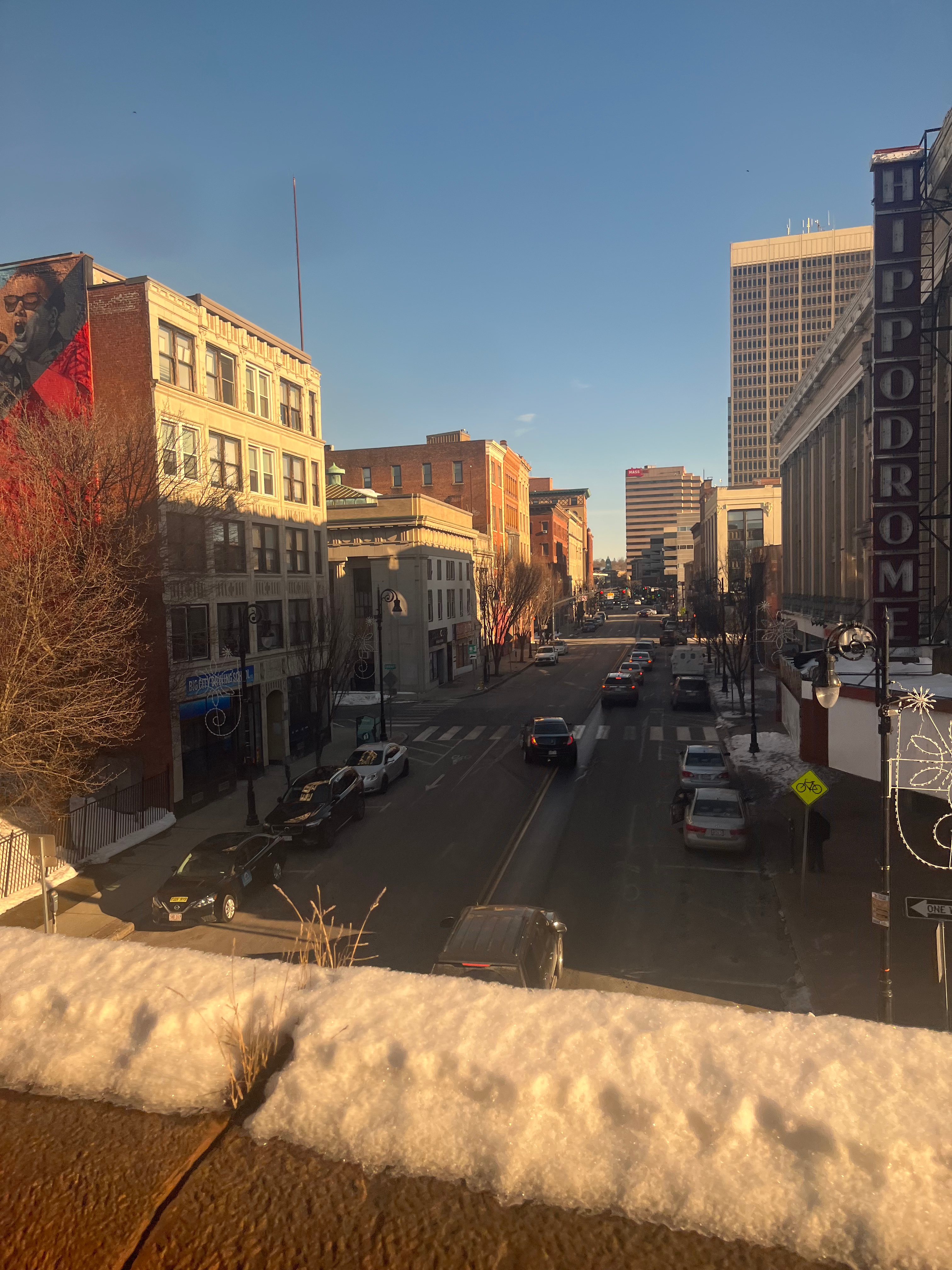
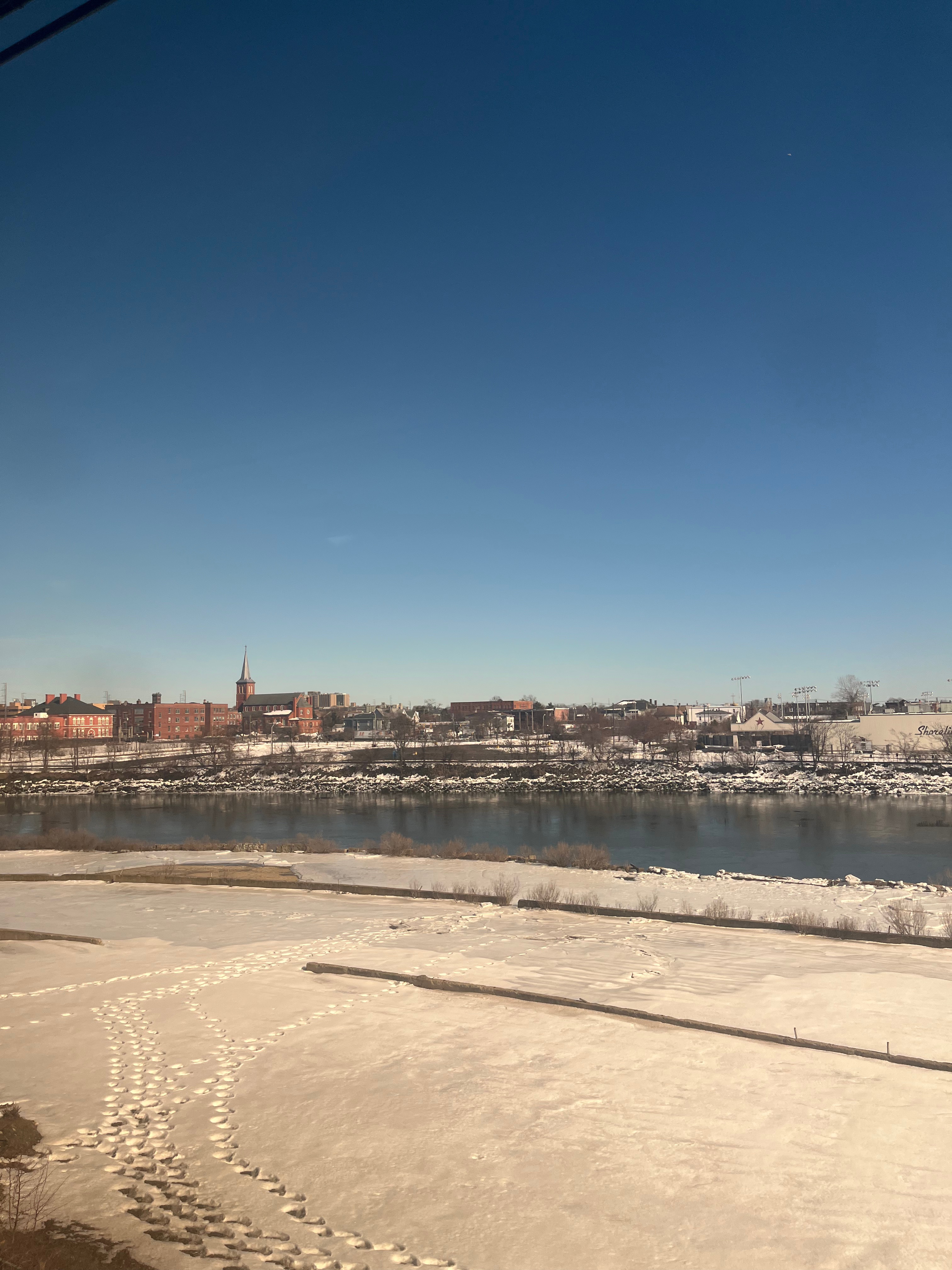
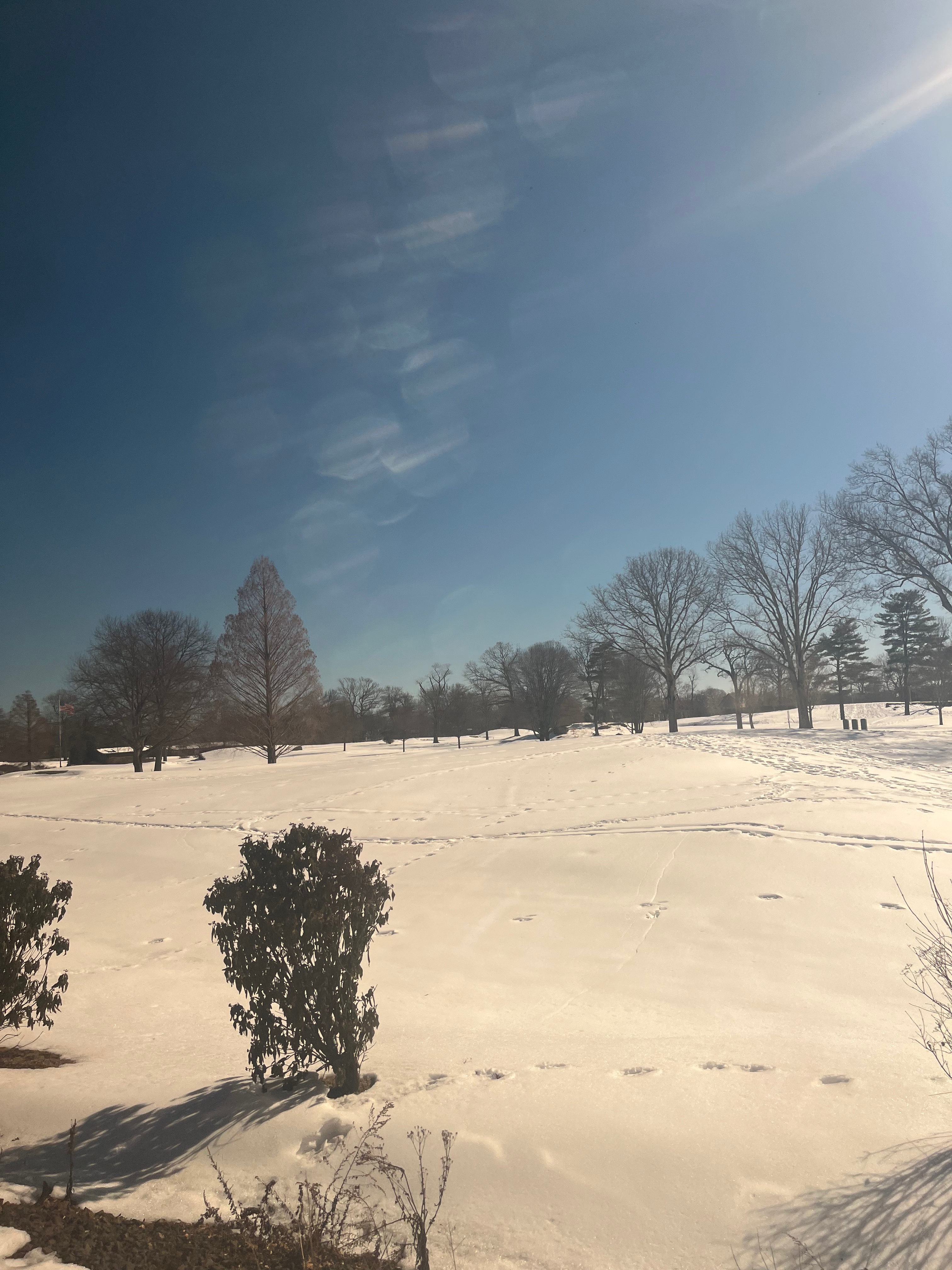
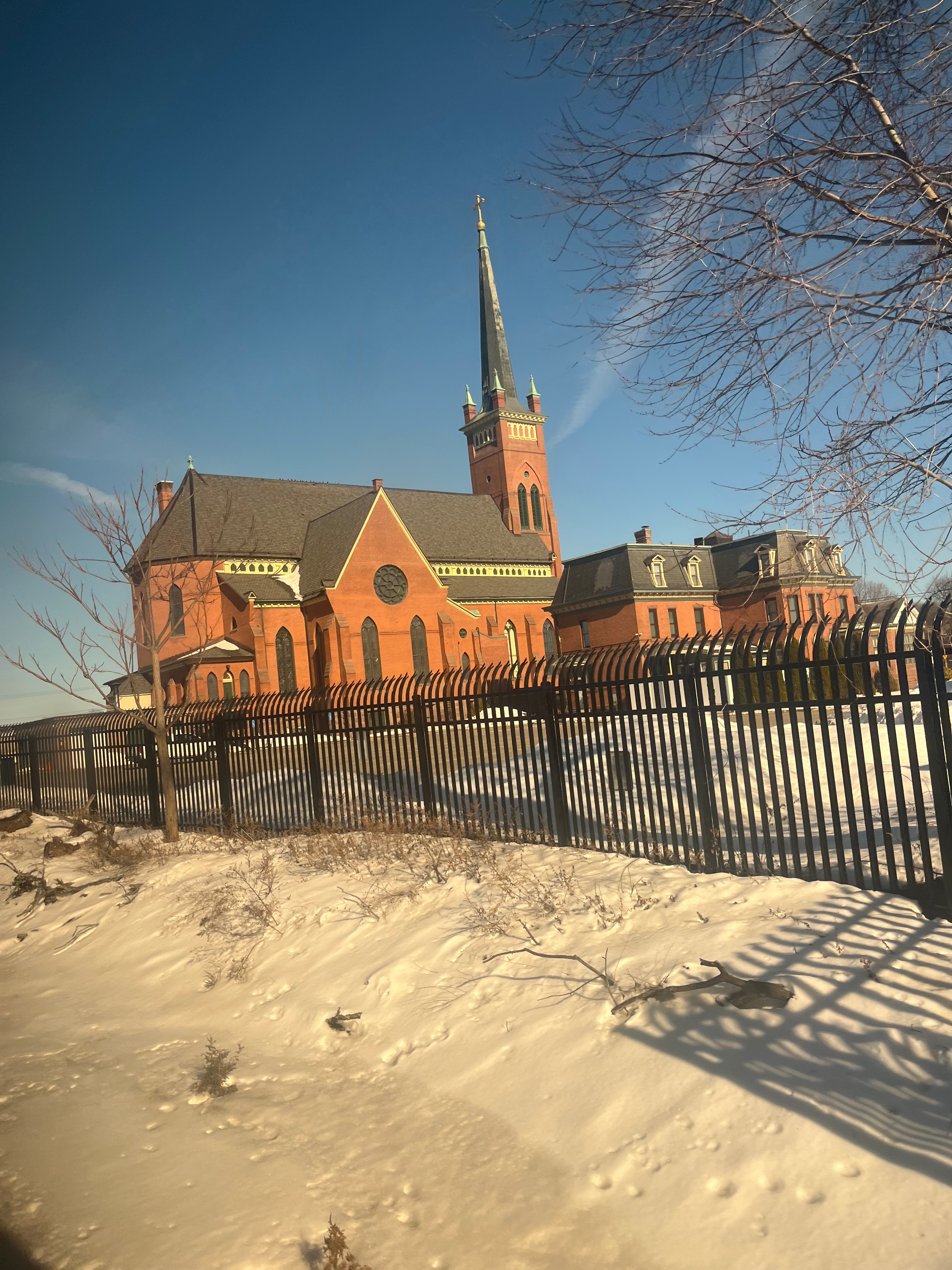
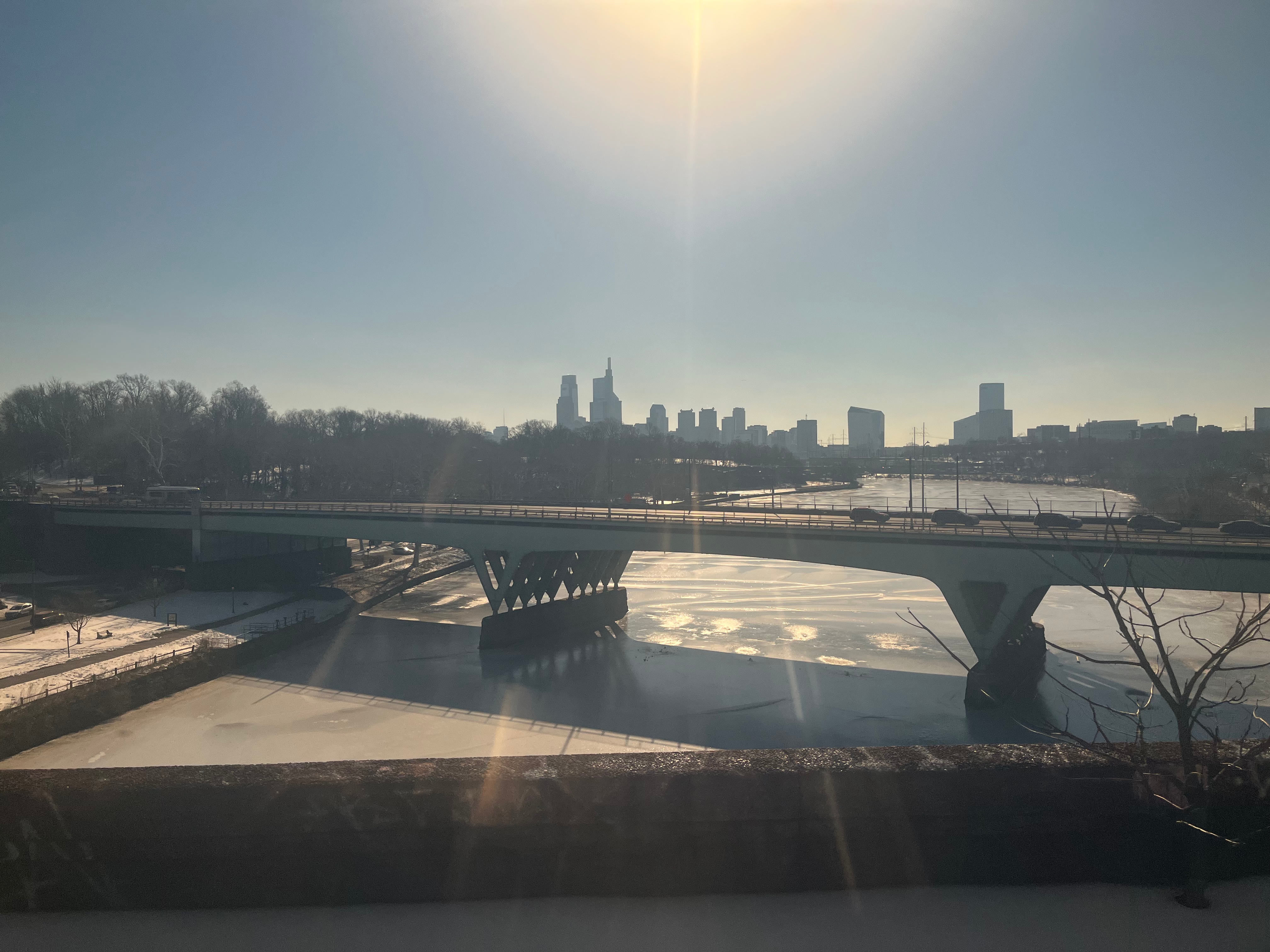
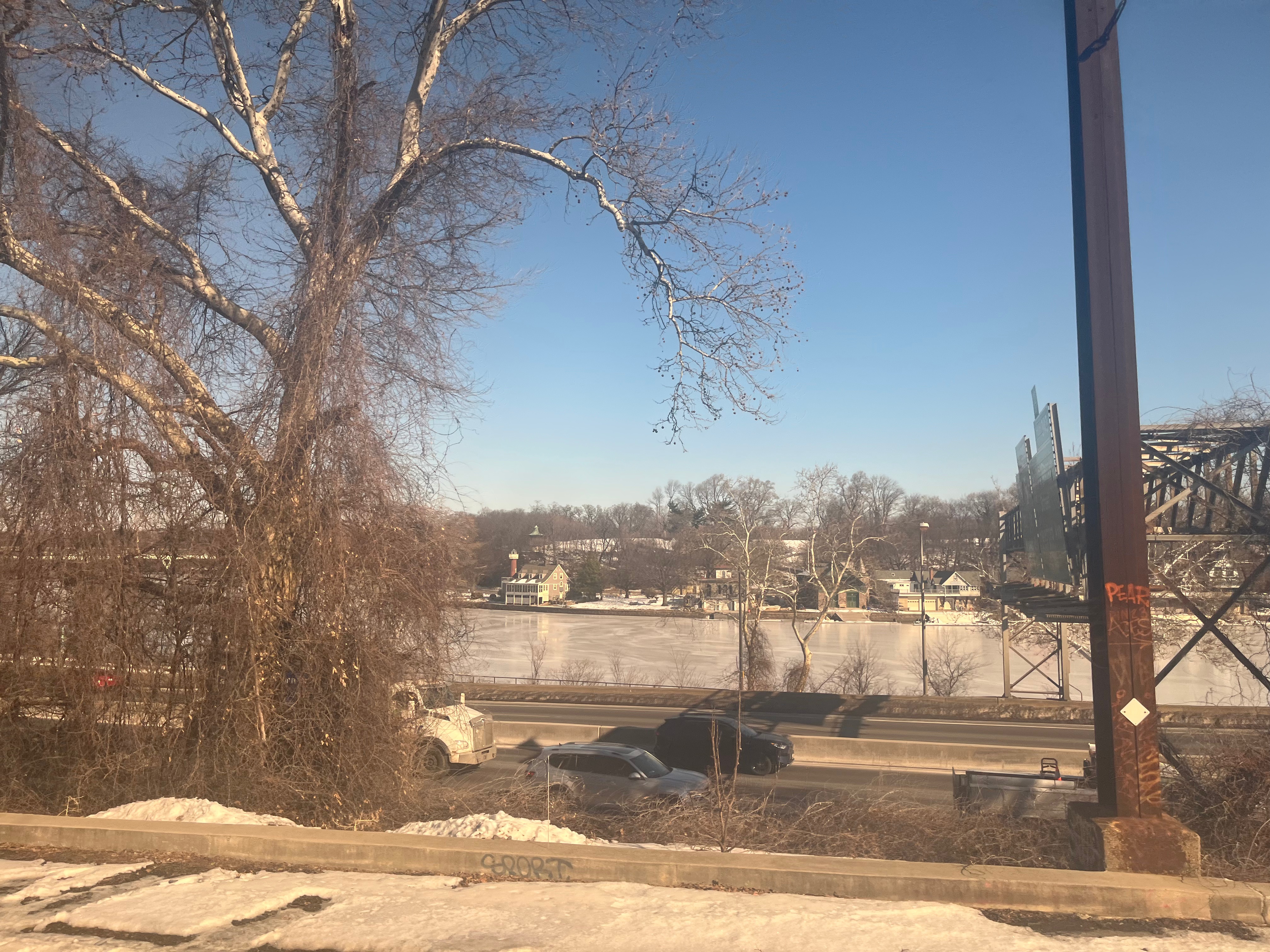
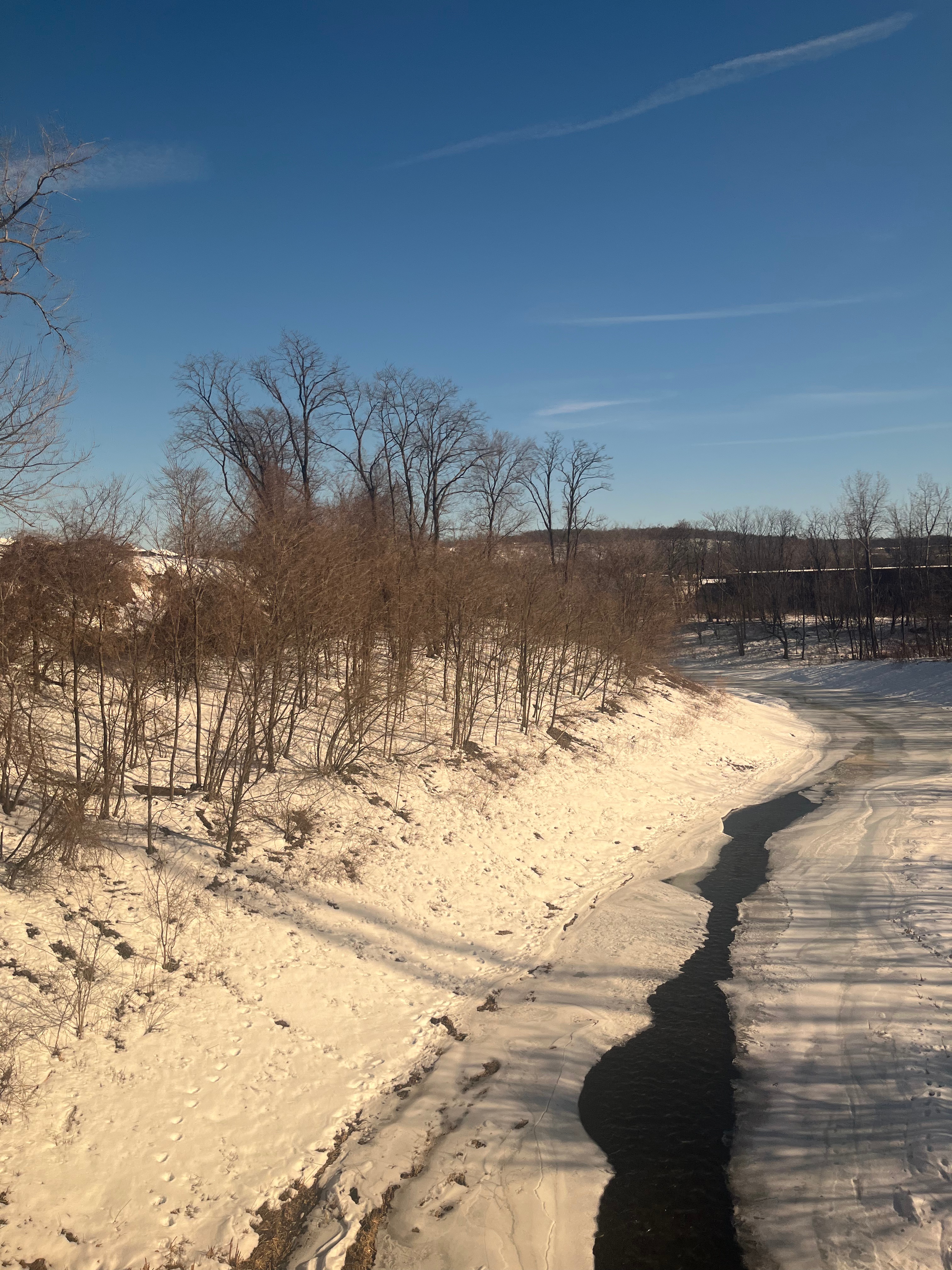
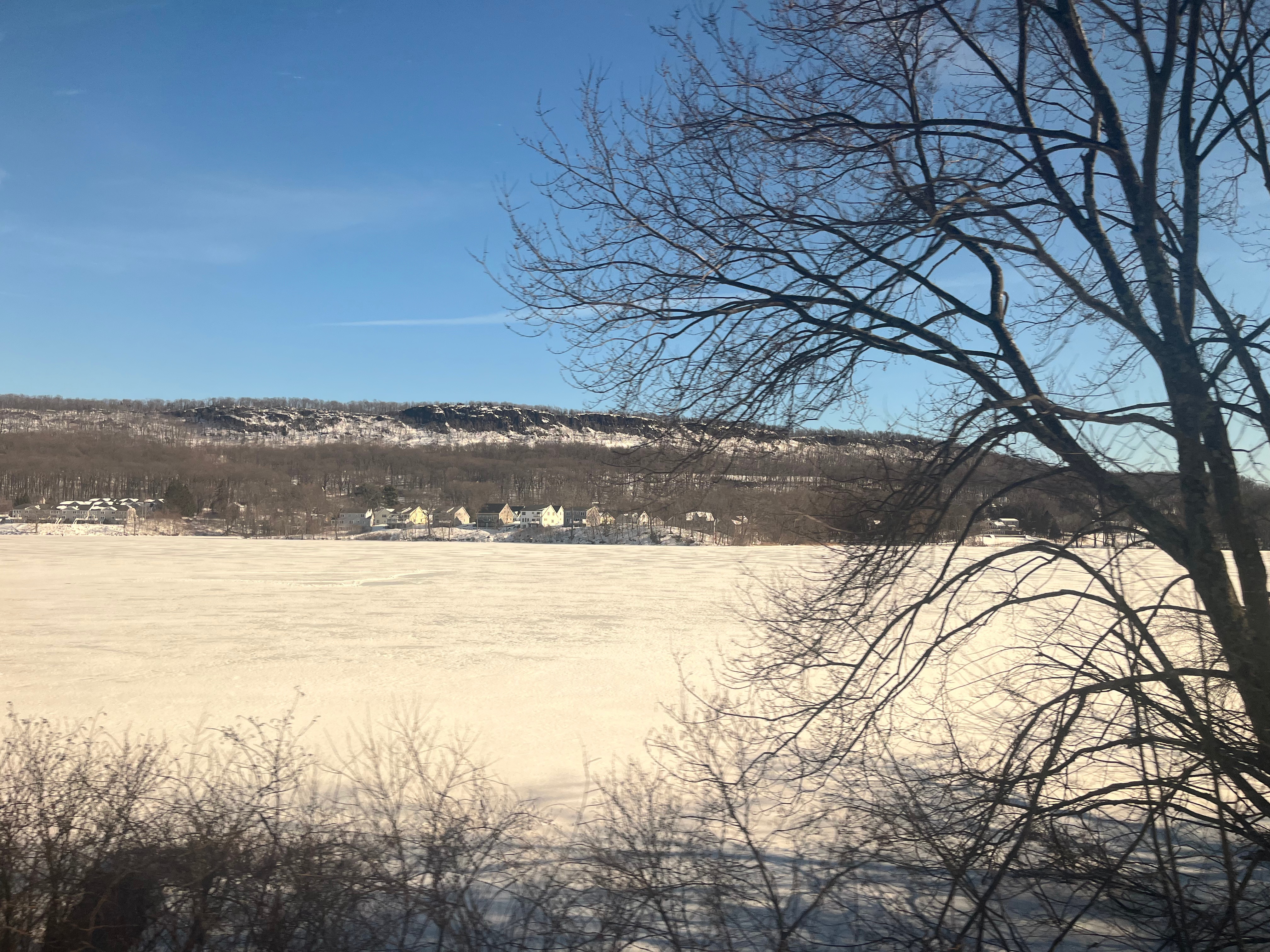
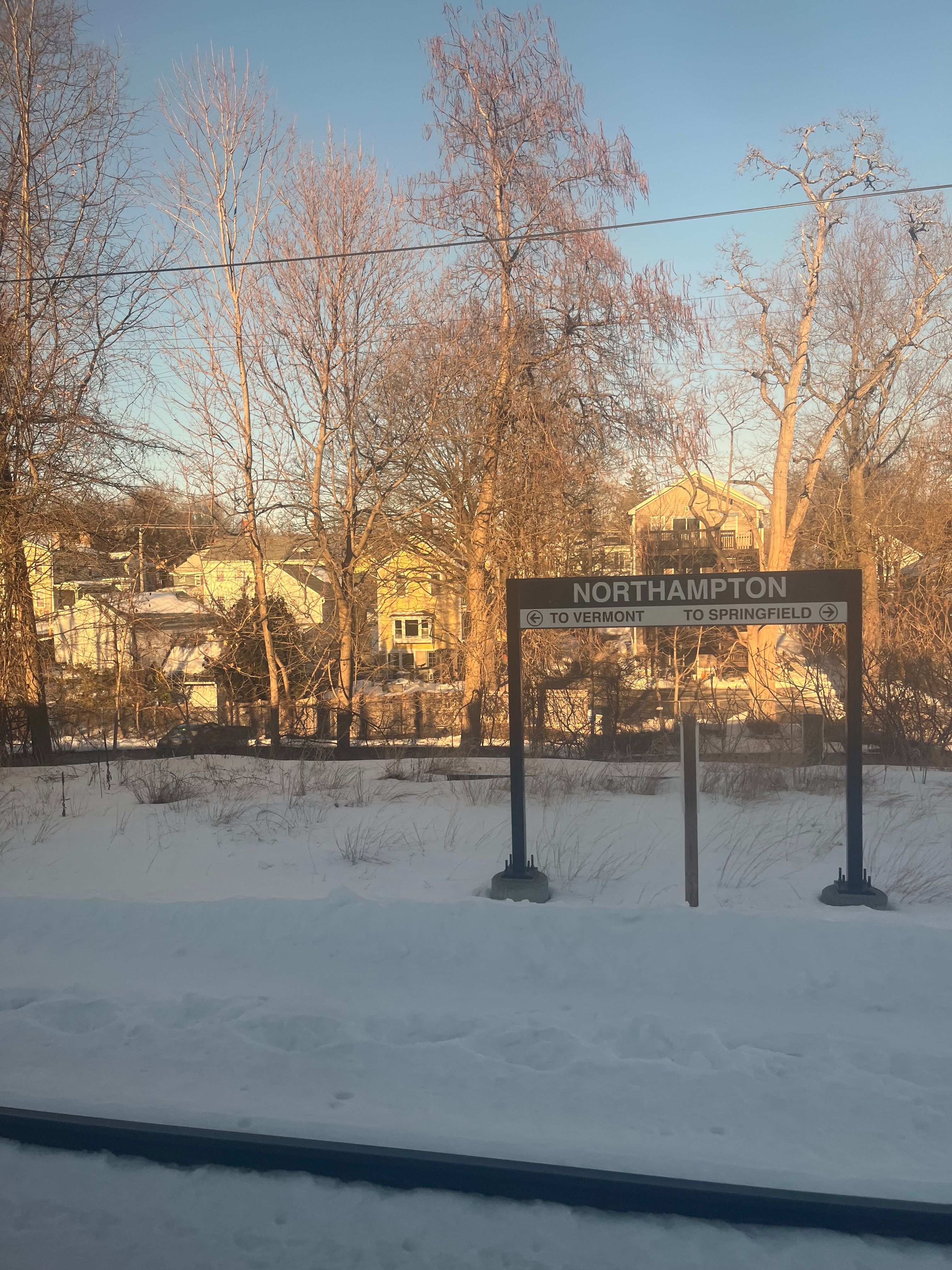
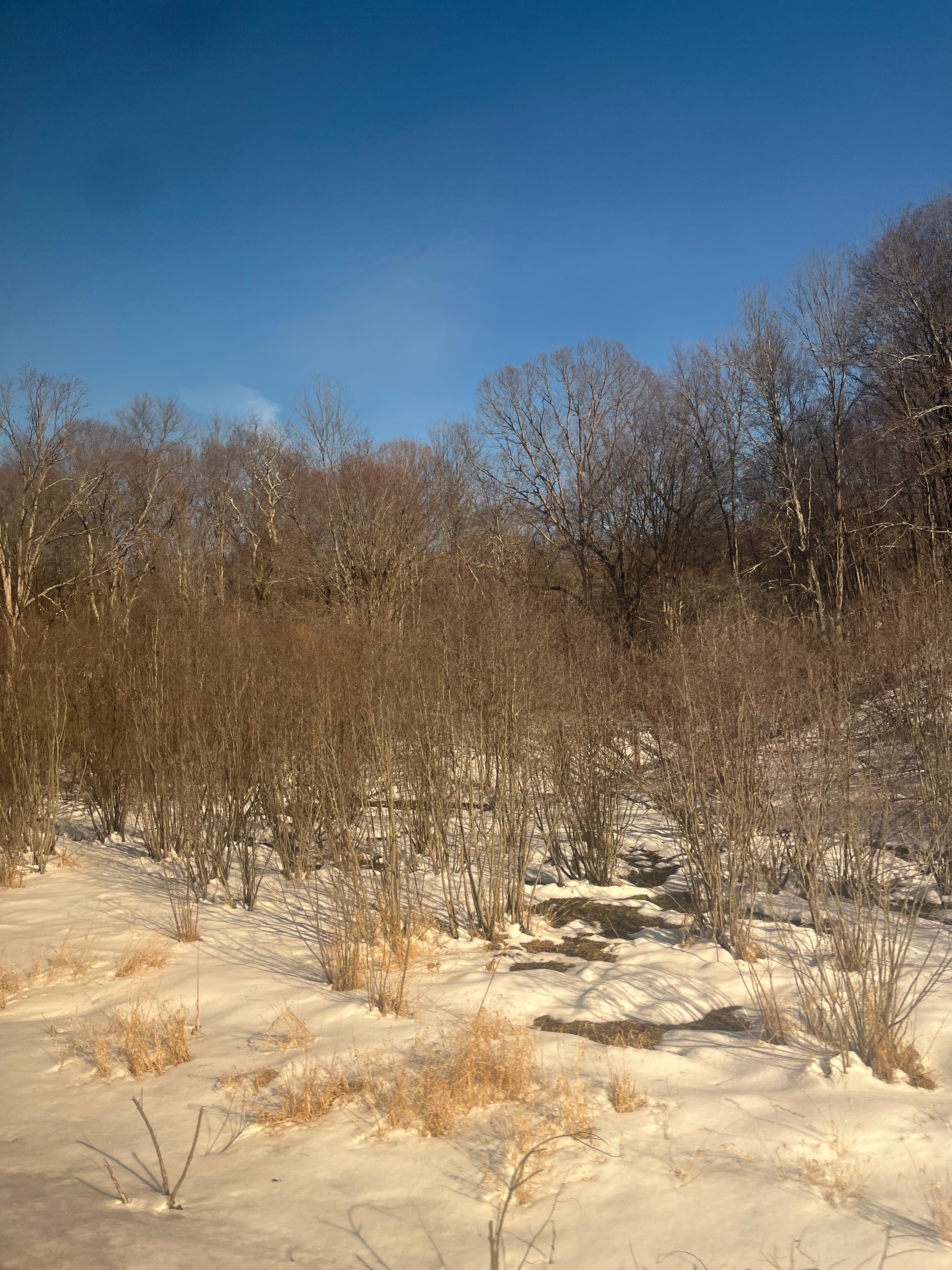
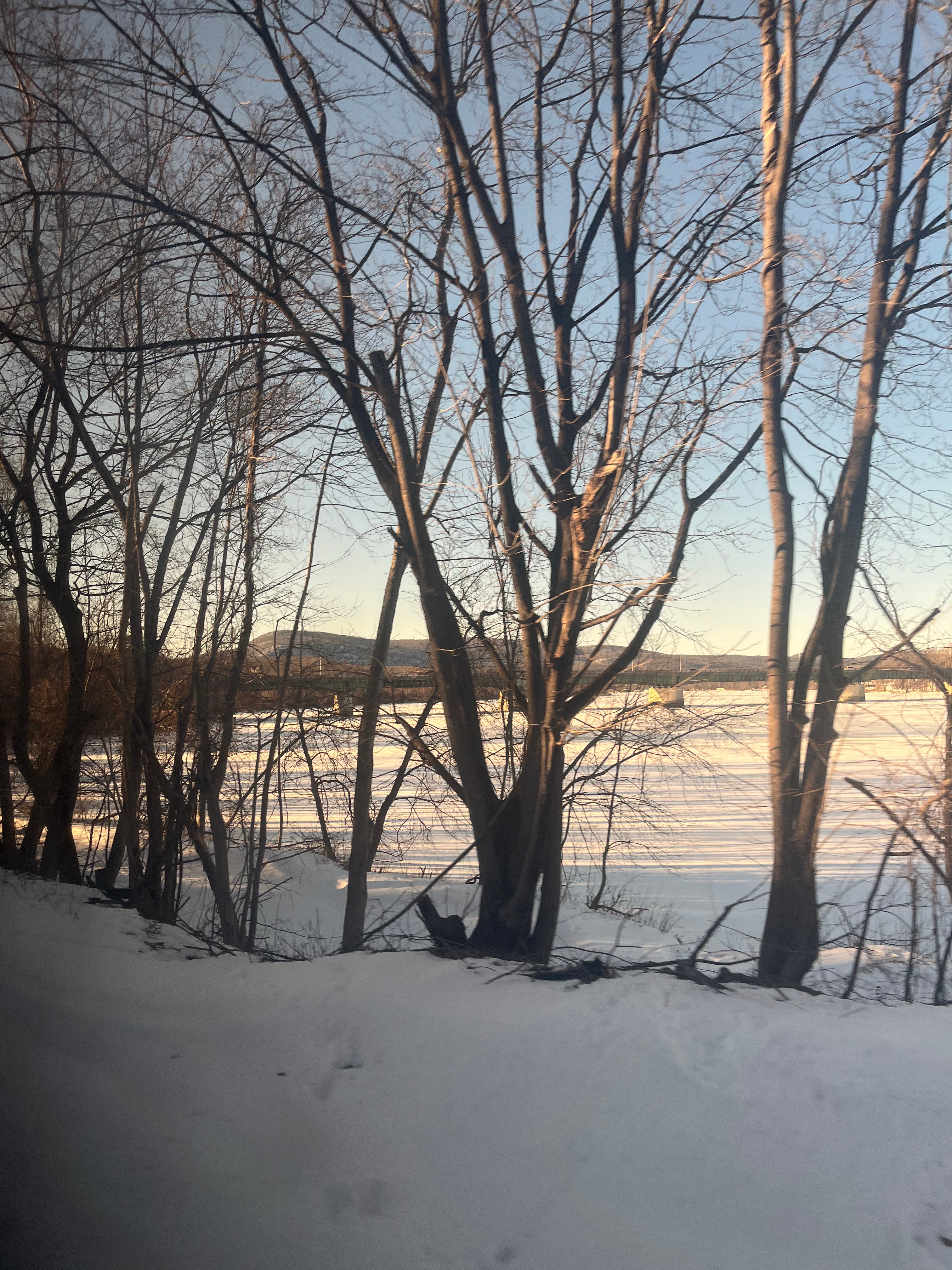
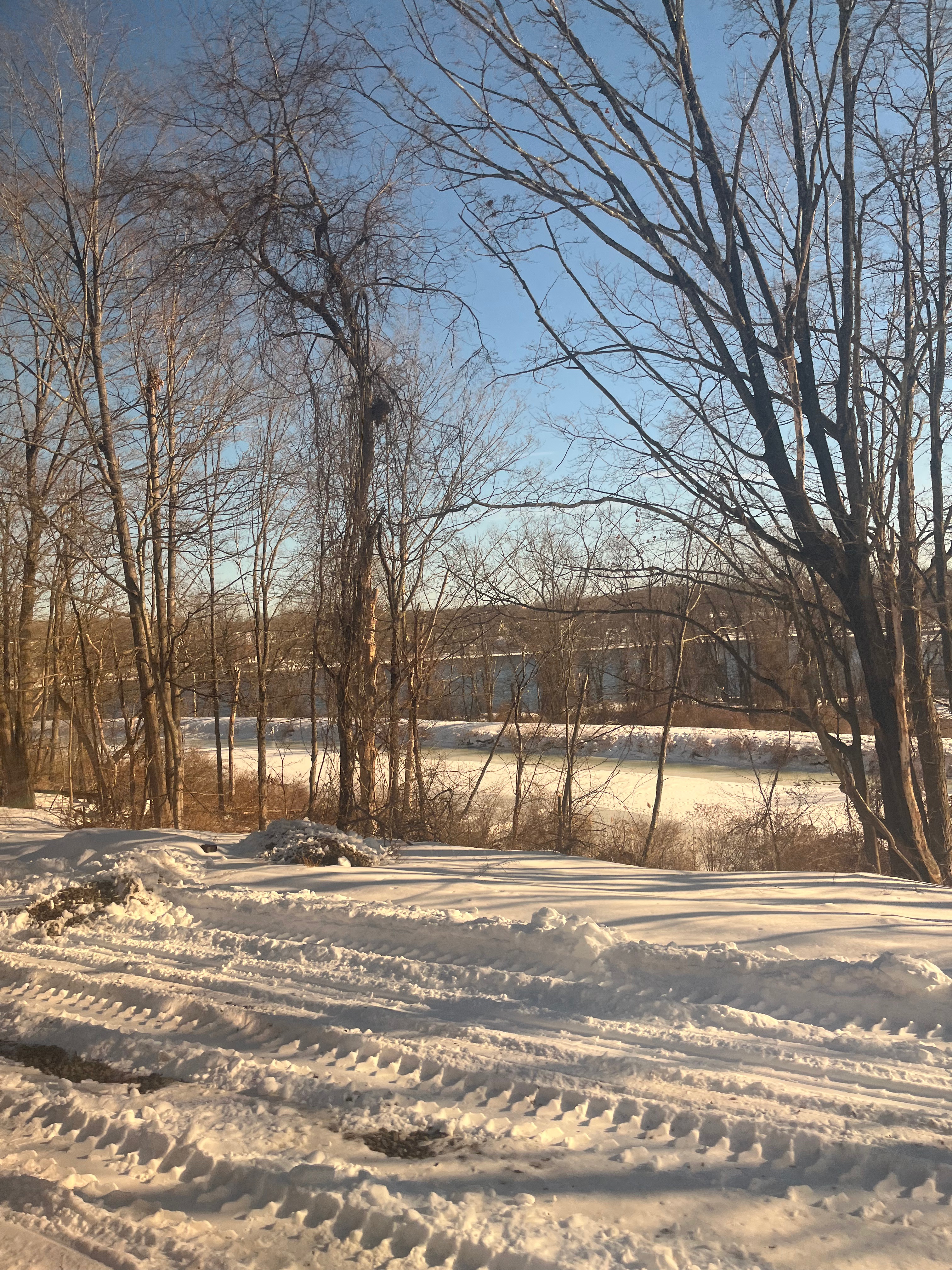
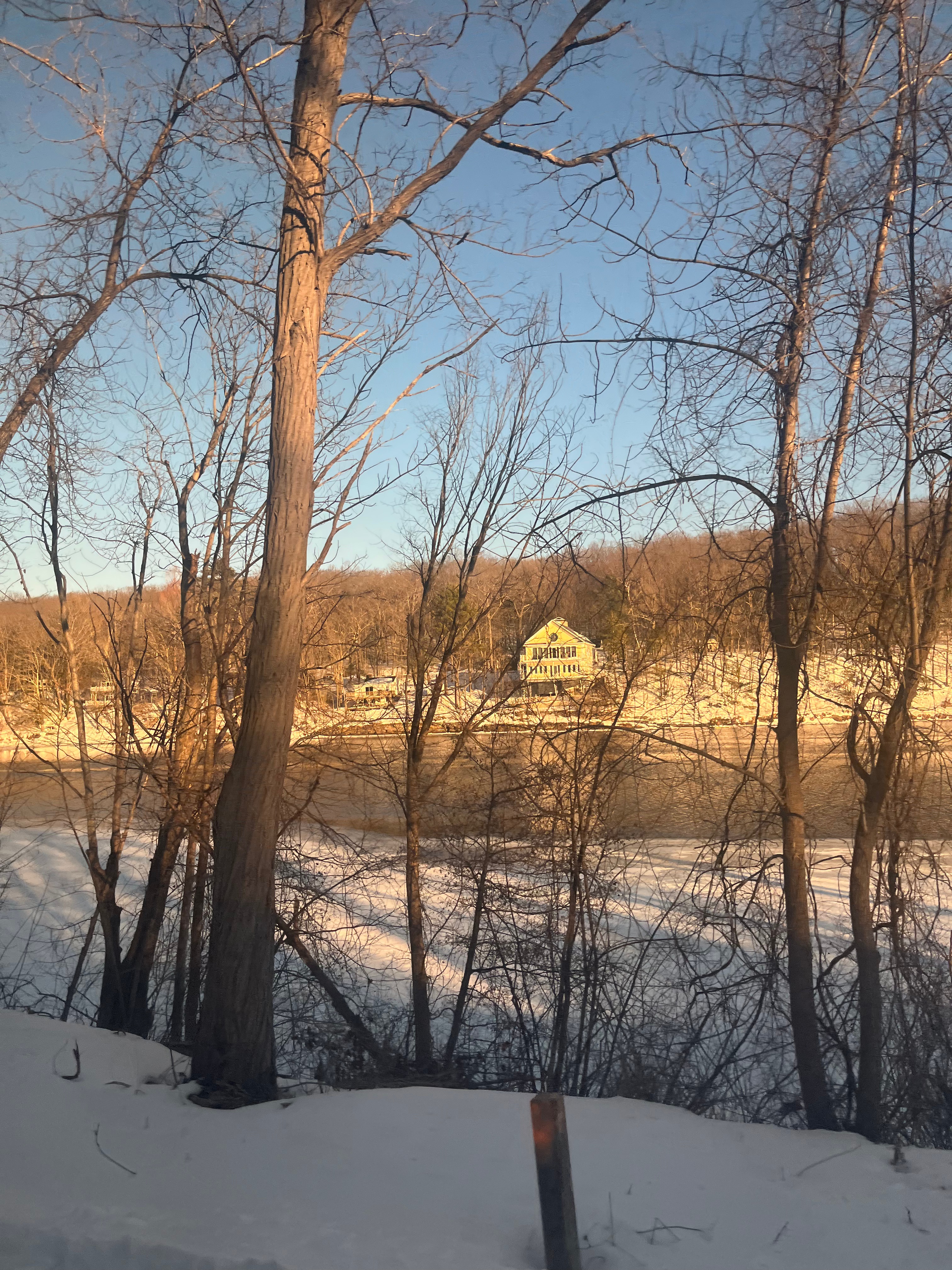
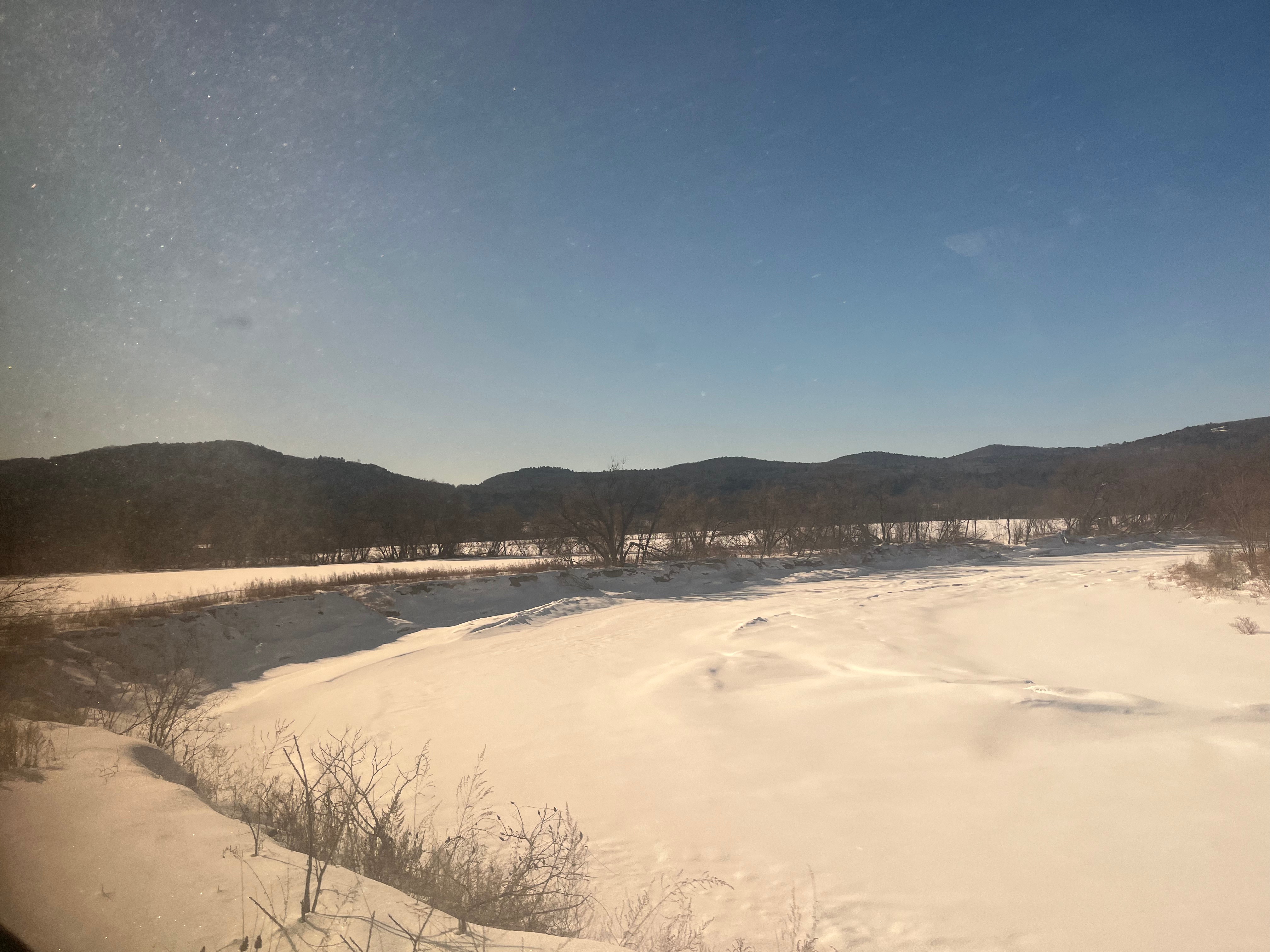
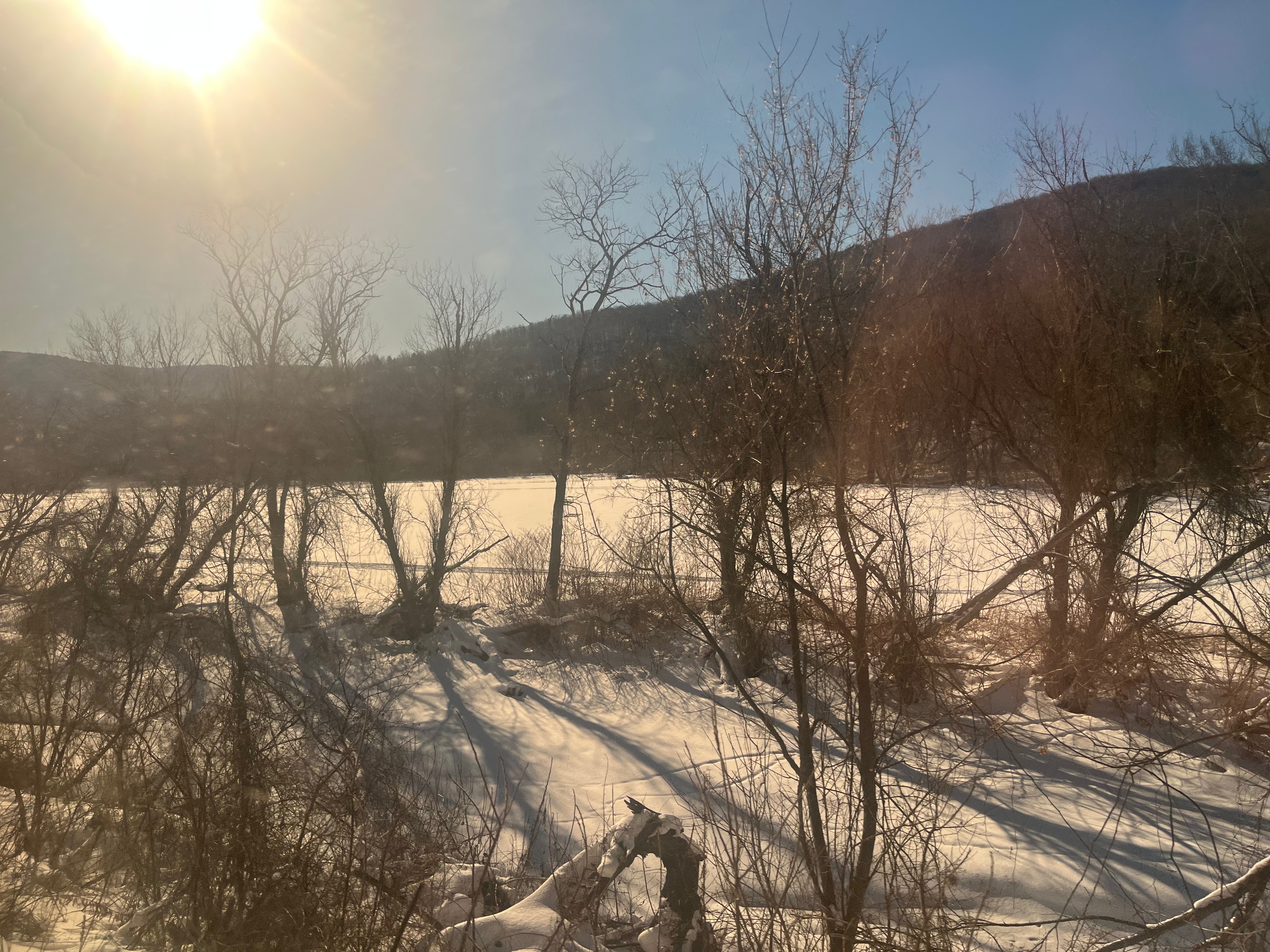
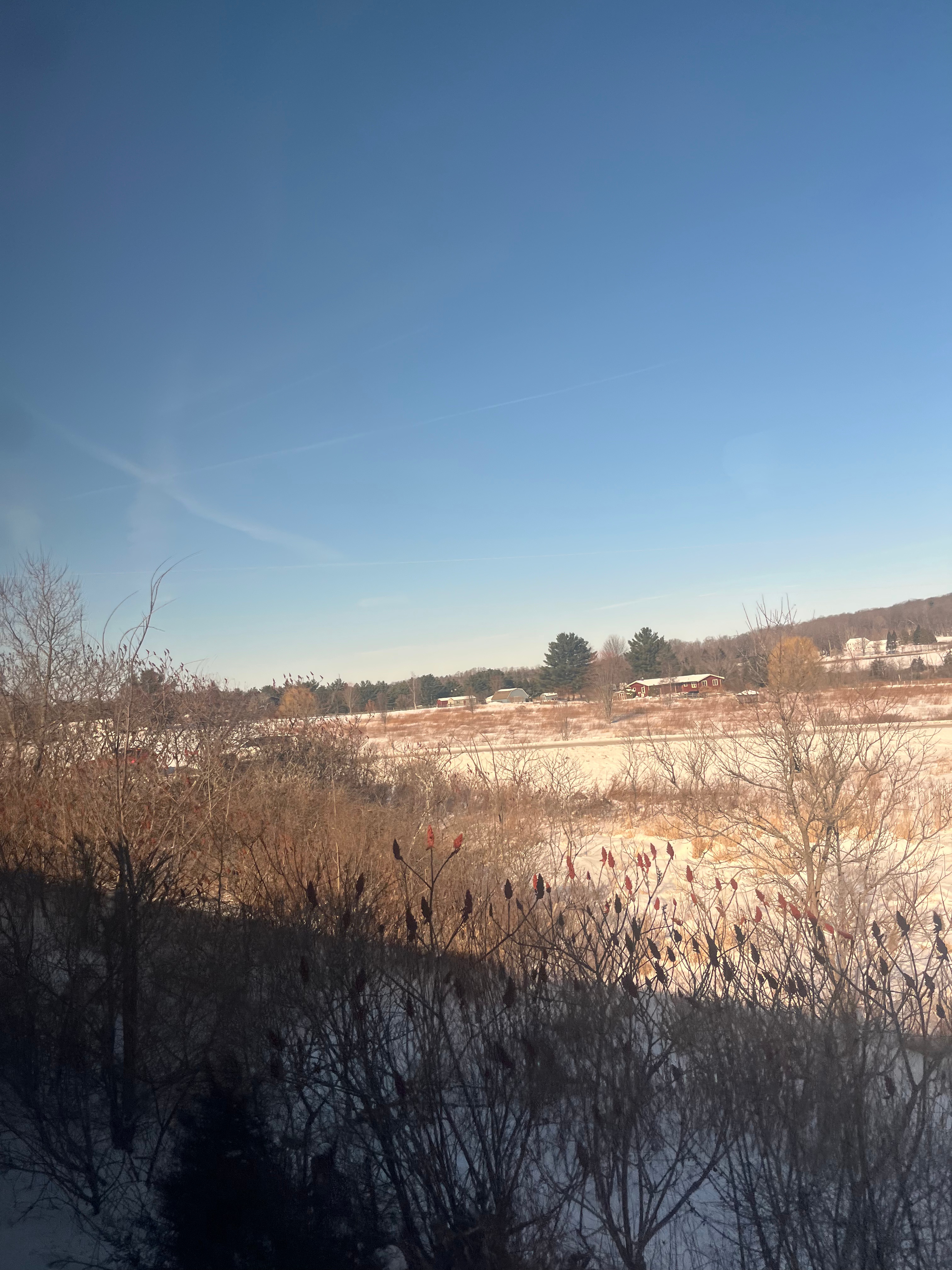
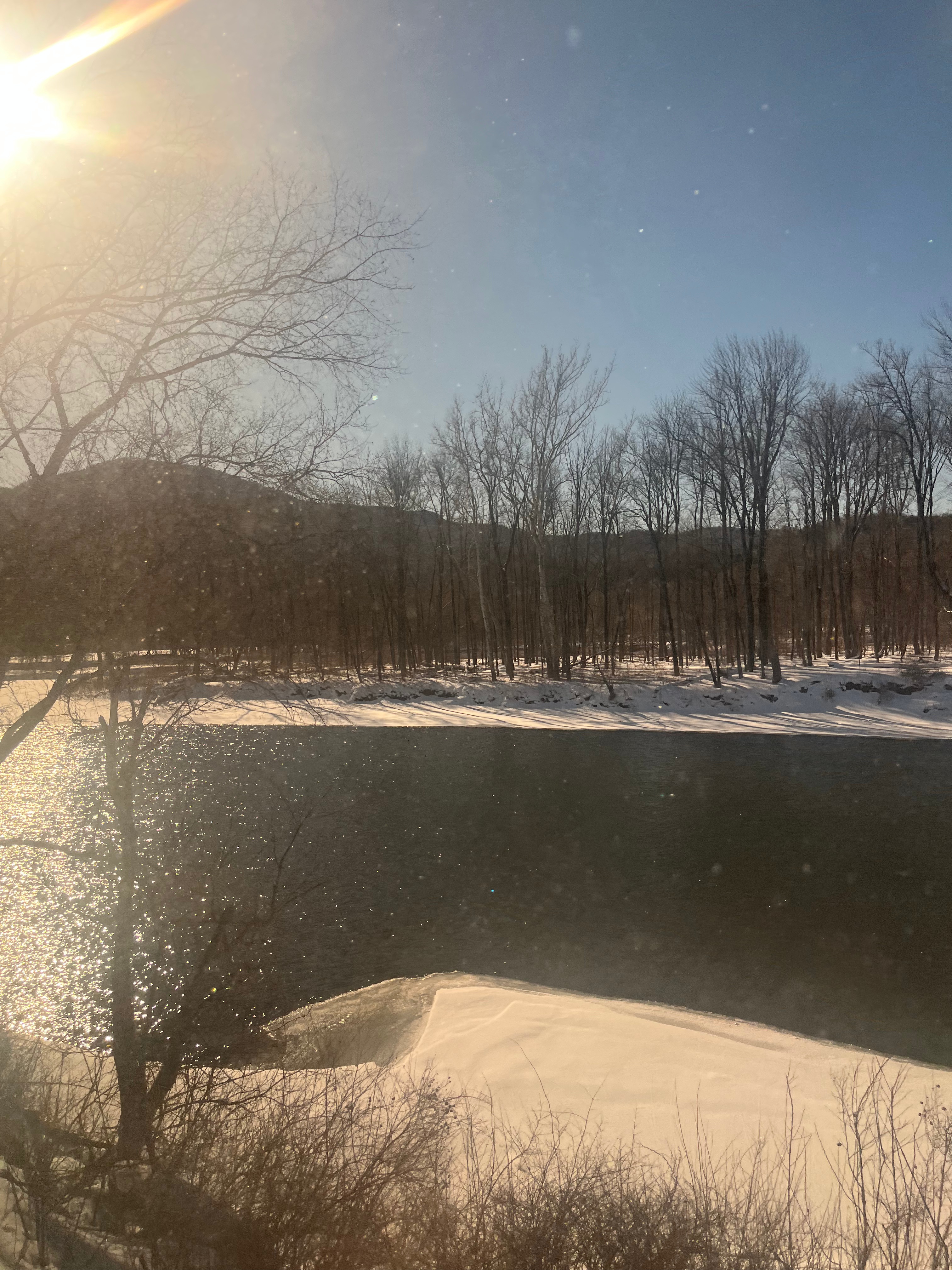
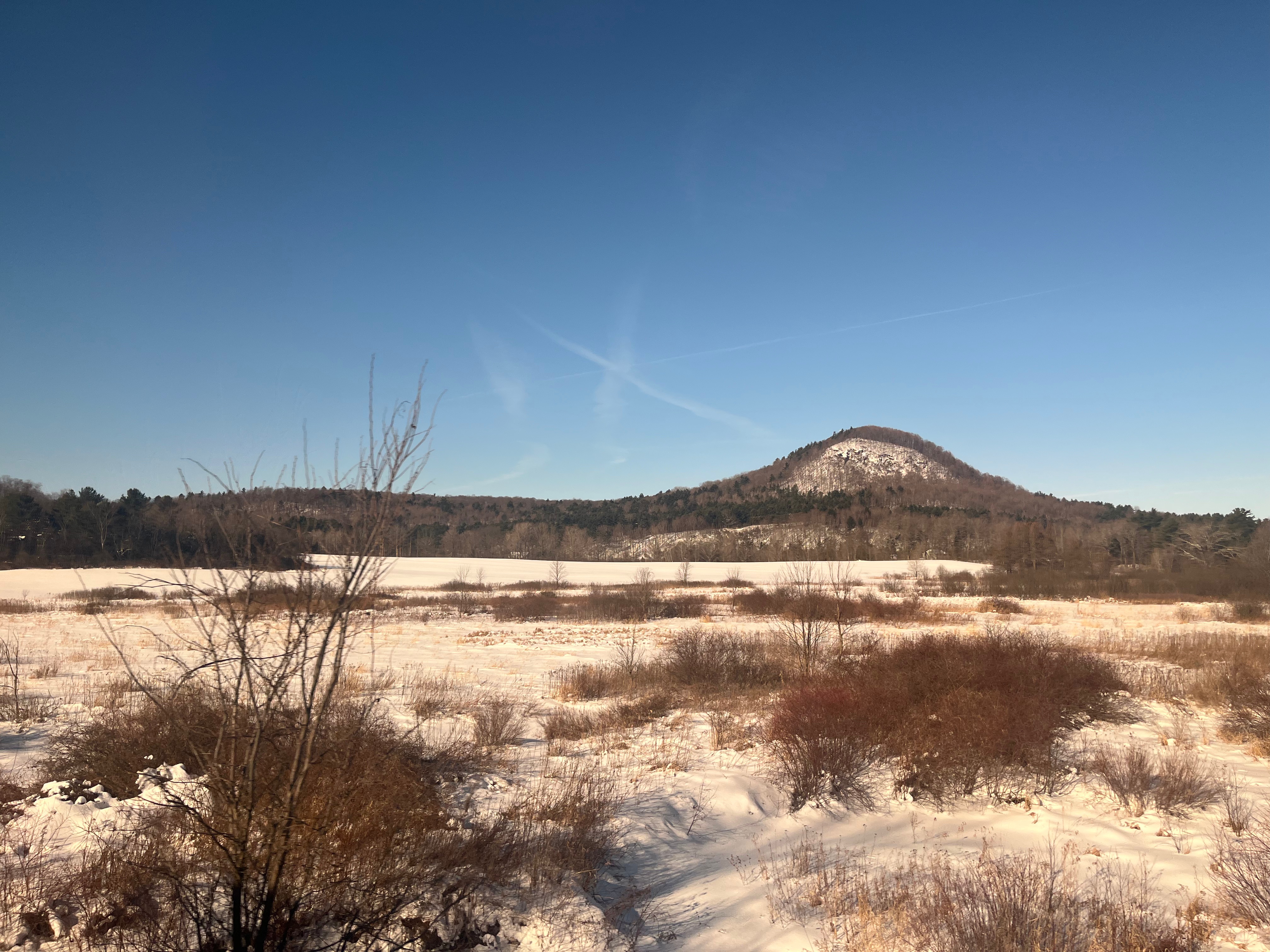
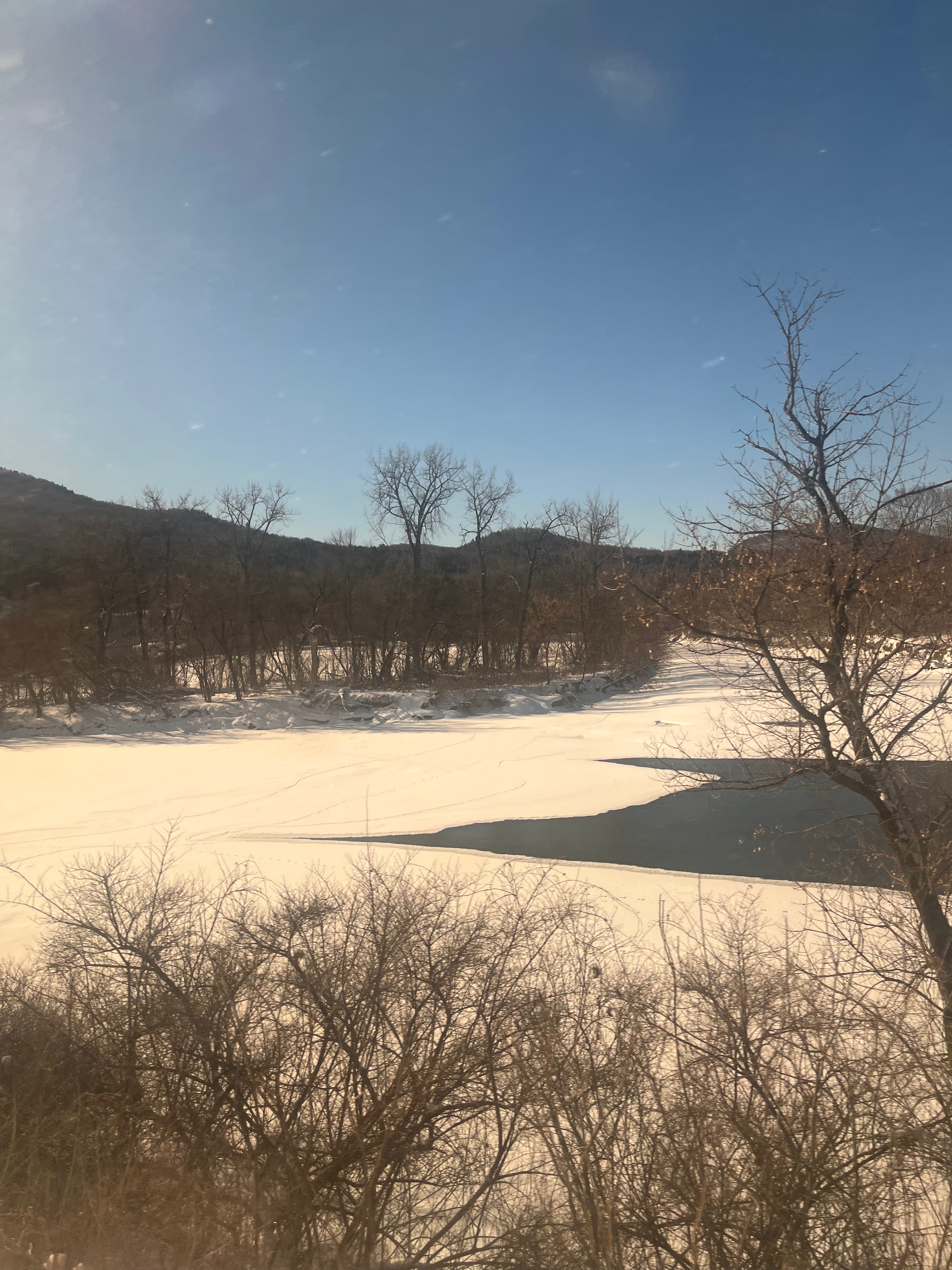
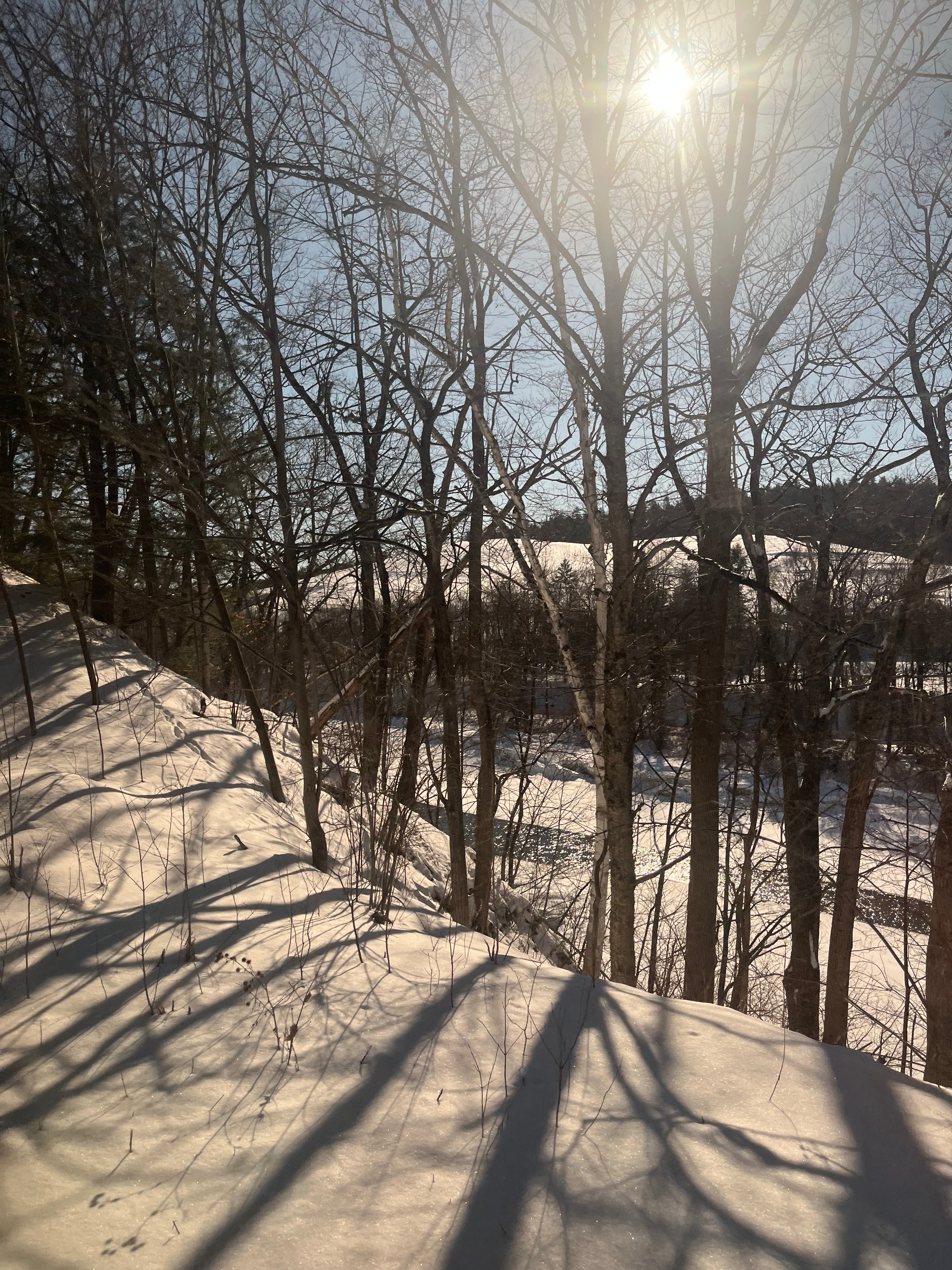
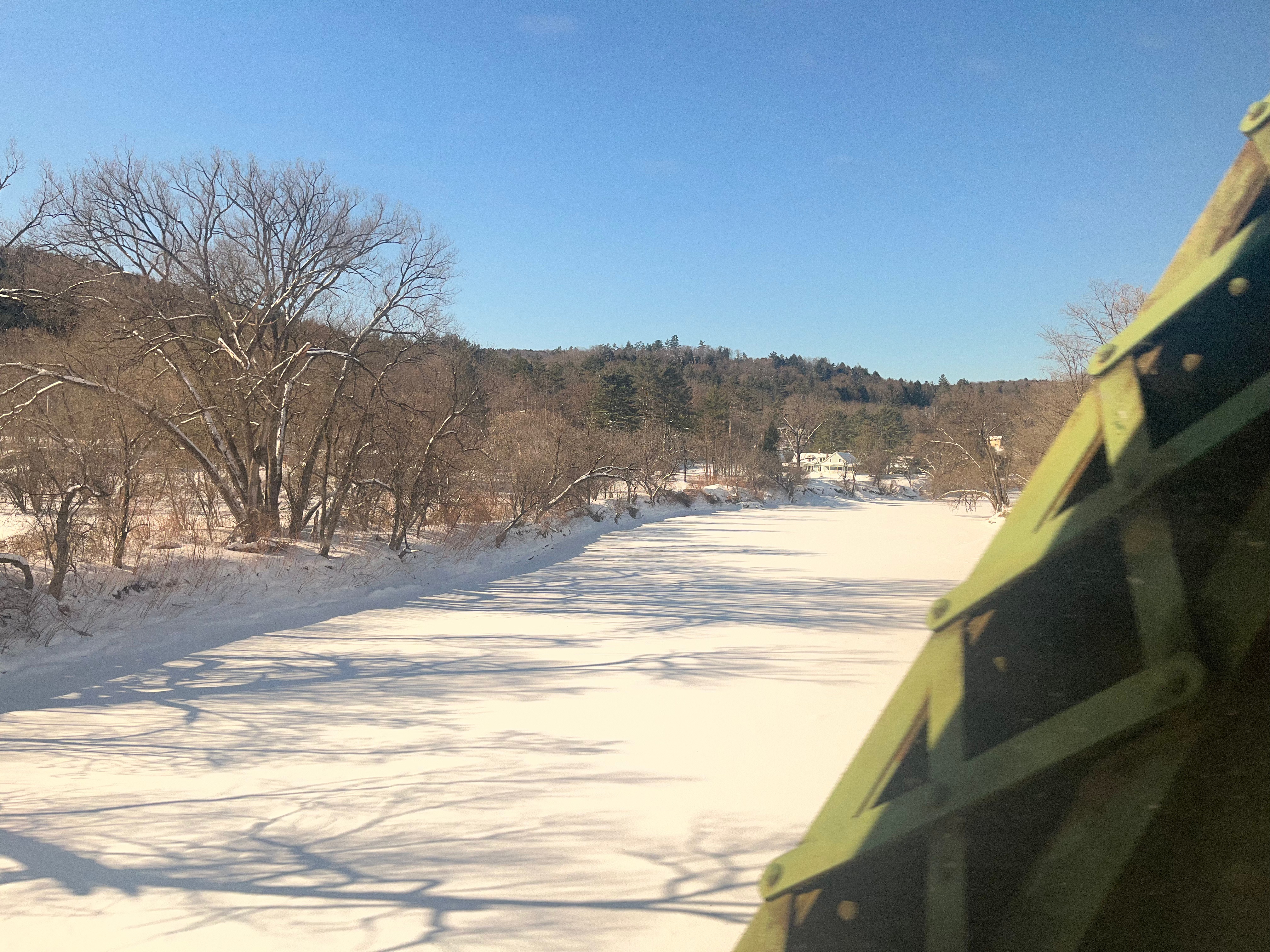
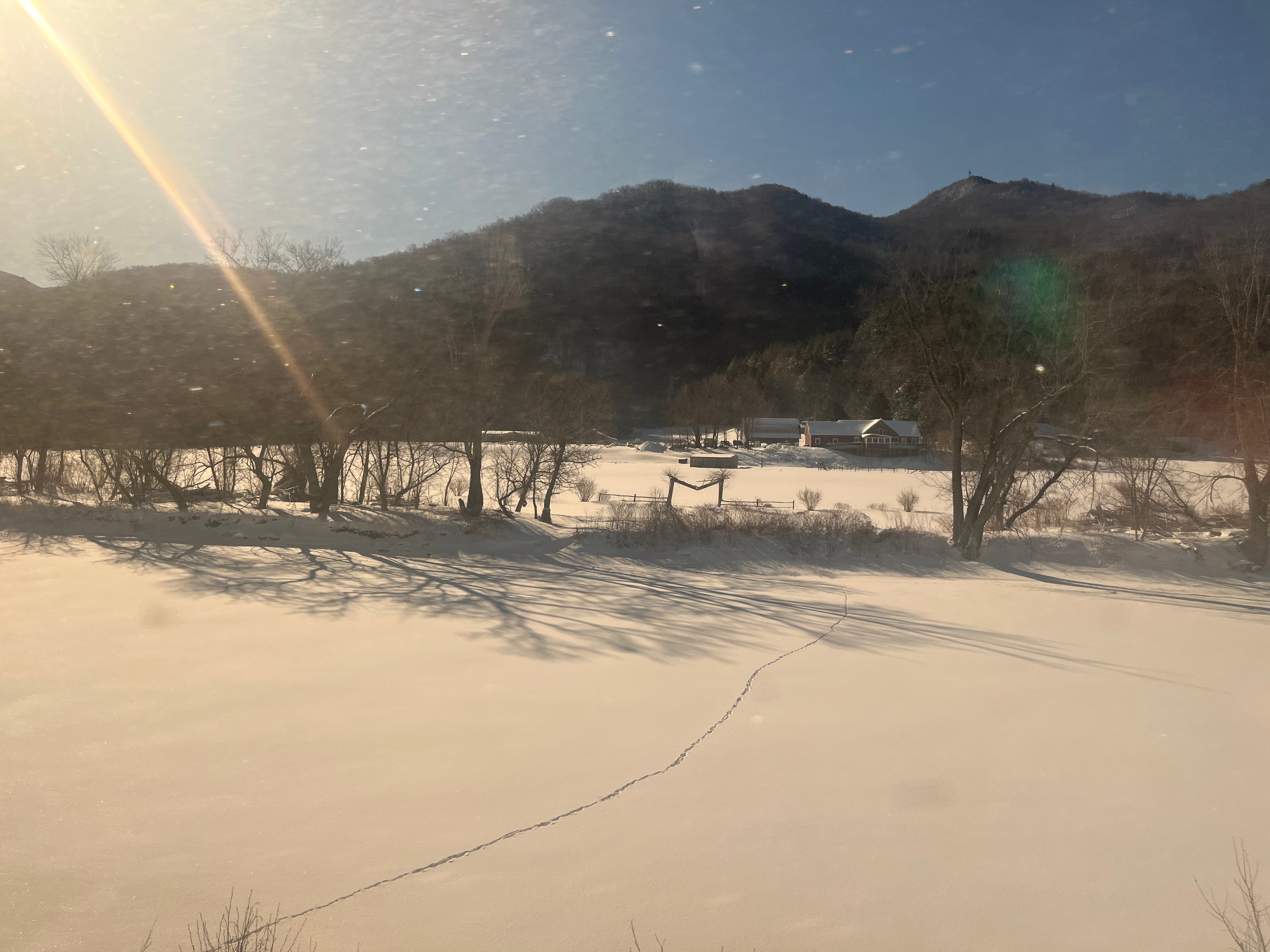
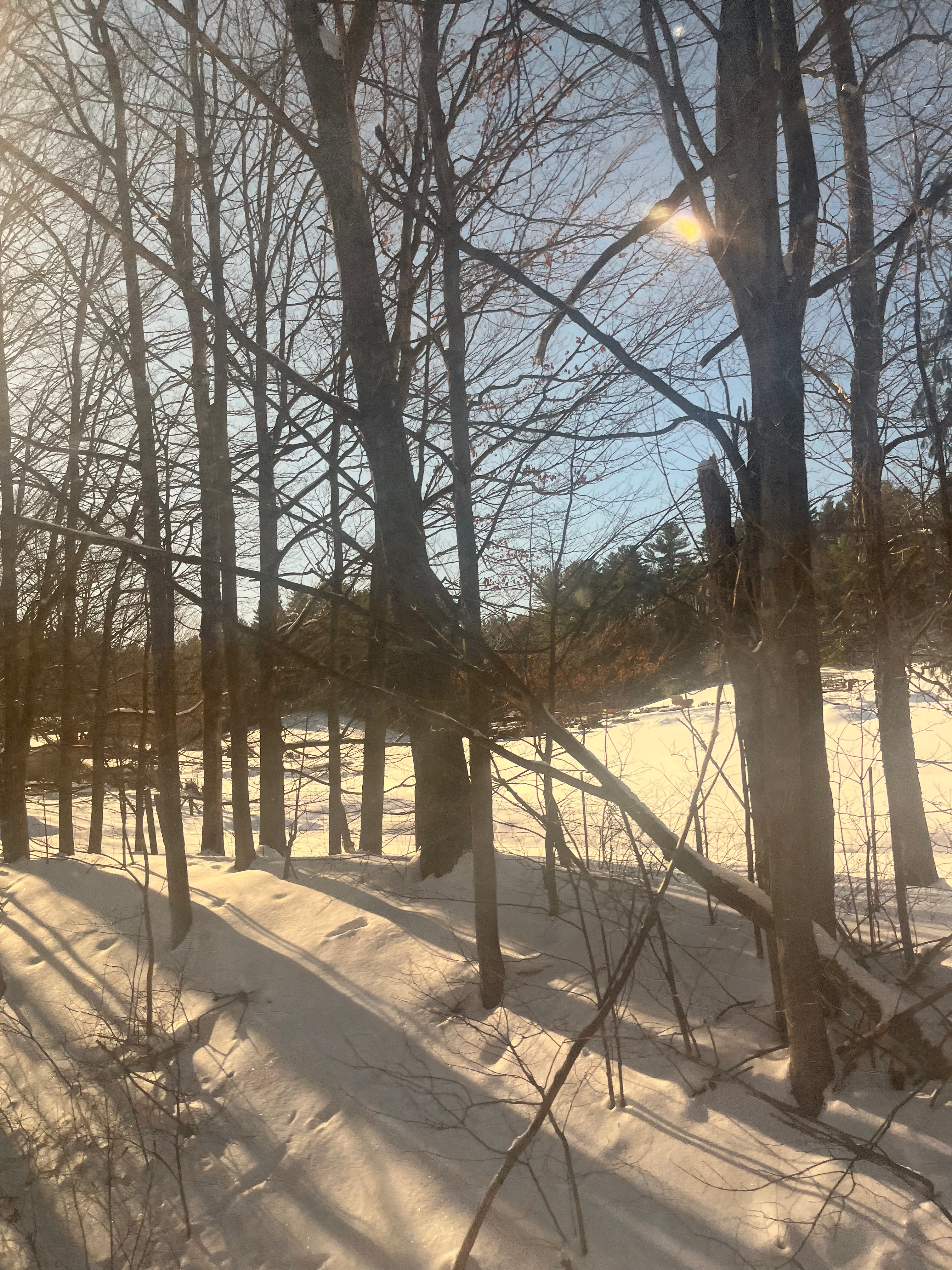
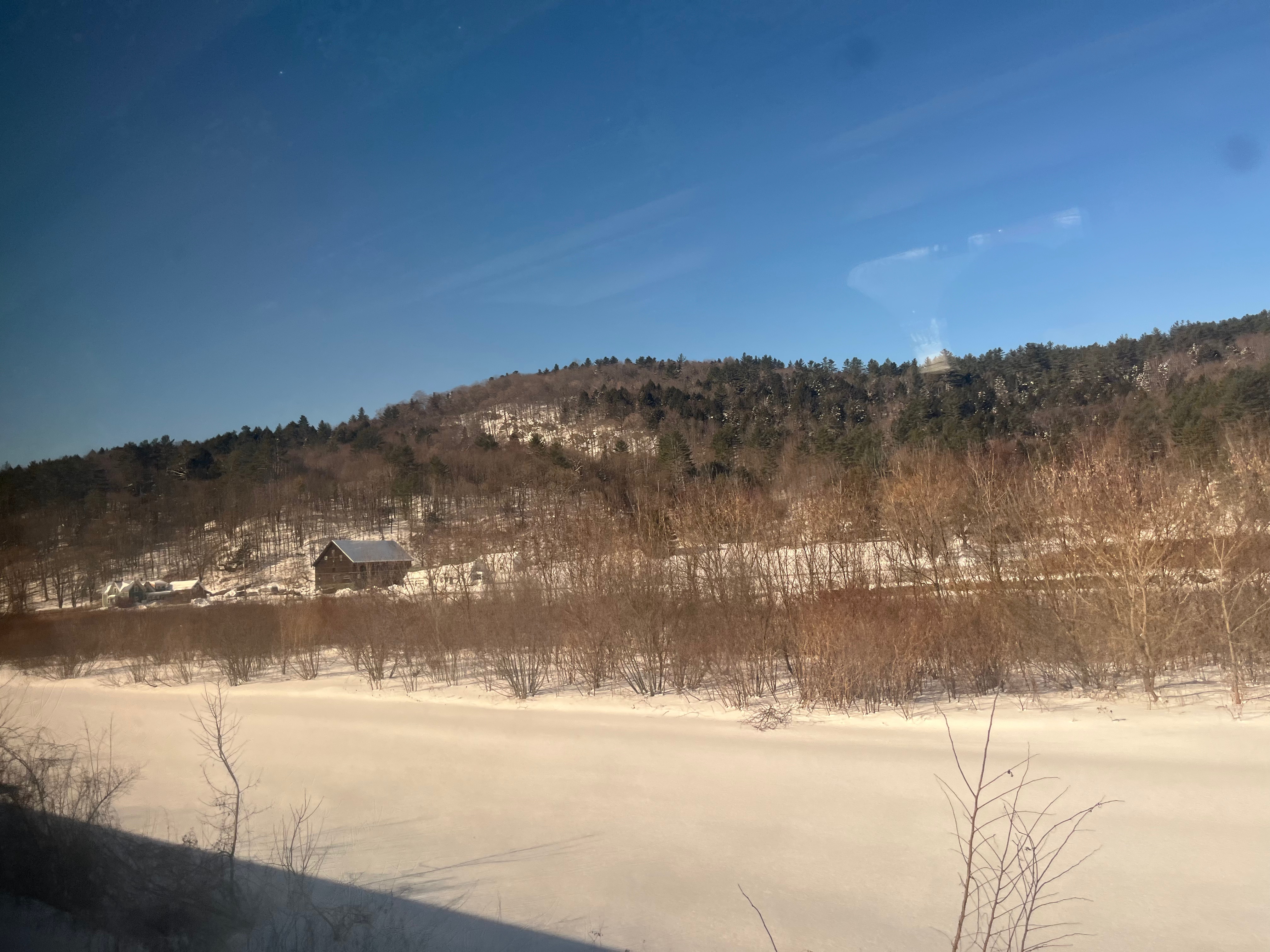
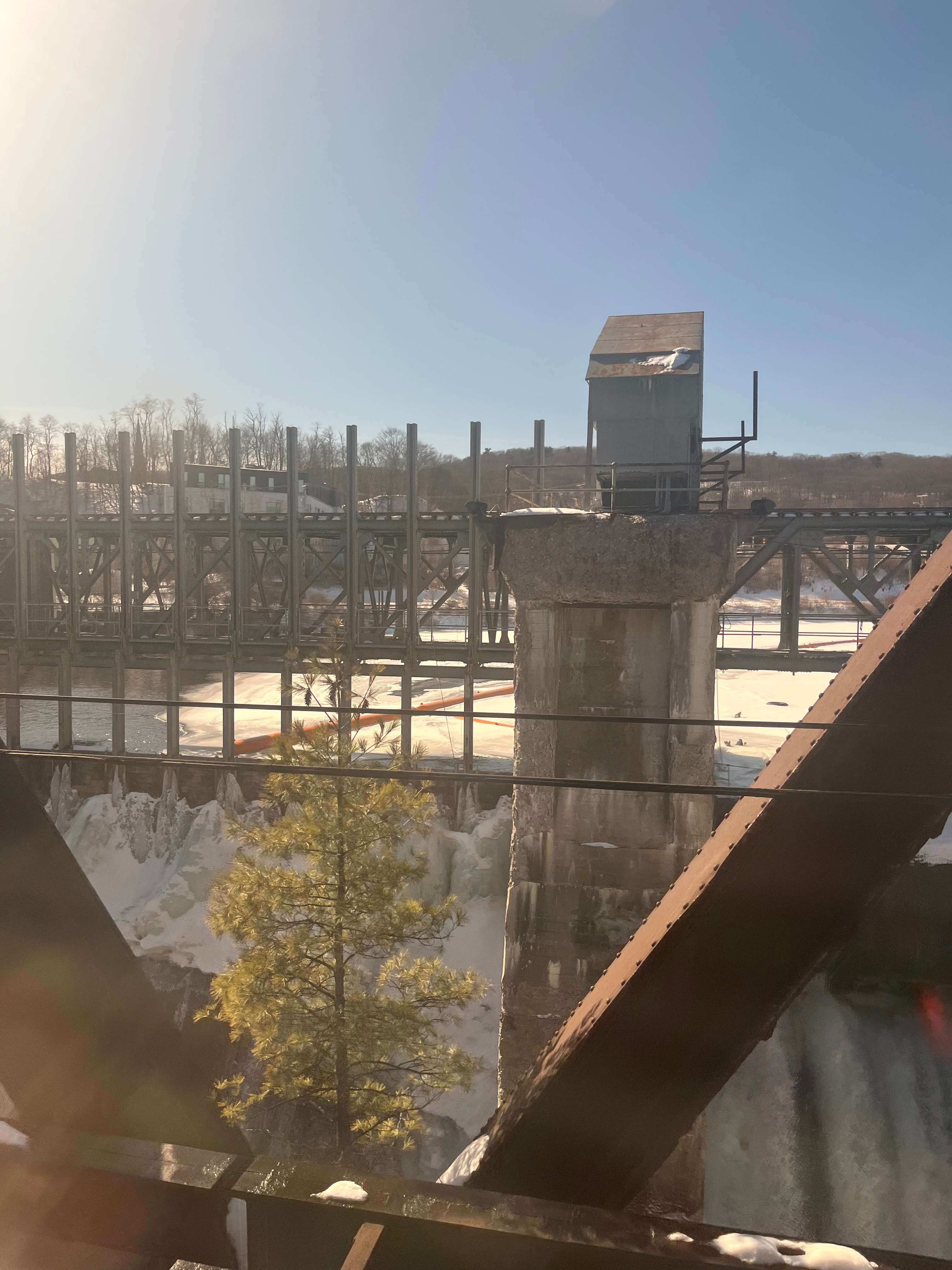
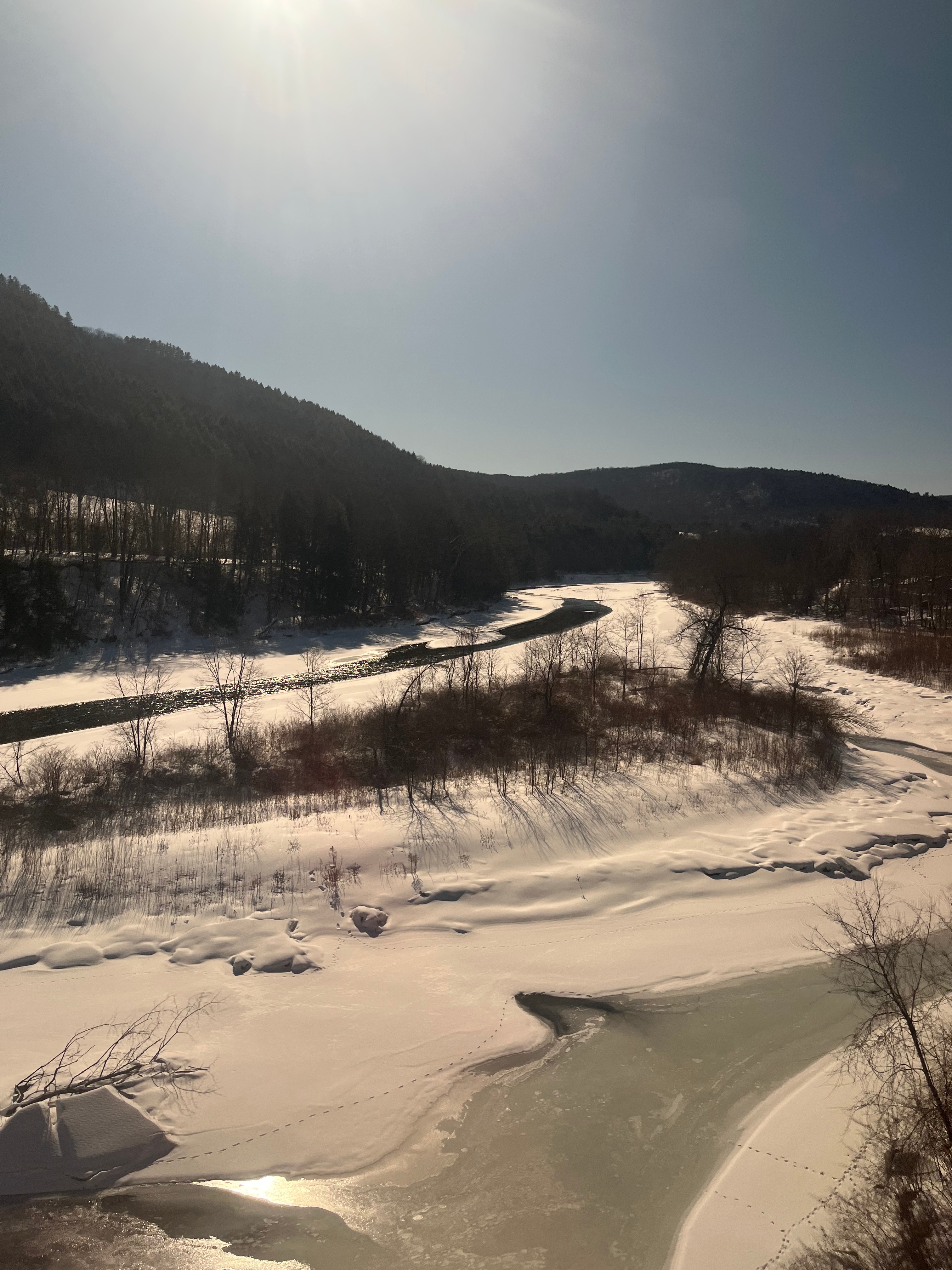
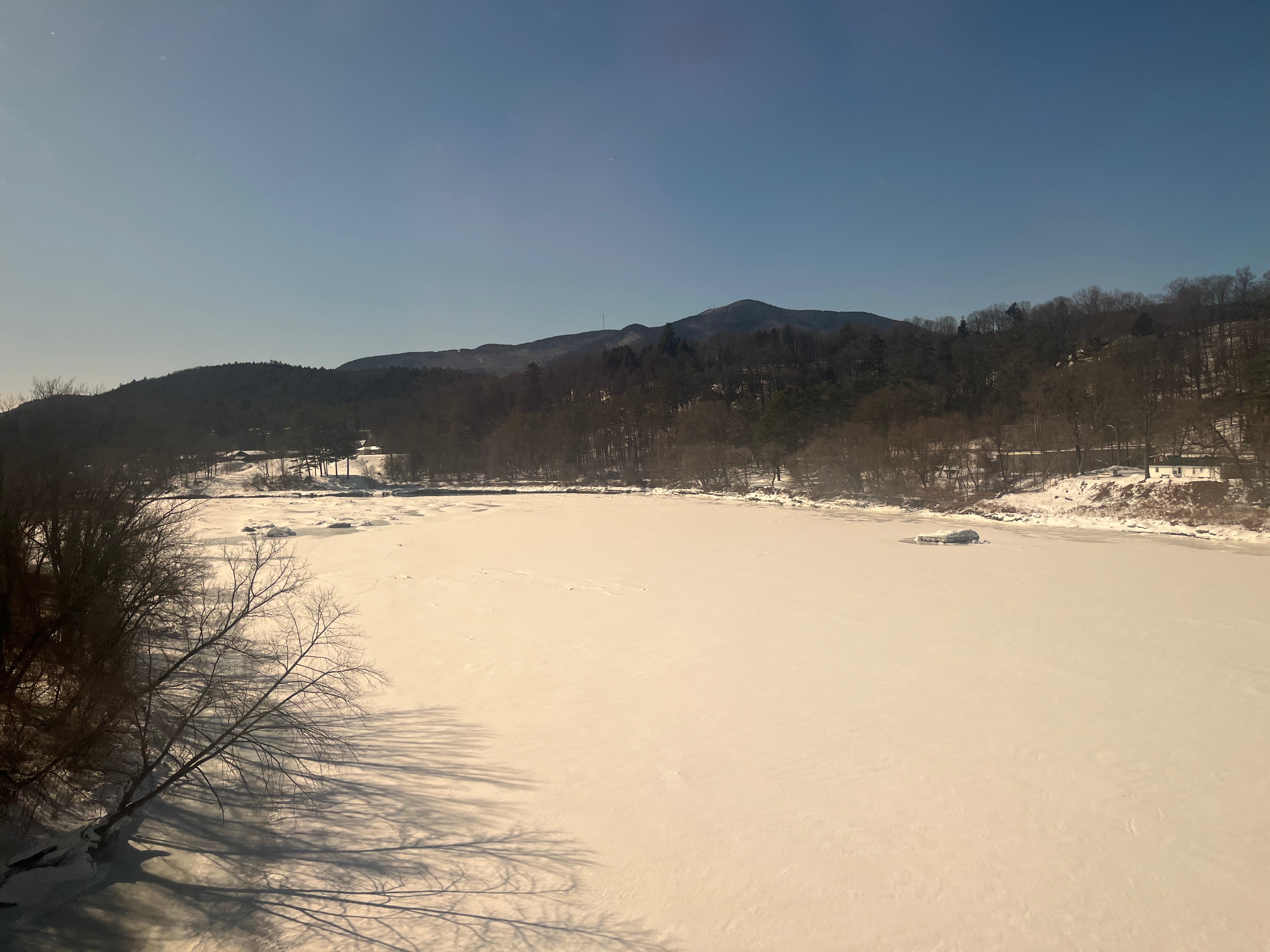
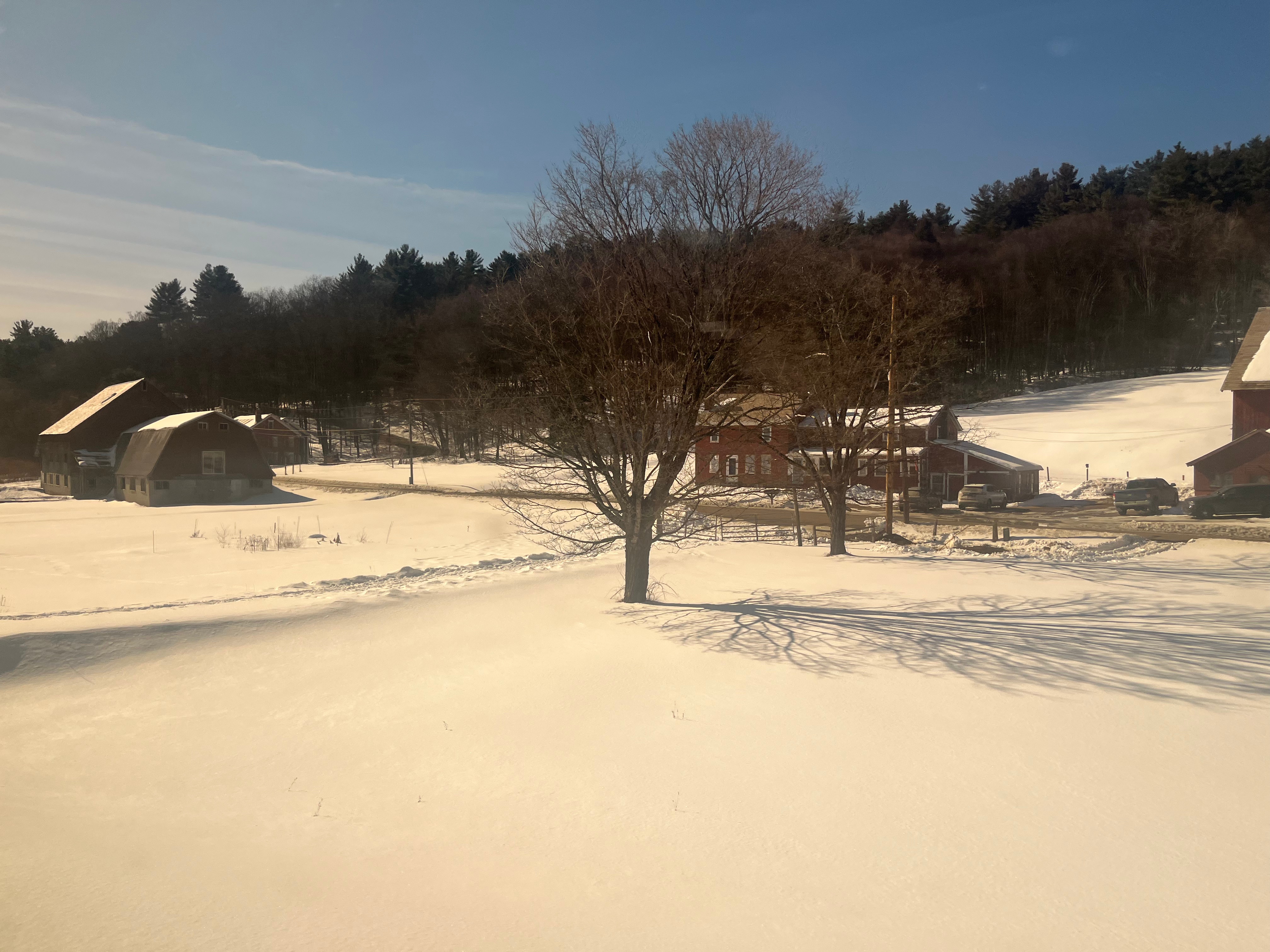
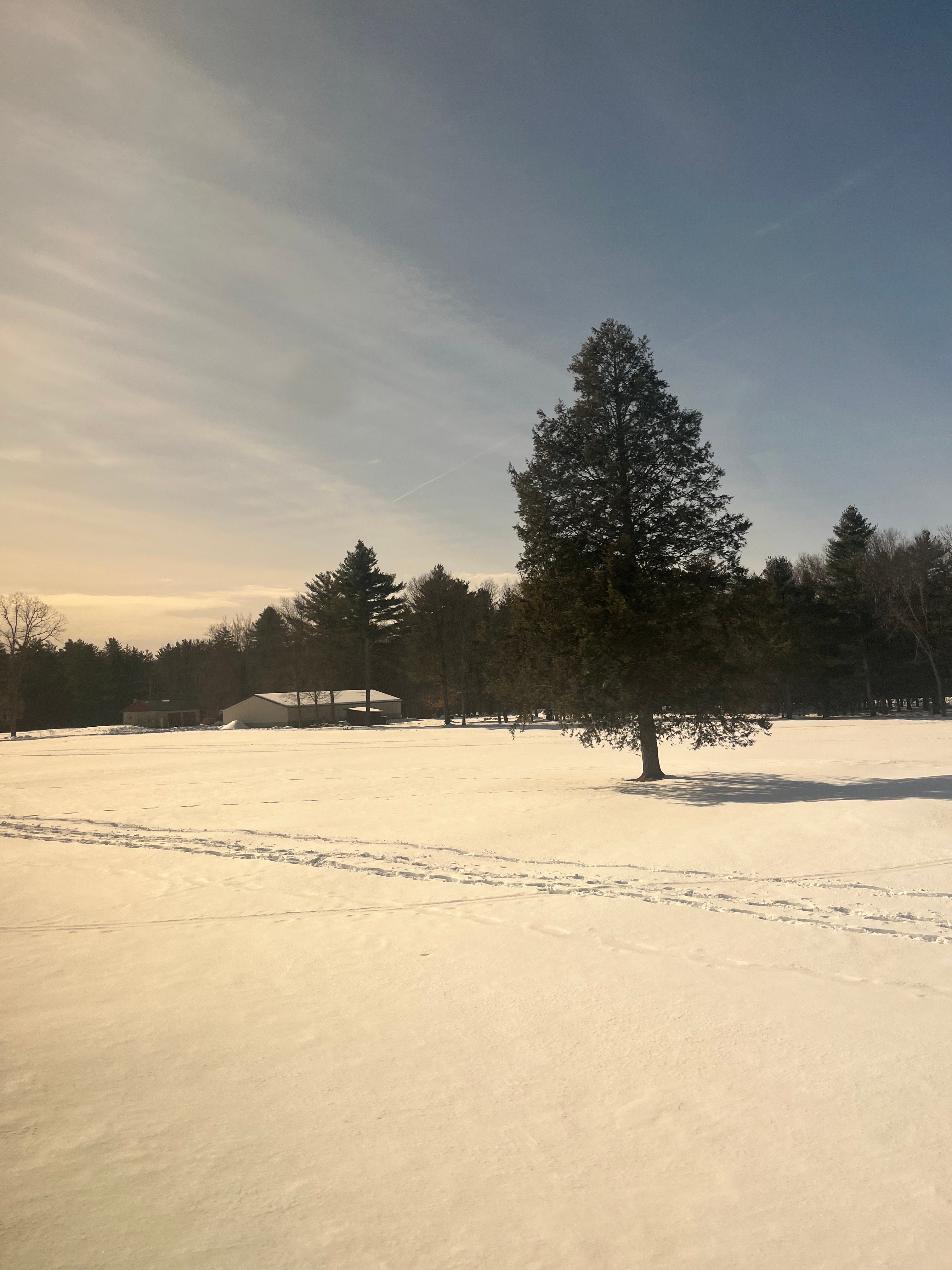
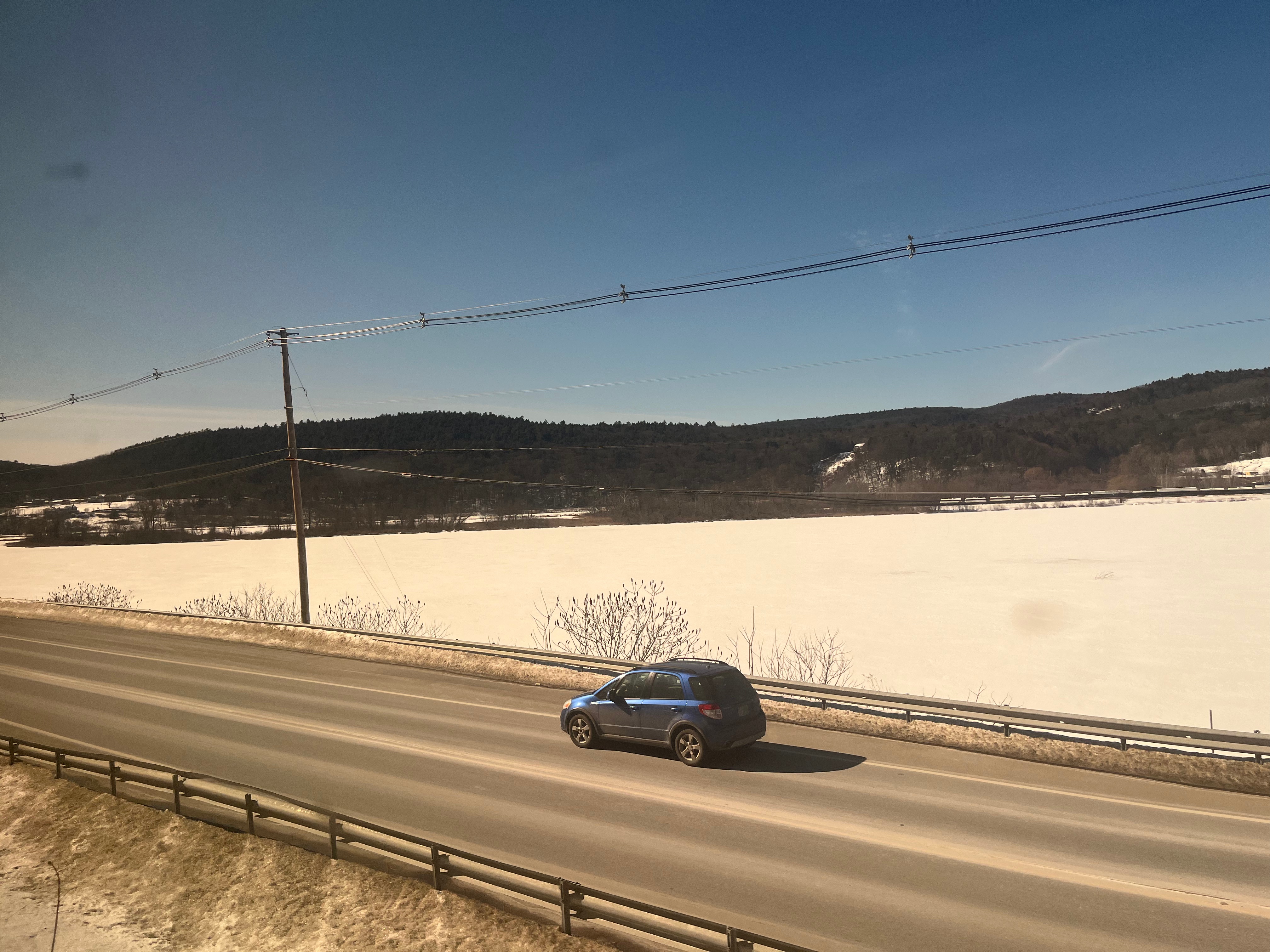
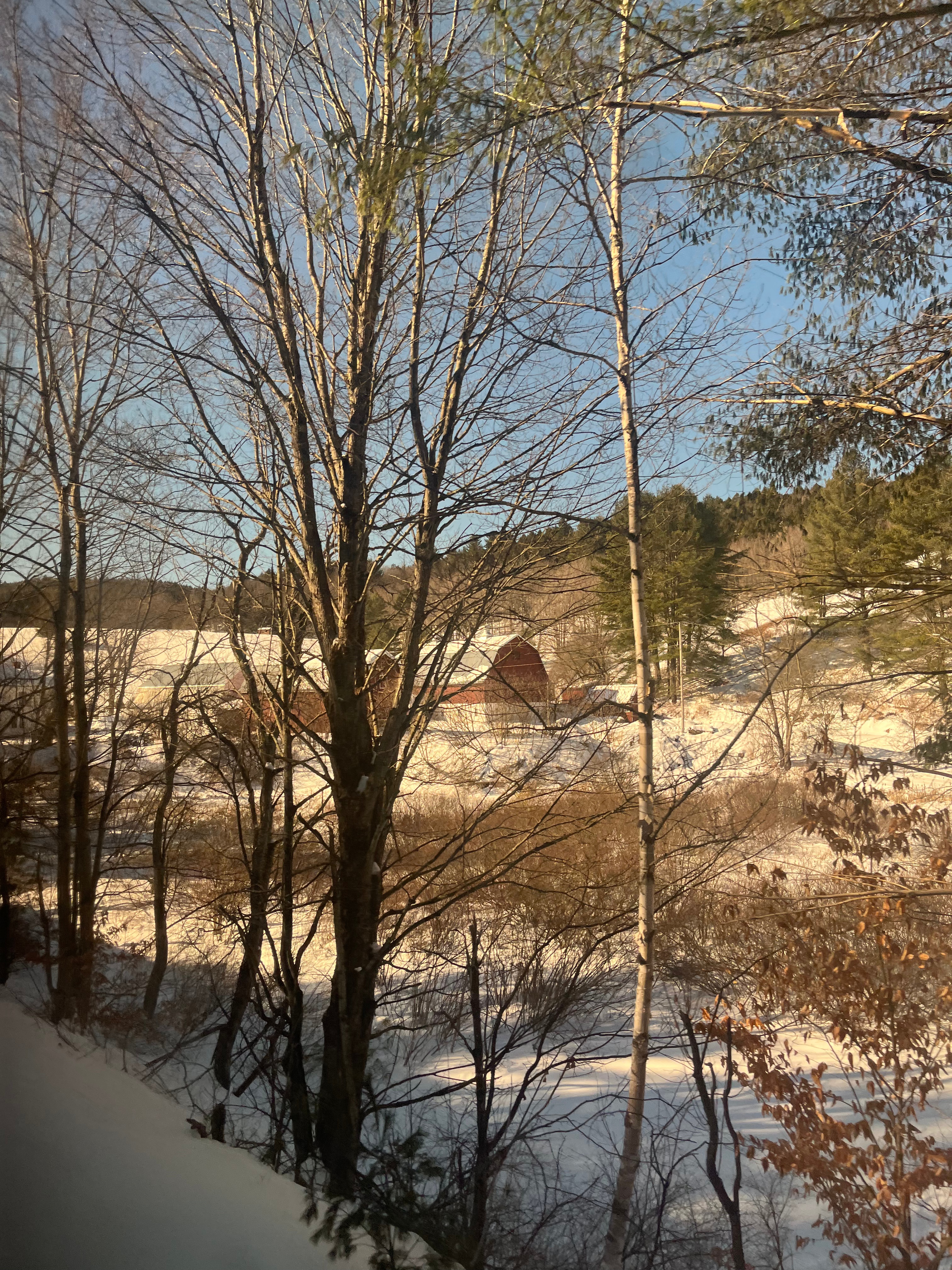
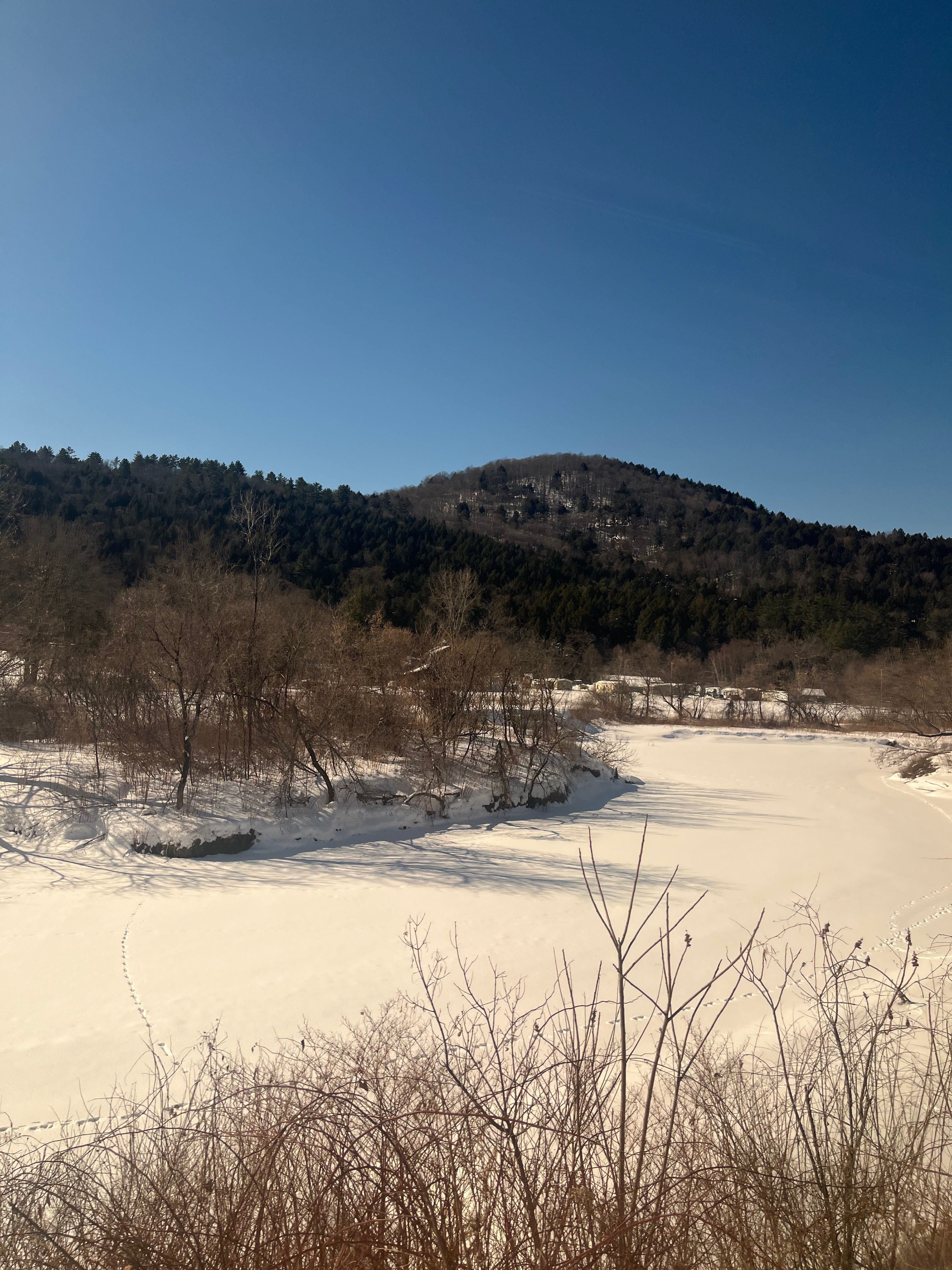
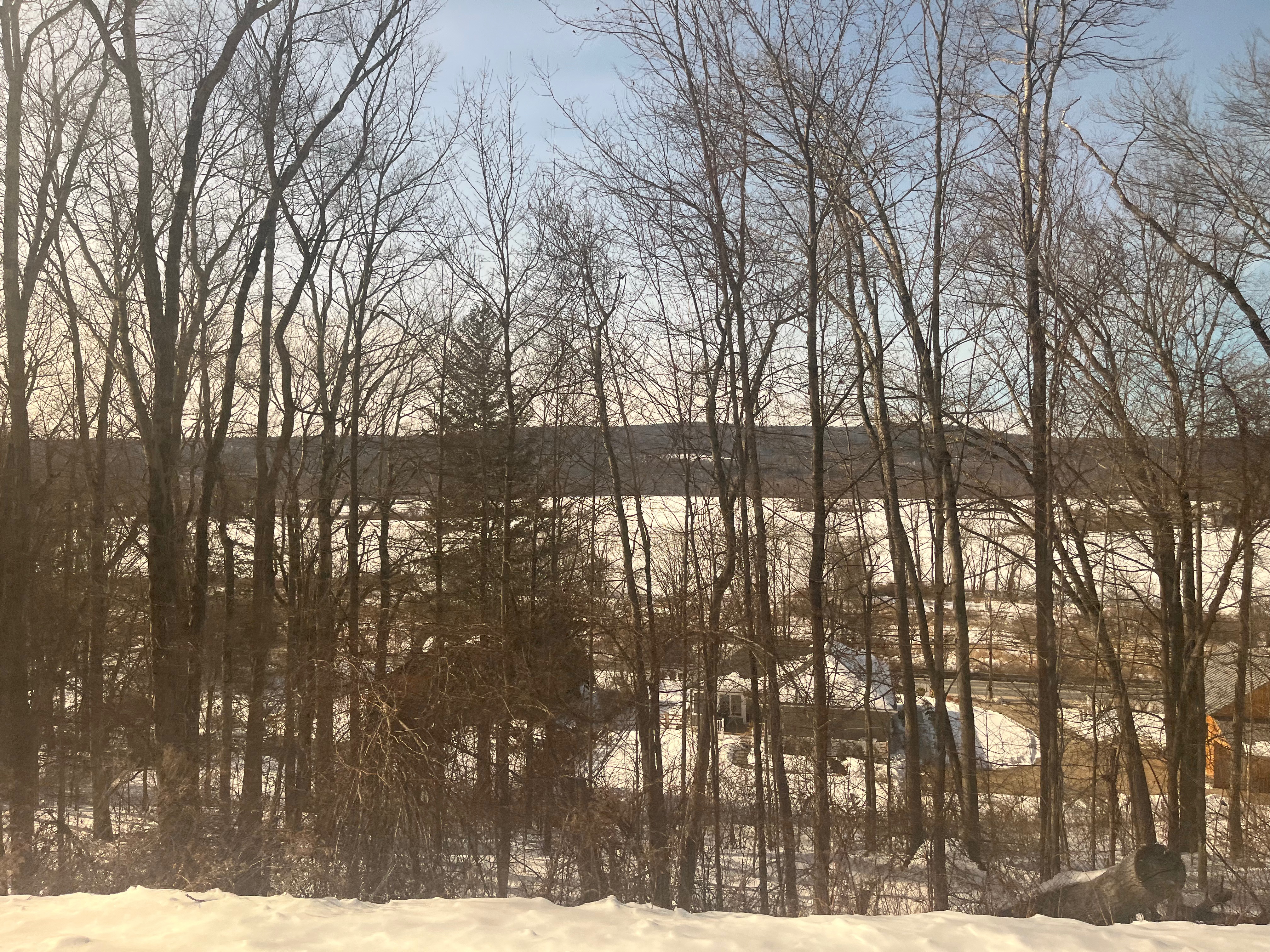
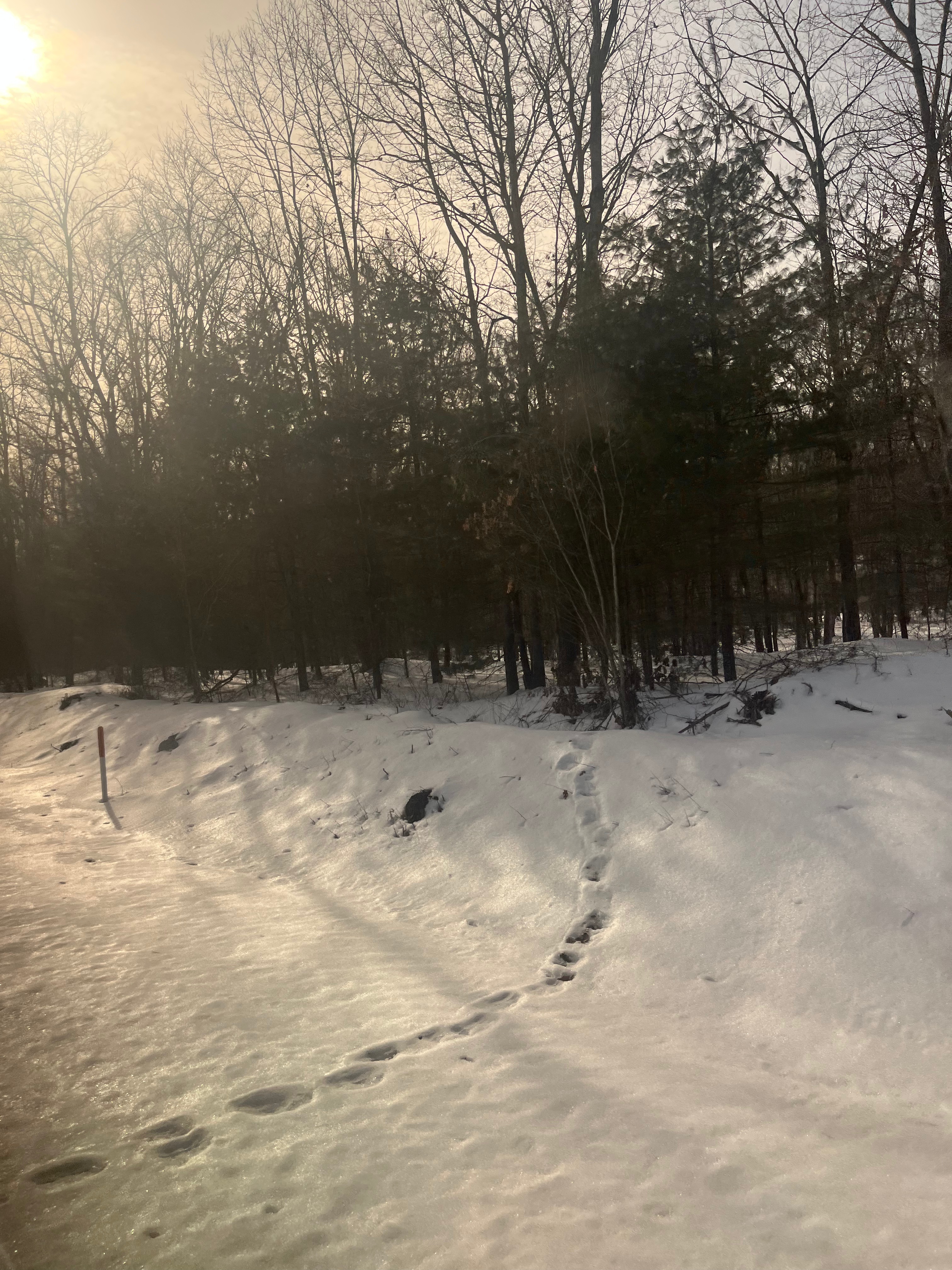
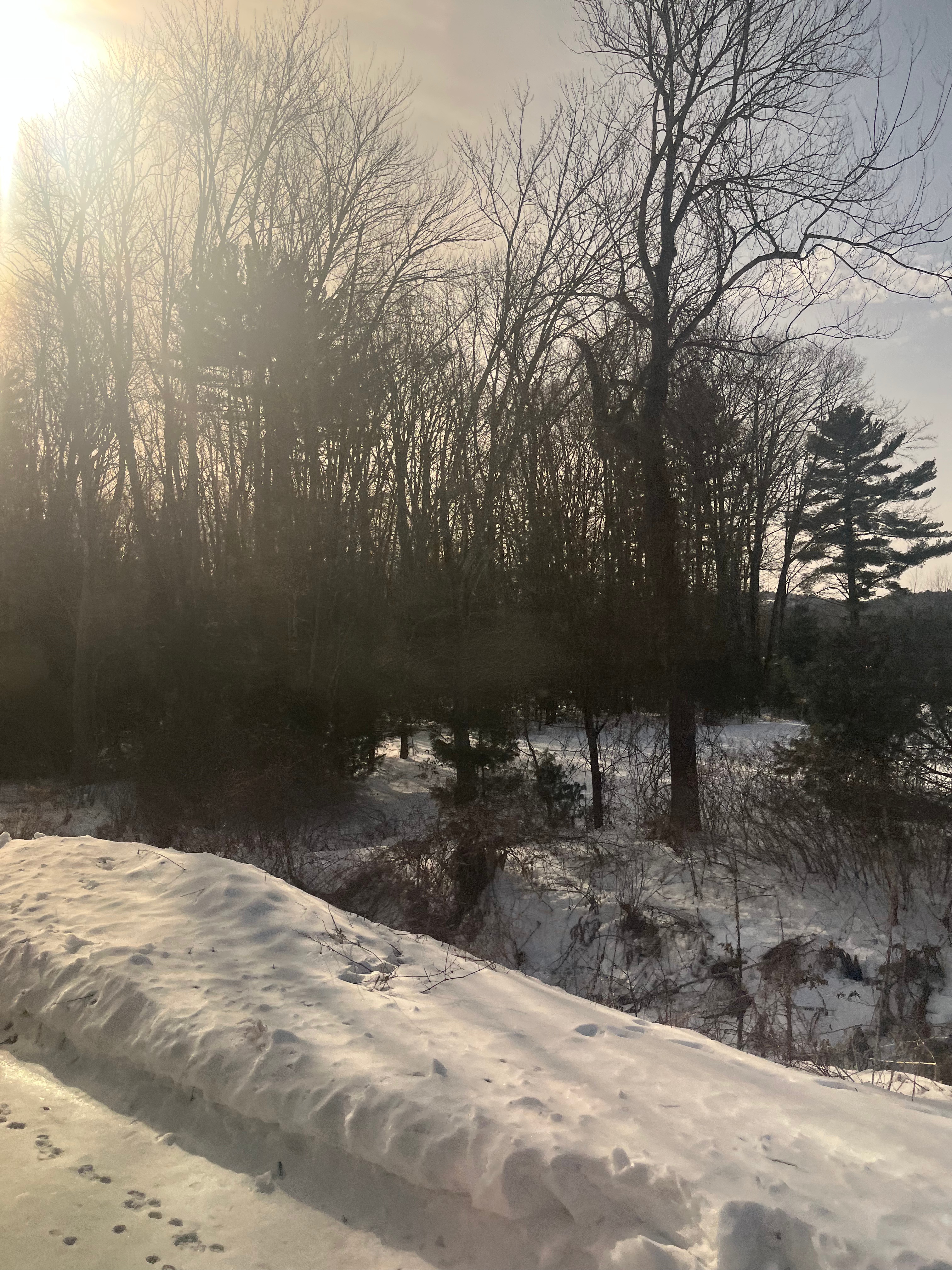
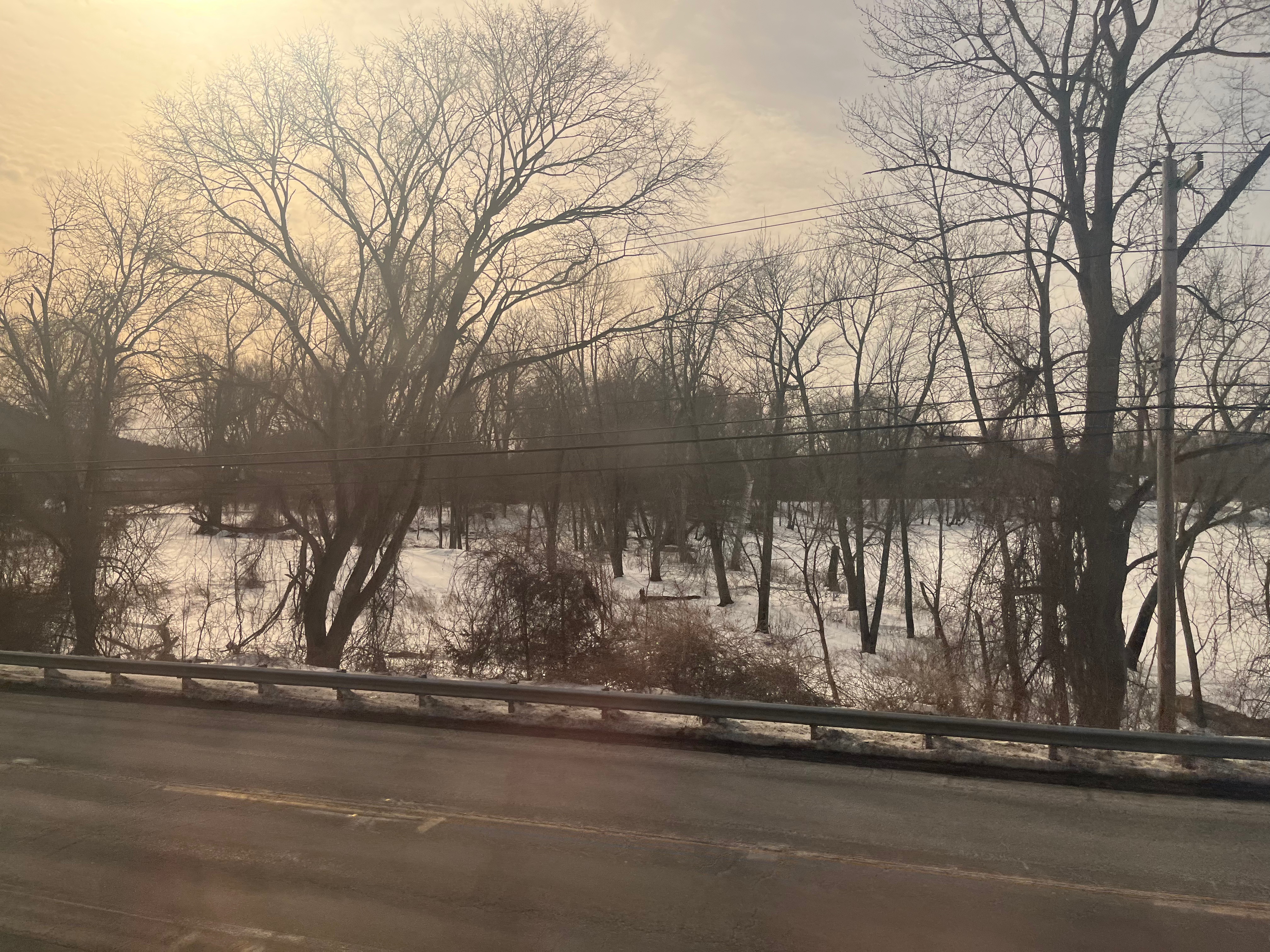
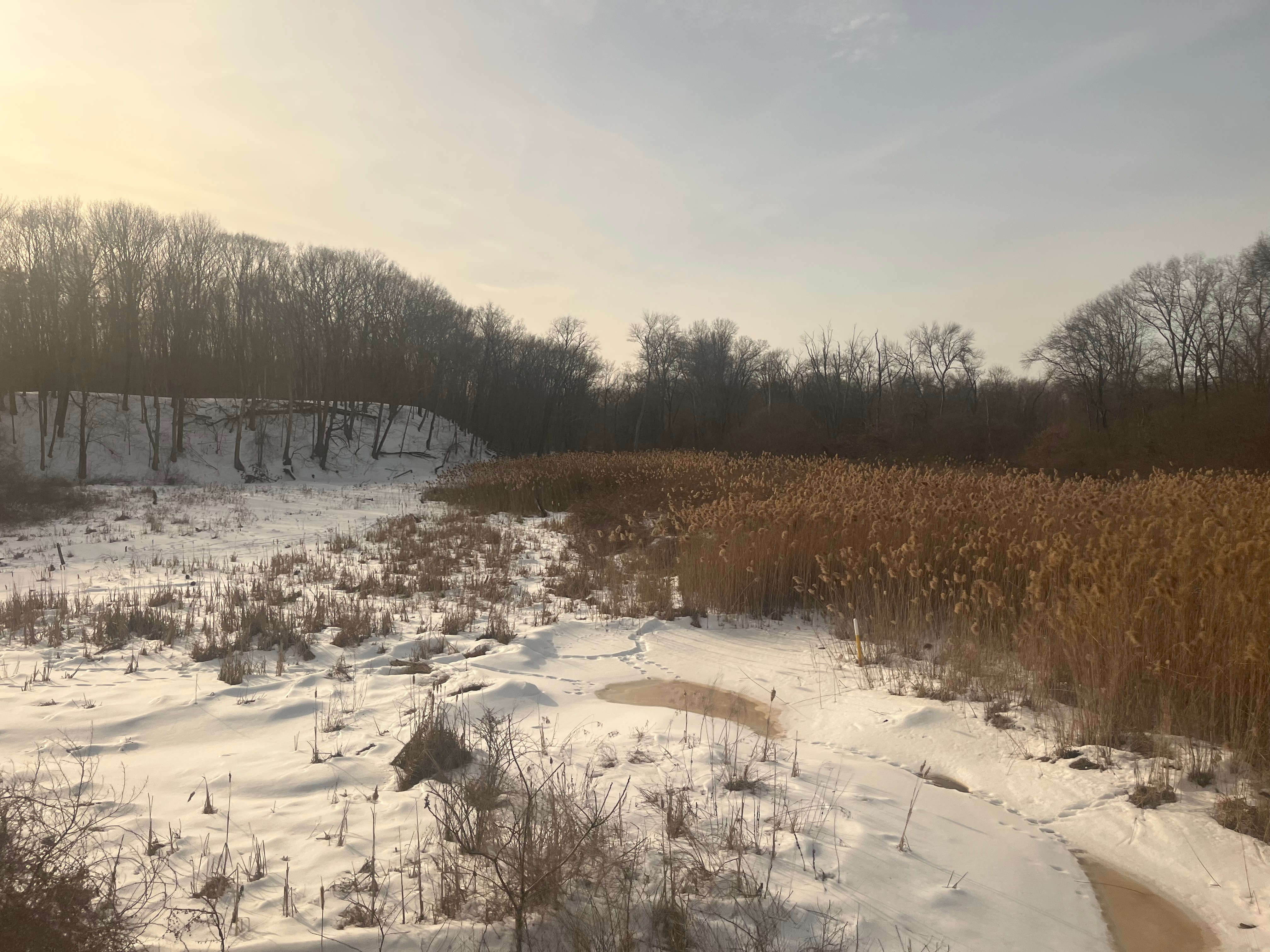
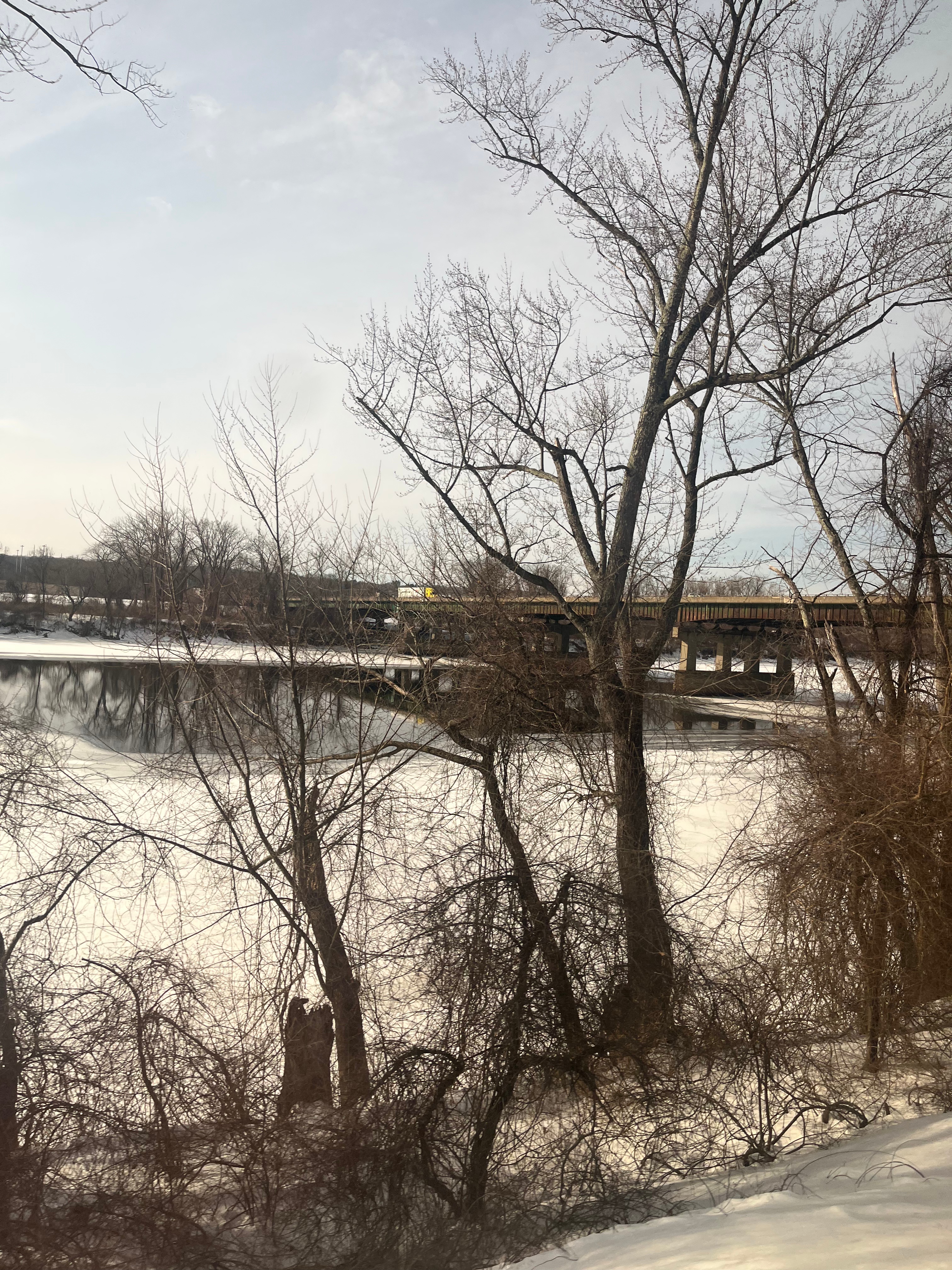
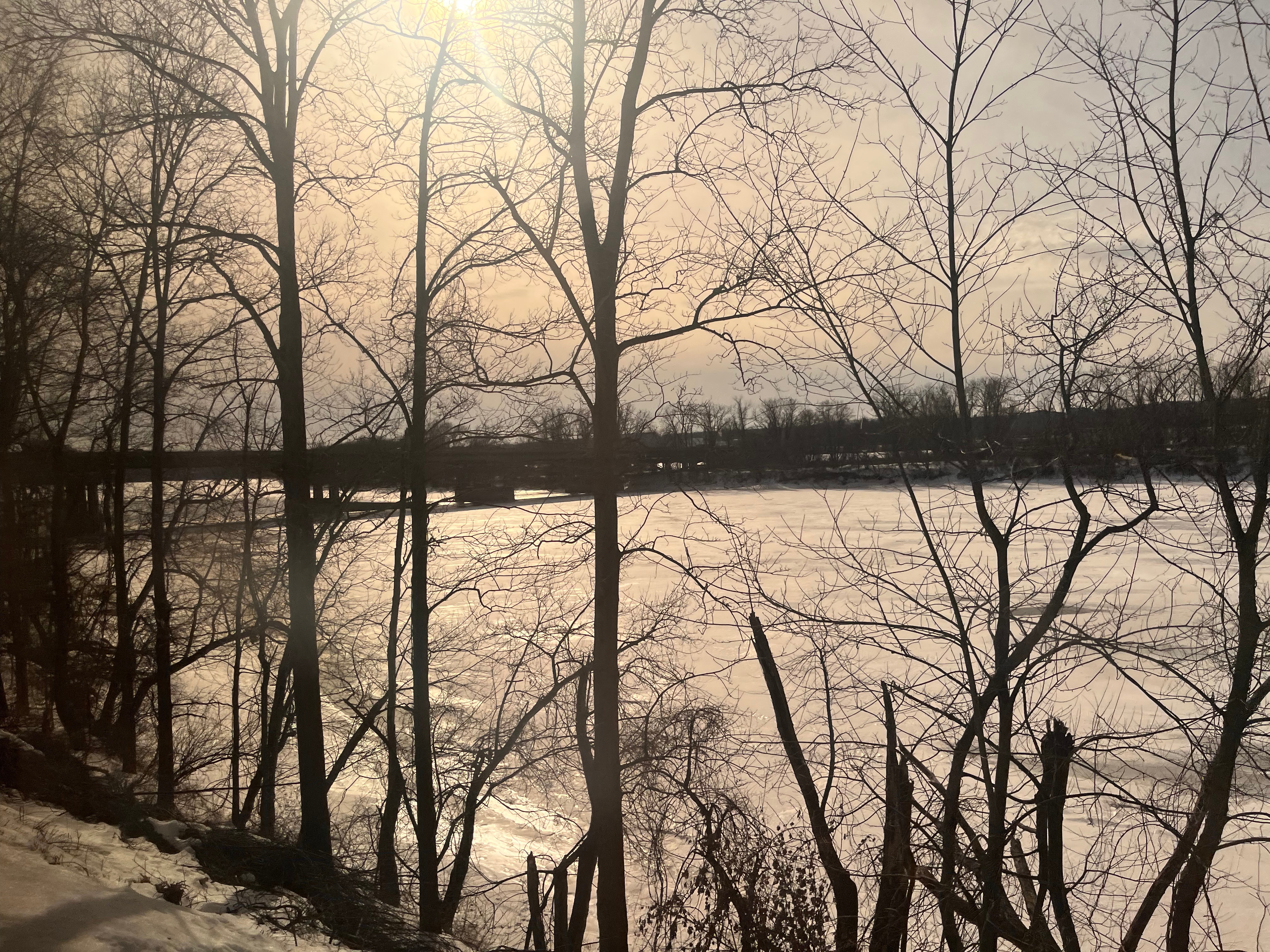
After New Haven, the landscape shifts. The dense corridor of the Northeast opens up into riverbanks, farmland, and distant mountains. As we began riding along the Connecticut River, the views turned unmistakably New England with wide white fields under snow, clusters of trees, and churches.
The train stayed fairly full through Connecticut, then gradually emptied as we crossed into Vermont. By the time we passed the first few Vermont stops, whole rows opened up and the car grew noticeably quieter. This was a welcome change as it’s hard not to absorb the stress that comes from other people trying to find a seat on a packed Amtrak.
We rolled into St. Albans just after 9:15 p.m., slightly behind schedule but honestly close enough in my book. The few of us that were getting off here had to take great care on the steps as the snow and ice had covered them. I then walked a few minutes over to my hotel, which happens to be the only one in this small town.

Day 2 – Day in St. Albans
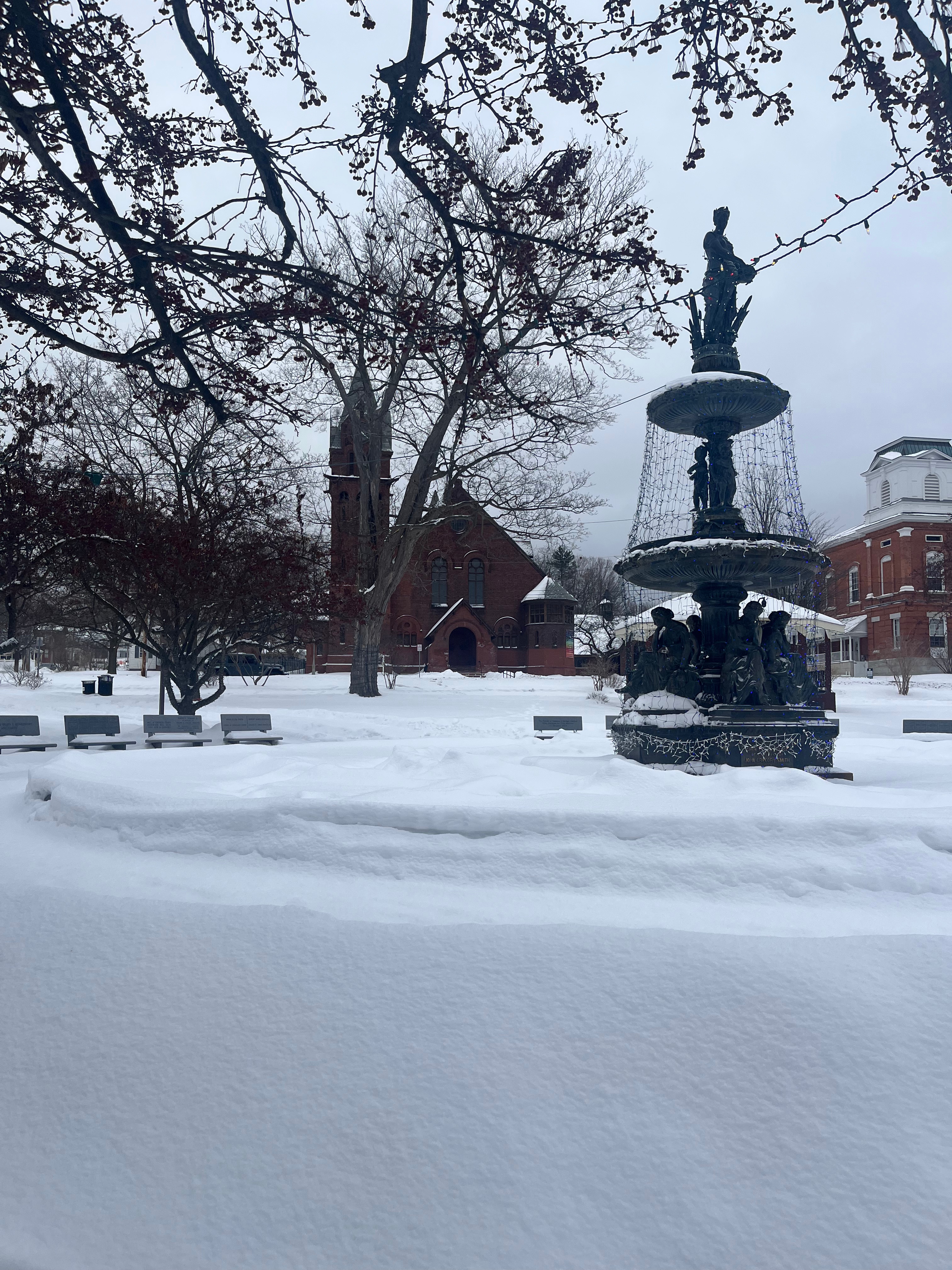
After a good night of rest, I woke up to it actively snowing. That wasn’t in the forecast, but it was just enough to be pretty instead of a hinderance.
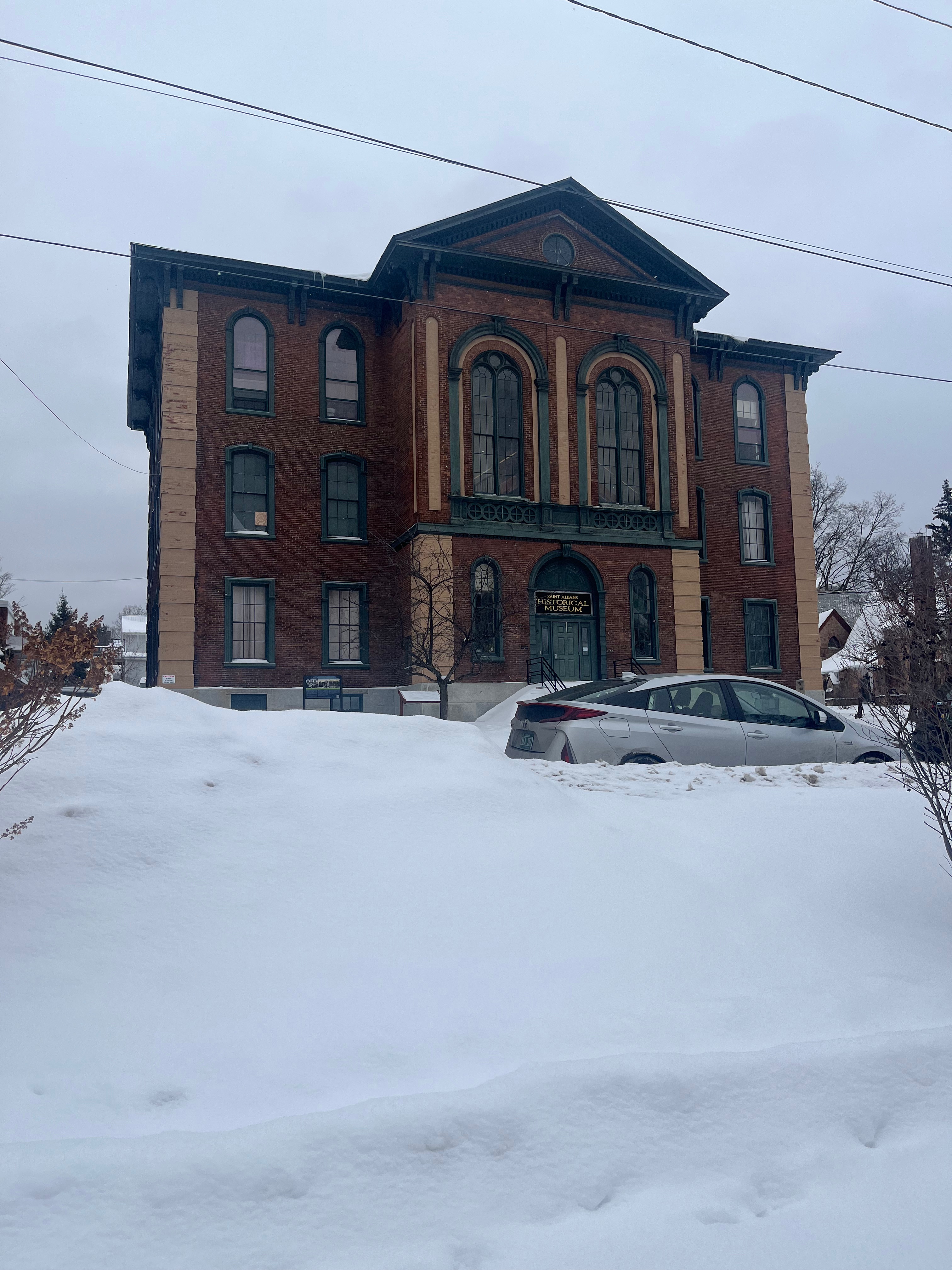
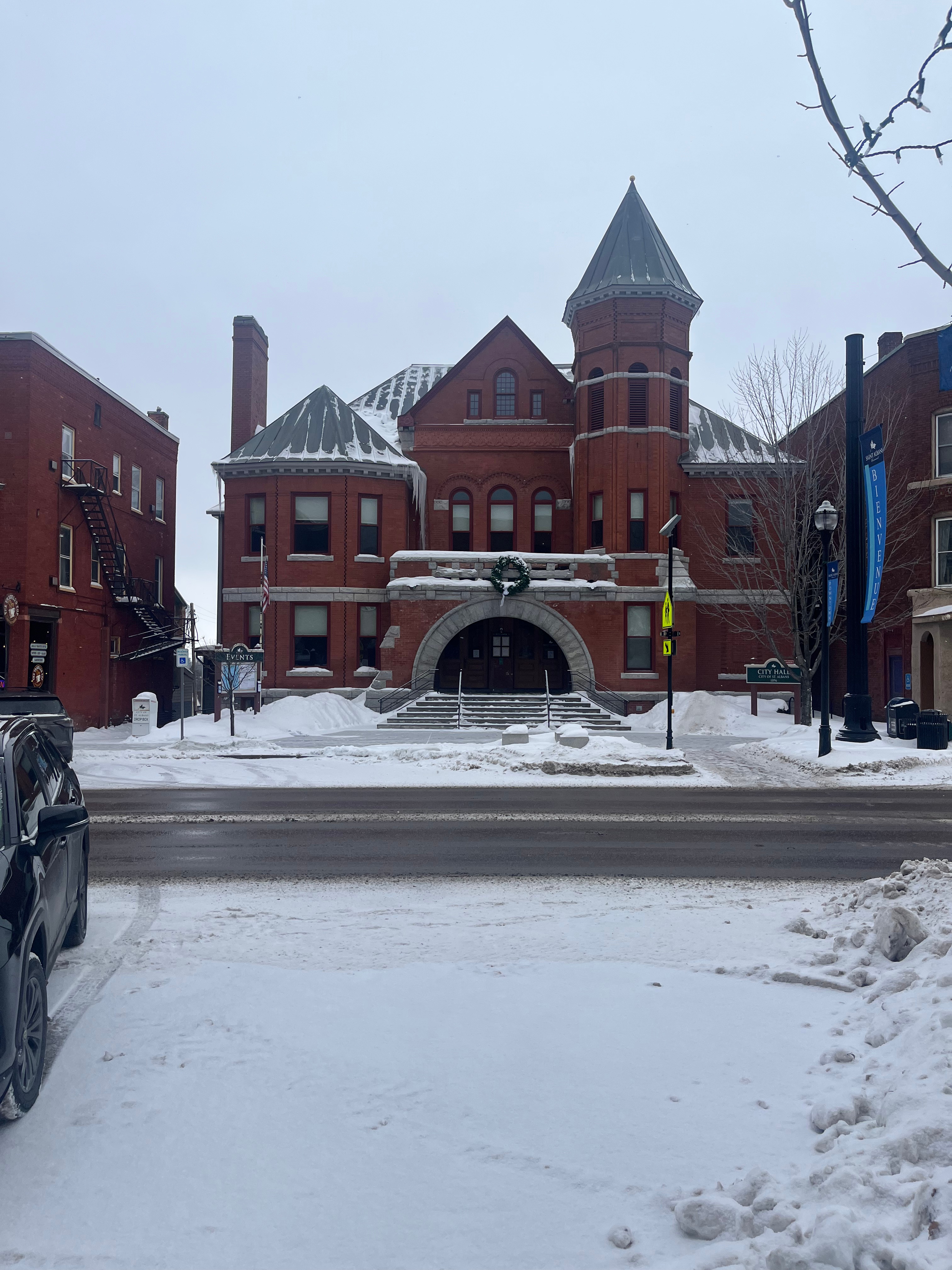
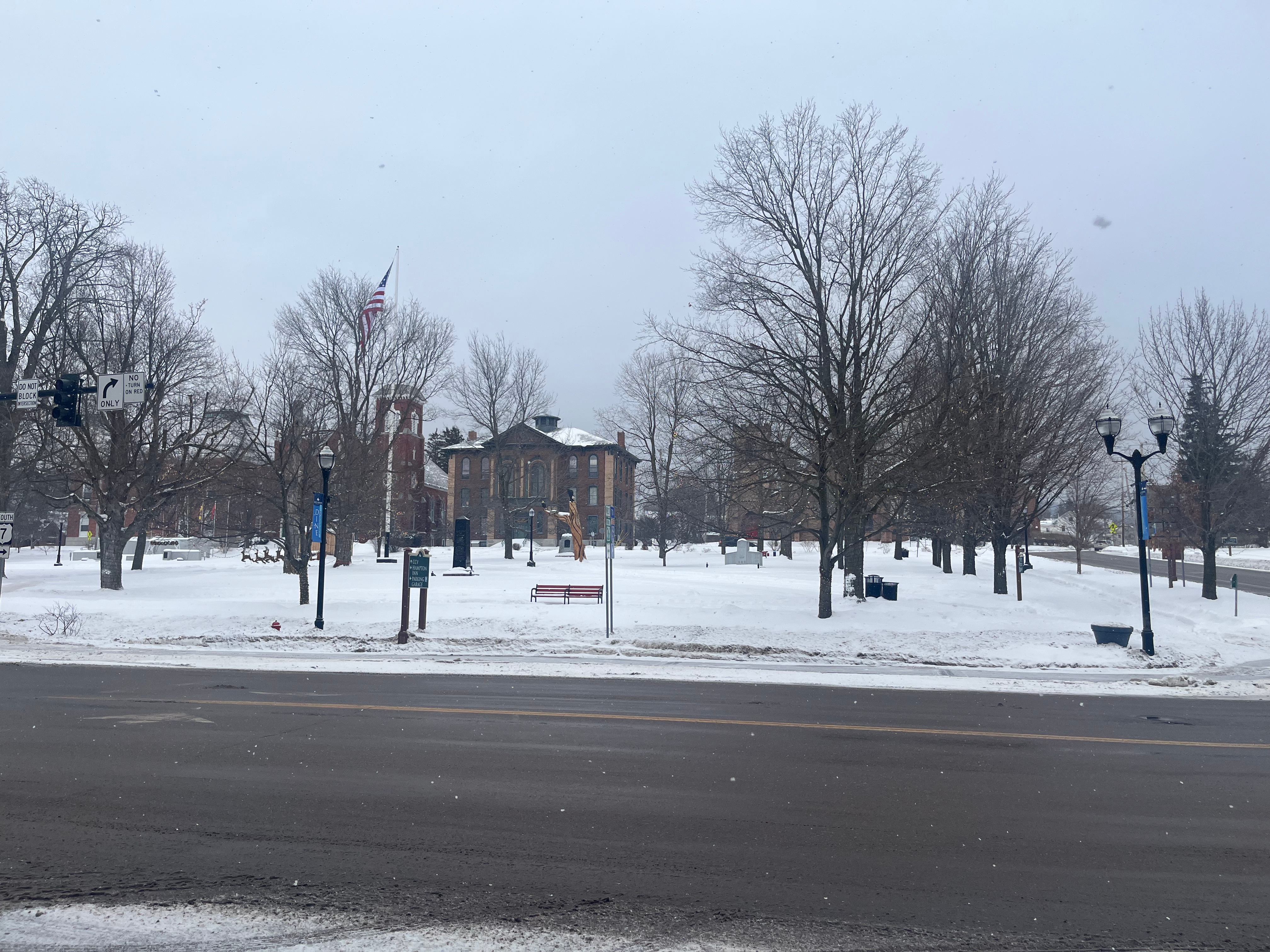
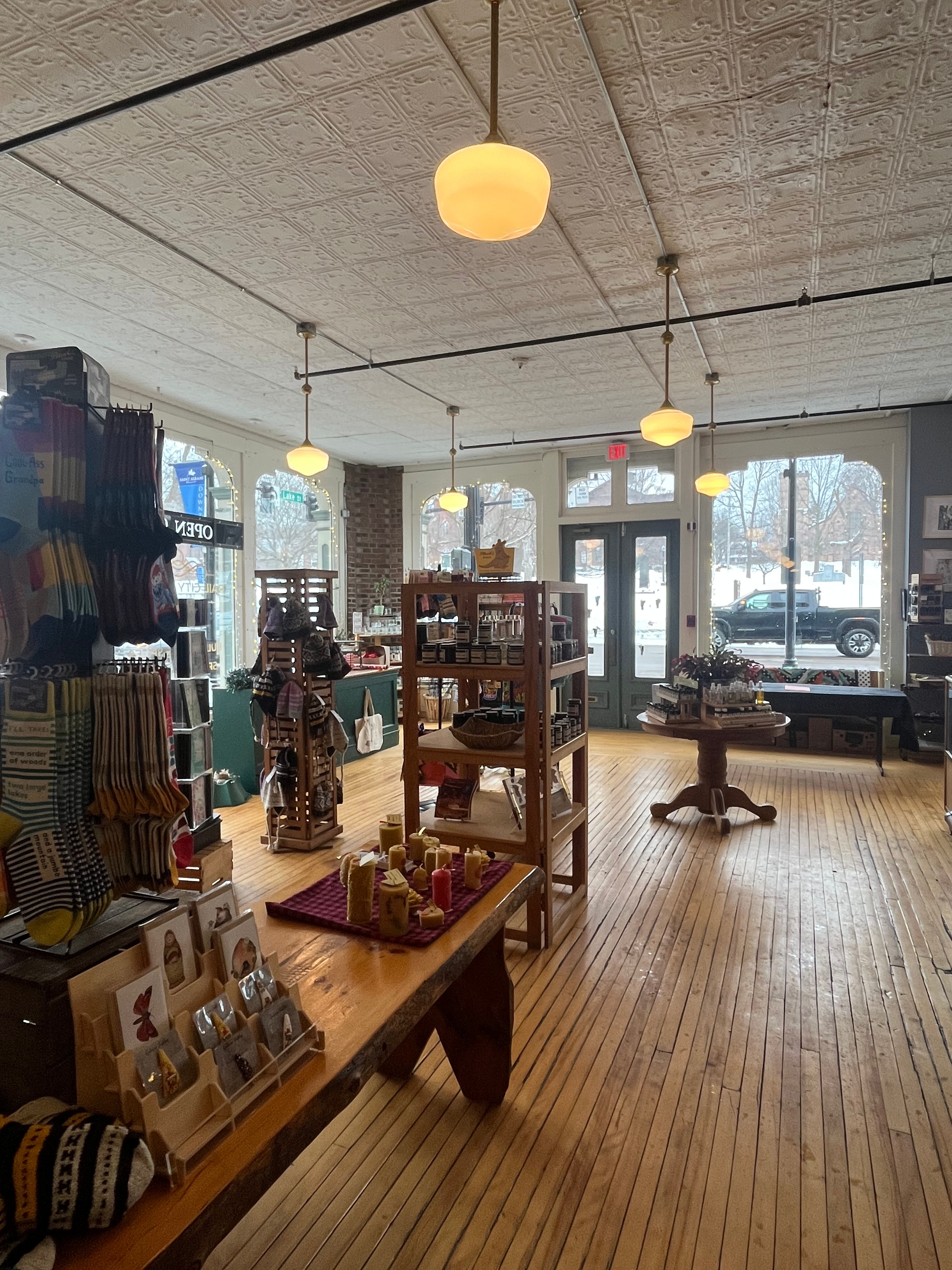
As it let up, I made my way over to the downtown area. The main thing to keep in mind is that St. Albans is small. The downtown area is compact and walkable, and you can comfortably see most of it in an afternoon without rushing, especially in the winter when a lot of the more nature forward things aren’t really an option. If you’re looking for museums, major attractions, or a packed itinerary, this isn’t that kind of destination.
What you can expect is a relaxed pace. I spent the late morning and afternoon walking through downtown, stopping into a few local shops, and generally just exploring without a strict plan. It’s the kind of place where you make your own structure for the day rather than following a checklist of must-see sights.
I ended my day with some takeout. There were several dining options in the area, so if you decide to make this trip, you’ll definitely be able to find something to your liking.
Day 3 – Southbound from St. Albans
After eating another free (but really included-in-the-cost-of-the-room) breakfast, I make the same three-minute trek over to the St. Albans Amtrak station. The contrast from Washington two days earlier was immediate. No semicircle of anxious passengers. No departure-board standoff. No coordinated power-walk to the platform. Just a handful of us standing around calmly because we knew there would be plenty of room.
I carefully picked out the best window seat in a completely empty Amtrak car, which was honestly similar to the one I had been in on my journey up. Why mess with something that’s not broken?
We started our journey again right on time at 9:15 am. The scenery was immediately the beautiful landscape that I had seen the other day, which I was happy about because I knew I was missing something after it got dark around Bellows Falls on my north-bound ride. If you only want to take this ride one way and are trying to decide which way to go, I’d highly suggest going north to south, especially in the winter months where it gets dark early.
Similar to my ride up, this train was pretty empty up until about New Haven. That’s where I gained a seatmate, who had ridden Amtrak for the first time every earlier that morning and was now riding back to Baltimore. I also met a first-time rider in the cafe car that told the attendant to take her time as he “had nowhere to be for the next three hours”. He said it in a way like he was taking this long, arduous journey that no one else would be able to beat. I decided not to tell him that I:
- Had been on for hours before and would be on hours after he got off
- Have been on multiple multi-day train rides and this was very short comparatively
We did have some mechanical issues immediately after New Haven. What I gathered from the announcement I heard half of and through the grapevine was there was some sort of connection issue when they switched over from diesel to electric and that it’s actually pretty common. Throughout the rest of the ride the lights would flicker on and off and I was worried they’d have to stop and fix it, but the engineers kept going.
We finally pulled into D.C. around 10:40 pm, about 20 minutes after we were scheduled to get in. Again, technically late, but in the grand scheme of things, not earth-shattering. D.C. had a few warmer days after I left, so a lot of the snow and ice we had gotten from Winter Storm Fern had melted. I was definitely not complaining about that as it stopped feeling like a winter wonderland a day or so after it all came down. However, it felt strange to think that just twelve hours earlier I’d been surrounded by a Vermont winter that wasn’t going anywhere anytime soon
Final Thoughts
This route was definitely deemed one of the most scenic winter routes for a reason! There was no shortage of beautiful snowy landscapes and definitely no shortage of time to take it all in.
If you’re planning this trip primarily for scenery, I strongly recommend riding north to south, especially in the winter when daylight is limited. The most visually rewarding stretch begins after New Haven, when the train starts following the Connecticut River and pushing deeper into Vermont. On the northbound schedule, that part lands later in the day, which means losing some of the best views when the sun goes down.
If a 14-hour journey is too much, another solid option is riding only to (or from) New Haven. Anything south of New Haven overlaps with several other Northeast Corridor routes and, comparatively speaking, is less exciting scenery-wise. If your goal is sightseeing rather than simply transportation, New Haven is the perfect cutoff point.
Another thing to consider is that since this is an east coast route, Amtrak uses the single level Viewliner equipment instead of the double level Superliner equipment. This is because the Superliner equipment is too tall for several of the tunnels on the east coast. The coaches are pretty much the same in both, but what does change is the fact that there isn’t a sightseer lounge. The original intention was to have Viewliner versions of the sightseer lounge, but that idea was scrapped due to (you guessed it) budget constraints. I missed having the panoramic views, the sense of community, and different seating options the sightseer lounge always brings, but don’t know how I’d feel about being exposed to the open air after the roof of a Superliner was ripped off after going through a tunnel that was too short.
Overall, this was a great trip and I’m glad I took it in the winter, despite the initial hesitation! I could easily see myself using the Vermonter again to explore other Vermont stops along the line.
 Commute Curios
Leave a comment