Those who ride public transportation are pretty familiar with what their specific agency’s public transit vehicles look like. That makes it a little bit interesting when a train or bus pulls up and it doesn’t look like what you’re expecting.
While most riders try to look unaffected by the change (especially the non-tourists just trying to get to work on a weekday morning), it’s fun to see others admiring the designs and even pulling out their phones and taking pictures. Some rail fans go so far as to hunt them down on purpose, which is made easier thanks to tools like WMATA’s “Special Edition” tracker on their live service map. The surprise vehicle change injects a little fun into what is often seen as completely utilitarian and gives transit agencies and brands a different way to stand out.
Defining the “Wrap”
In this post, when I say “wraps,” I’m referring to full or nearly full removable vinyl coverings that cover the vast majority the bus or train, not just a few stickers or logos. Those smaller graphics (covering maybe 25–75% of the surface) can be interesting too, but that’s a discussion for another day.
How are wraps installed?
Here’s a good video showing people installing a full body wrap on a bus for Harris County Precinct 4. Although it seems like this isn’t technically a public transit vehicle, it’s similar enough to buses that are used in that way to give you an idea of how wraps are installed.
Here’s a video of a TransPennine Express train being wrapped to celebrate Eurovision being held in Liverpool. It seems to be a similar process to how the bus was wrapped, but on a much larger scale.
Finally, here’s a video of a wrap being removed. Again, I had some trouble finding videos of trains or buses being unwrapped, but this should still give you an idea of the removal process. Heat seems to be the key.
Why do transit agencies go through the hassle?
According to bartable, train and bus wraps achieve two things:
- Generating ad revenue
- Masking a cosmetically damaged car
These reasons are very apparent and applicable to most transit systems that wrap their vehicles. When I was doing my research, most of the wraps I was coming across were advertisements, which serves the first purpose. WMATA and a couple of other systems have also wrapped trains and buses to serve the second purpose, which is explained further below. However, not discussed in this article is when agencies wrap vehicles for their own purposes, such as to celebrate a holiday or mark an occasion.
WMATA is a great example of this. While the transit agency has wrapped their trains and buses since 2004 for advertising reasons, it’s really only been somewhat recently where they’ve started wrapping vehicles for their own purposes. General Manager Randy Clarke started the initiative as he wanted riders to feel proud of the system and feel a sense of ownership in taking care of it. According to WMATA spokesperson Ian Jannetta, “Metro is an integral part of our community and we take pride in being part of the holidays and special events that our customers observe every year…” and “wraps are a great way to bring our community together and build excitement for transit.”
Another agency that has wrapped transit vehicles for all of the above reasons is the Metropolitan Transit Authority of Harris County Texas. The President and CEO of the agency at the time (George Greanias) discussed train wraps in this 2012 video. He talked about the red Stop.Think train, which the agency did for themselves (I can’t quite tell what the campaign was for though). He also specifically discussed two partnerships that resulted in wraps:
- Reliant Energy – Reliant was changing its logo at the time and wanted to make sure people knew about it. The transit agency wanted to promote ridership. Thus, Reliant paid for a vinyl wrap on a train and the fares of riders going to the Houston Texans game. Greanias specifically said this partnership was a good way to introduce people to riding transit as the free fare provided a lower barrier to entry.
- Museum District – Promoted the Museum District, which was a new development at the time for learning about things from art to history to national science.
Criticism
There has been some backlash against WMATA’s use of train and bus wraps, with some riders questioning why the agency would prioritize aesthetics while facing a $750 million fiscal shortfall in FY2025.
In response, WMATA clarified that the non-advertisement vinyl wraps incur no cost to the agency. Under its revenue-generating contract with OUTFRONT Media, the advertising company covers the cost of the wraps as part of its agreement with WMATA.
WMATA is not the only transit system that has received criticism about train and bus wrapping. In 2017, the Delhi Transit Police temporarily suspended full-body advertisement wraps on buses, citing safety concerns. A 2014 ruling had previously limited advertisements to the left and rear sides of buses. The State Transit Authority (STA) revisited the issue in 2015 and allowed right-side ads in May 2016. However, in October 2016, one STA member raised concerns that right-side ads could distract motorists and increase the risk of accidents, prompting another suspension of full-body wraps.
However, full body wraps for Delhi are being reexamined. In April 2025, the STA put together a committee of three experts to look into the matter again. The situation is still ongoing.
WMATA Wraps
There are two main reasons WMATA wraps their trains and buses. The first is to generate ad revenue and the second is for commemorative/celebratory reasons.
Advertising Reasons
If you’ve spent any time in the WMATA Metrorail system, you’ll know how hard it is to miss all the ways advertisers are trying to get your attention. This includes ads everywhere from the mezzanine floors to the ceilings inside train cars. And it’s no different on the Metrobus.
This makes sense – many people in the DMV use the metro system daily. In fact, WMATA is on track to surpass one million daily riders across its rail and bus systems. That makes advertising on Metro an enticing option for advertisers to reach their target audience.
McDonald’s was the first company to take advantage of Metrorail’s advertising potential through a full train wrap in 2005, which was 29 years after the system first opened. At the time, WMATA was looking to grow its non-fare revenue, which was around $29 million through Metrobus and Metrorail advertising initiatives. This was during a time of financial hardship (which some may argue is always the case for WMATA but was specifically mentioned in this case).
The company paid $54,000 to wrap two six-car trains on the Orange Line for a three-month campaign. The wrapped trains debuted at New Carrollton station on May 9, 2005.
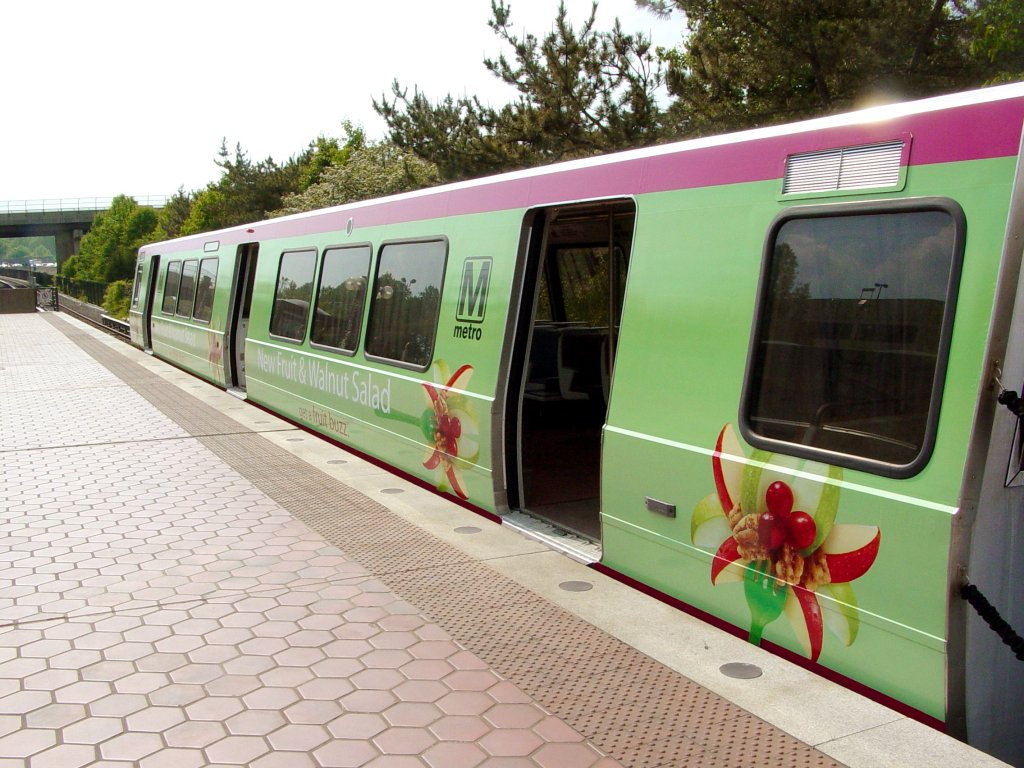
Advertisers are required to pay for the cost of the vinyl full wrap of each car, installation, and
removal, as well as the ad space cost for one four-week period. WMATA receives approximately 68% of the total space value as revenue from train wraps.
While WMATA is not able to guarantee certain rail lines, advertisers can choose the number of rail cars to wrap. For example, when McDonald’s and Cirque de Soleil advertised with WMATA, they chose to fully wrap two train cars. In contrast, Red Bull chose to only wrap a single rail car for one of their advertising campaigns.
WMATA began wrapping buses a bit earlier than trains in 2004. Unfortunately, there was not a definitive source for exactly which advertiser had the rights.
Unfortunately, I wasn’t able to find information on how much a WMATA bus ad wrap costs. However, if you’re curious, a SEPTA bus wrap can cost around $10,000, with rates varying depending on the number of vehicles wrapped, service routes, and other factors.
The sale of advertising on Metrobuses and in the Metrorail system, including train and bus wraps, is handled by OUTFRONT Media. WMATA awarded them the first contract in 2014 and locked in a new ten-year contract in 2020.
Commemorative/Celebratory Reasons
While train and bus wraps sponsored by advertisers are most common, I wanted to make sure I covered the wraps riders tend to enjoy the most. Besides, I don’t think most people reading this are interested in wrapping a train car or bus themselves.
While looking through train and bus wraps WMATA and OUTFRONT Media have sponsored in the past, I grouped them into different categories.
Holiday Wraps – Christmas/The Holidays
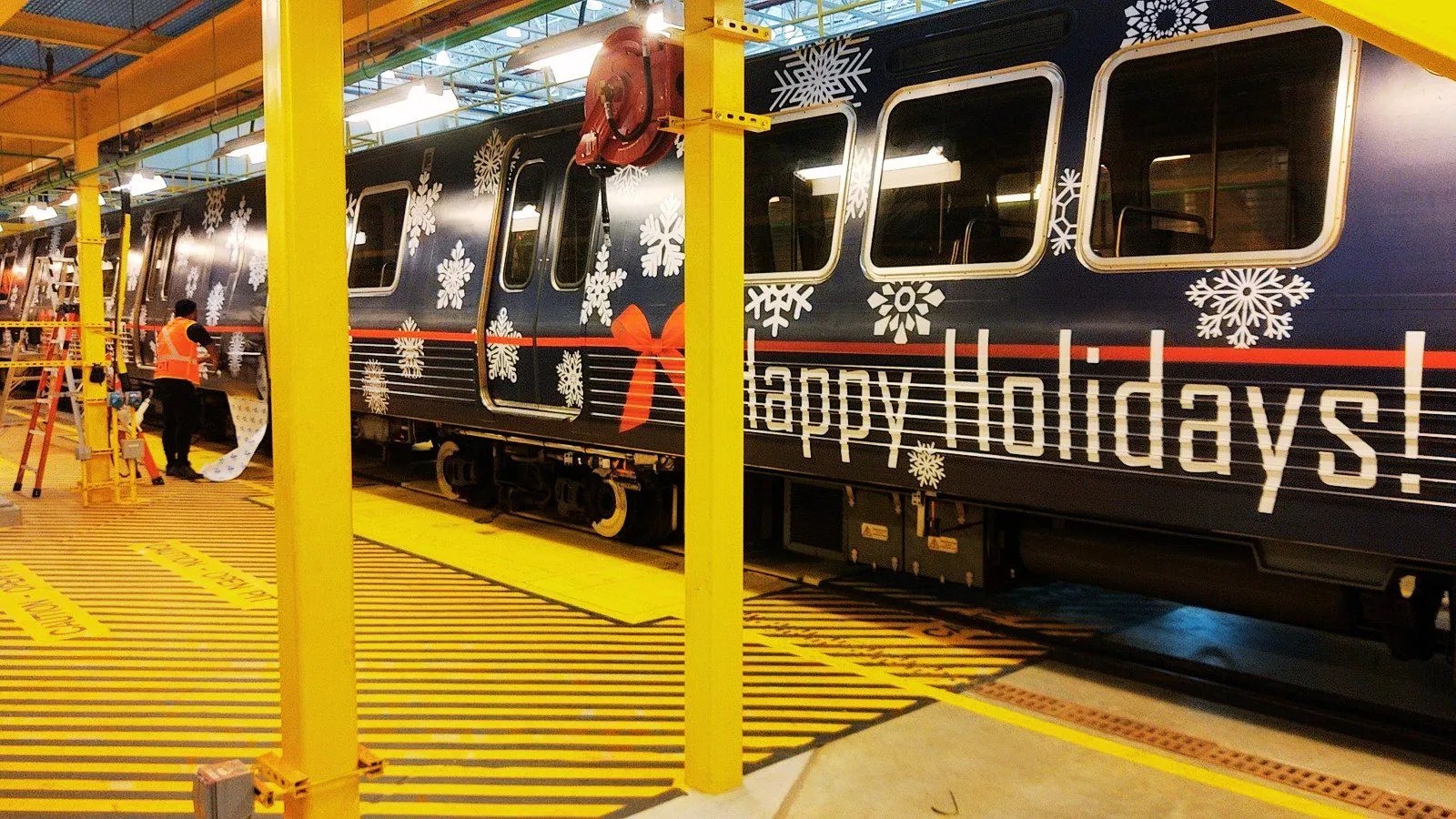
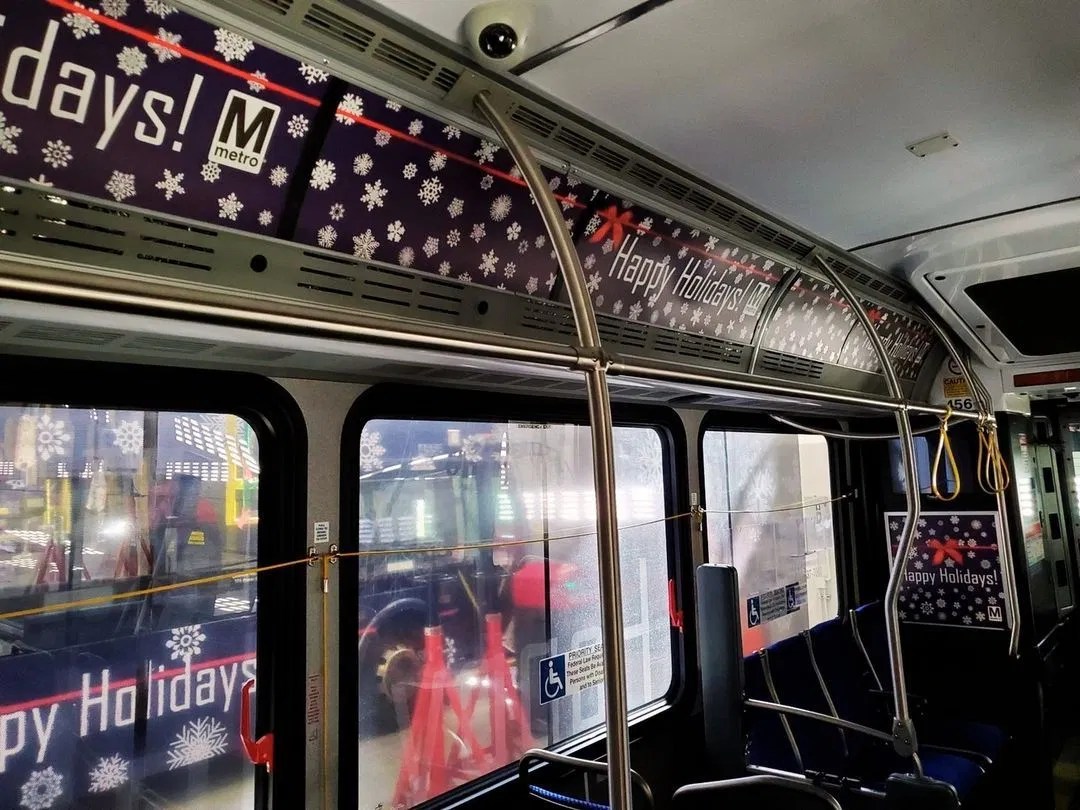
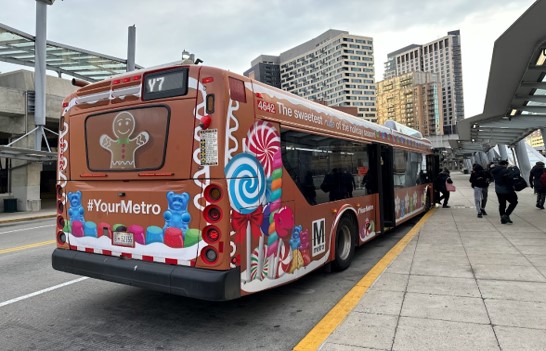
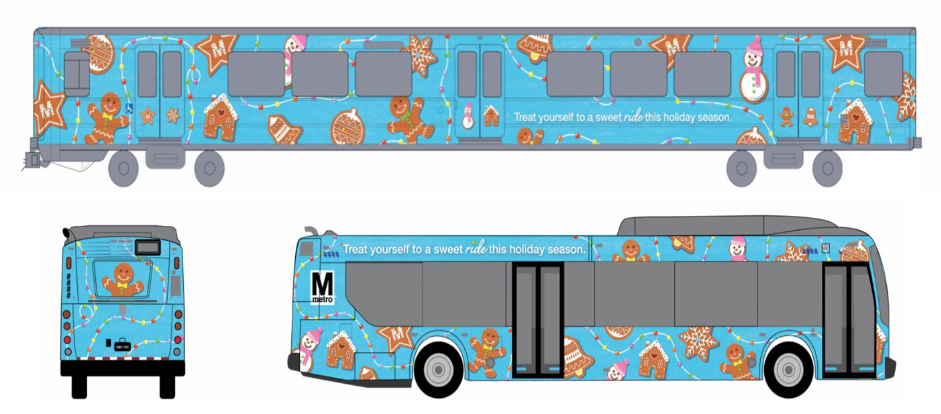
Holiday 2022 (Slides 1 and 2) – This was the first year WMATA wrapped trains and buses for the holiday season. Sorry for the not-so-great example of the wrapped bus; for some reason it was difficult to find a picture.
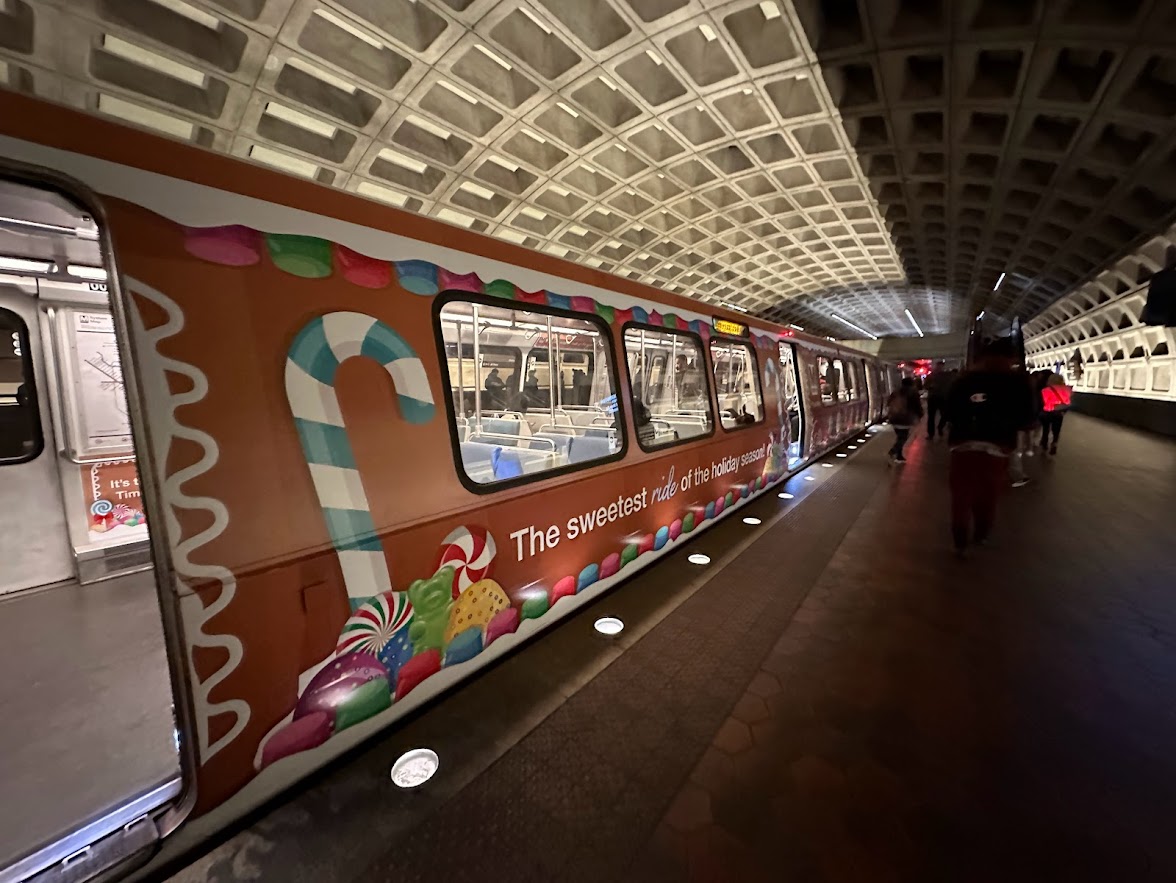
Holiday 2023 (Slides 3 and 4) – This was the second year WMATA wrapped trains and buses for the holiday season. There was even a corresponding game where WMATA challenged riders to take pictures of the Metro items that had been wrapped (trains, buses, and even a pylon) and send them an email. Five winners were picked at random to receive a “Ho Ho Go Giftbag” which contained $75 worth of Metro merch.
Holiday 2024 (Slide 5) – Last year, WMATA wrapped one train and three buses in observance of the holiday season. In the linked article, WMATA clarified that 2024 was their third year wrapping trains and buses for the holiday season, meaning that the 2022 season was their first.
Holiday Wraps – The “Less Festive” Ones
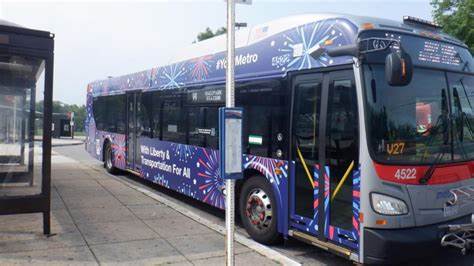

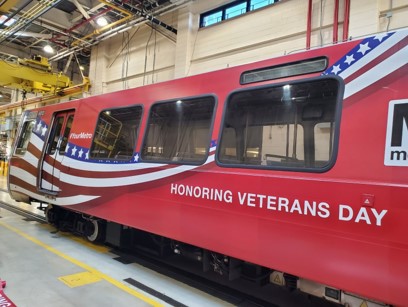
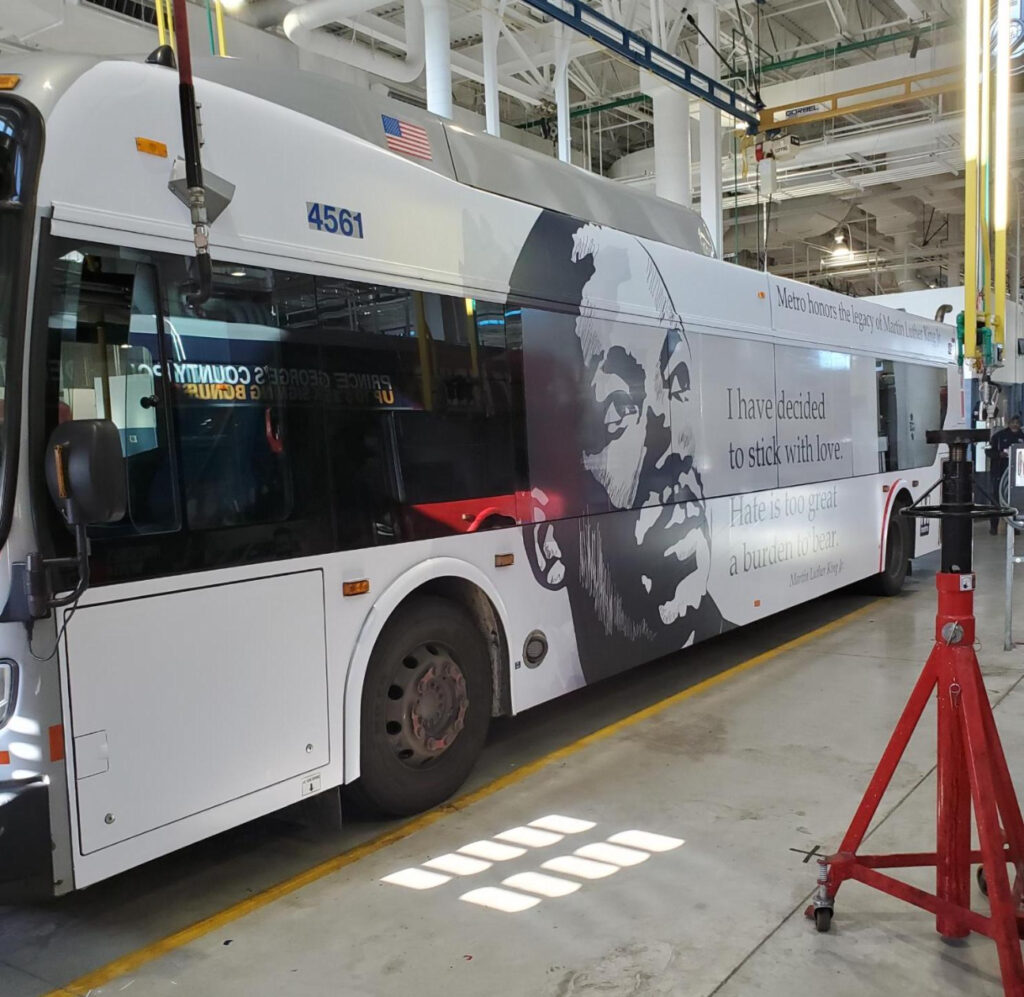
Fourth of July 2023 (Slides 1 and 2) – This was the first year WMATA decided to wrap their trains and buses for Independence Day. Their theme was “With Liberty and Transportation for All” (which is a nice slogan, but far from the truth nationwide if they’re specifically talking about public transit).
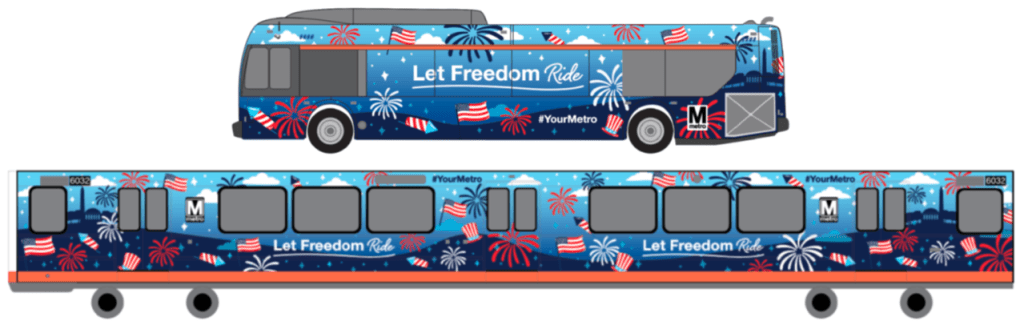
Fourth of July 2024 (Slide 3) – This was WMATA’s second year wrapping trains and buses for Independence Day, as well as providing fare free rides after 5:00 pm. Their slogan appears to have been “Let Freedom Ride”, which continued the tradition of transit-ifying patriotic slogans.
Veterans Day 2023 (Slide 4) – WMATA released one train and one bus to celebrate Veteran’s Day in 2023. It makes sense as the area has one of the largest veteran populations in the country.
MLK 2023 (Slide 5) – WMATA decided to celebrate MLK Day in 2023 by wrapping two buses. The wraps had a picture of King and displayed the quote “I have decided to stick with love. Hate is too great a burden to bear” from his 1967 address to the Southern Christian Leadership Conference.
Earth Day 2023 and 2024
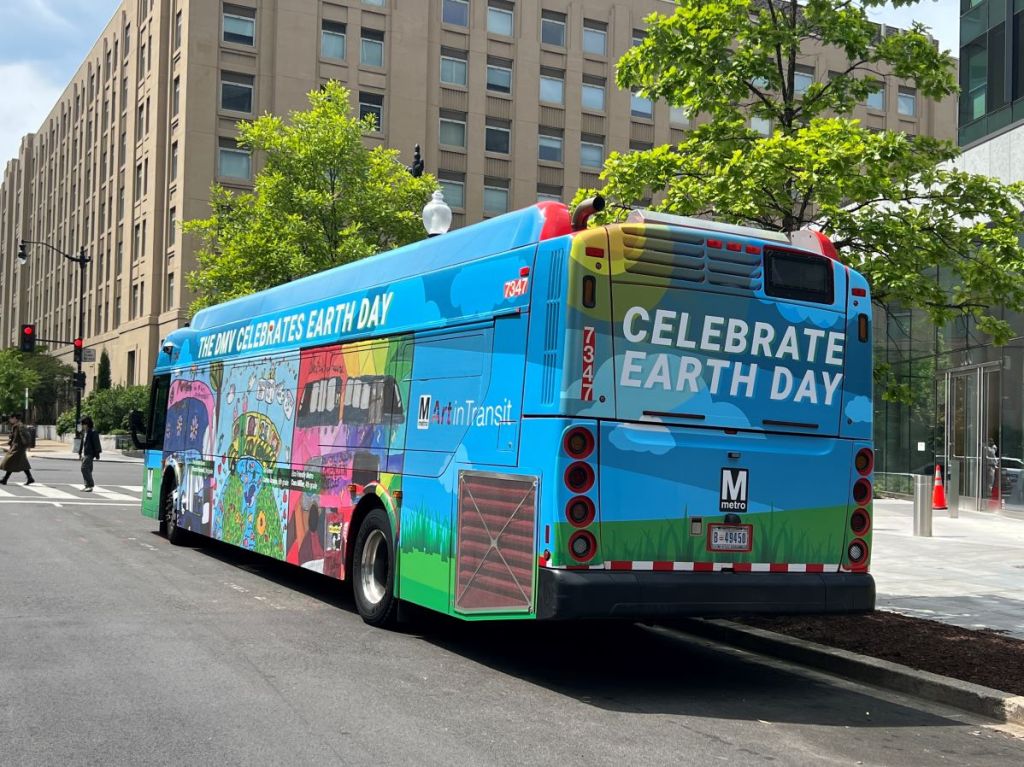

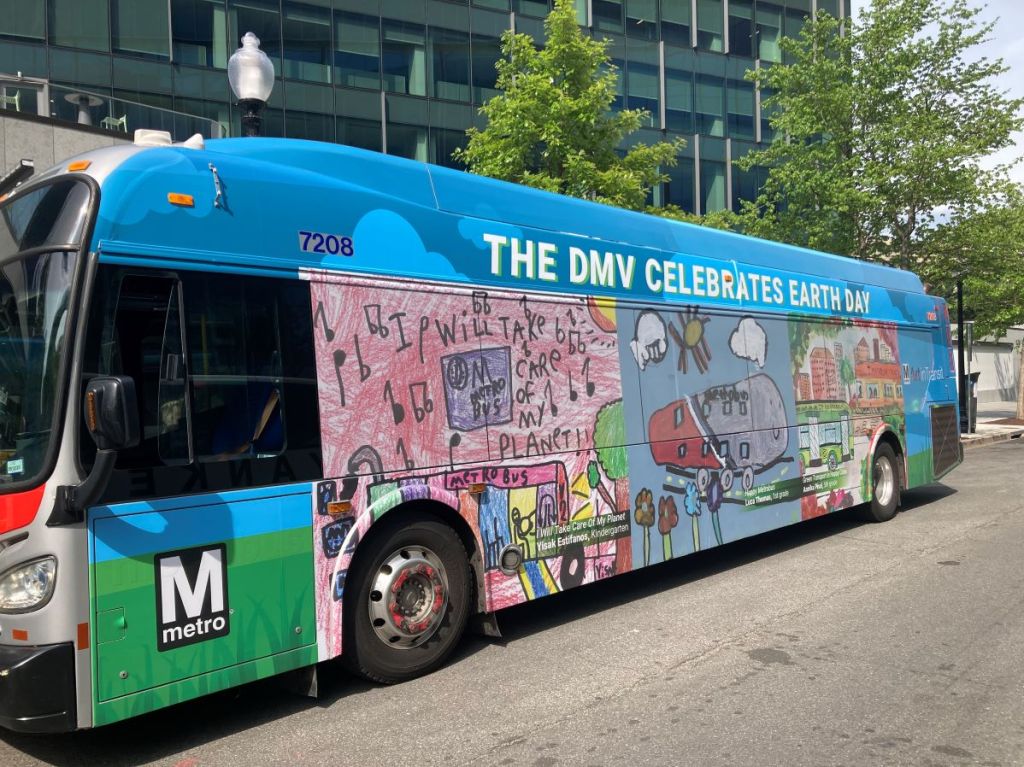
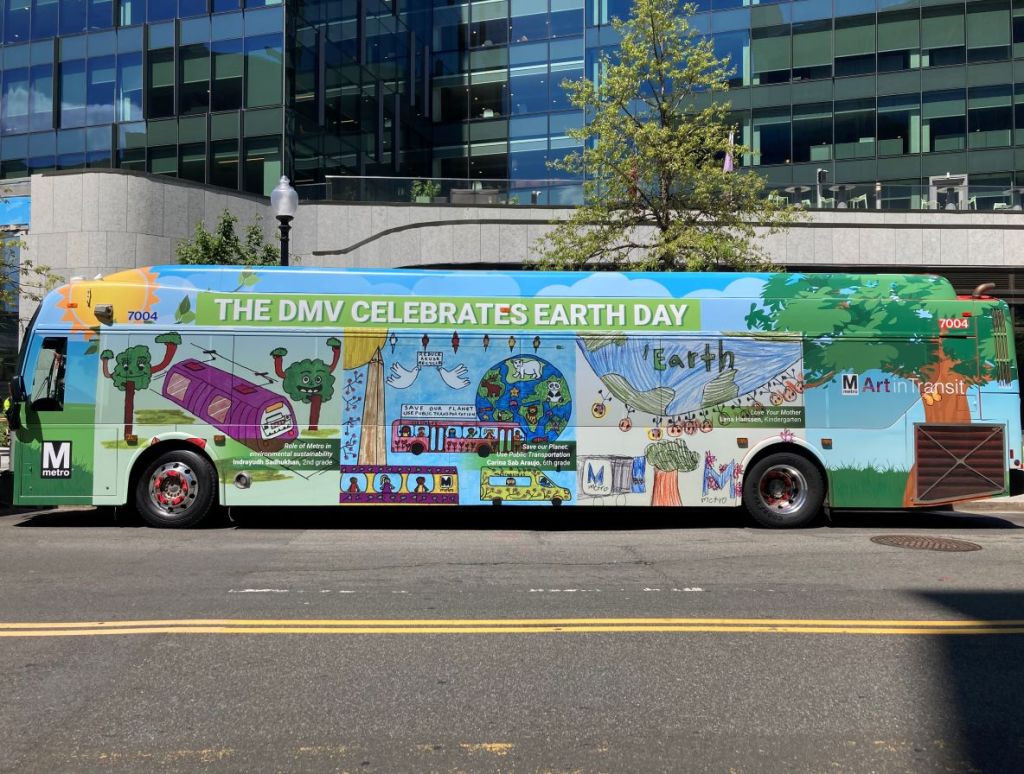

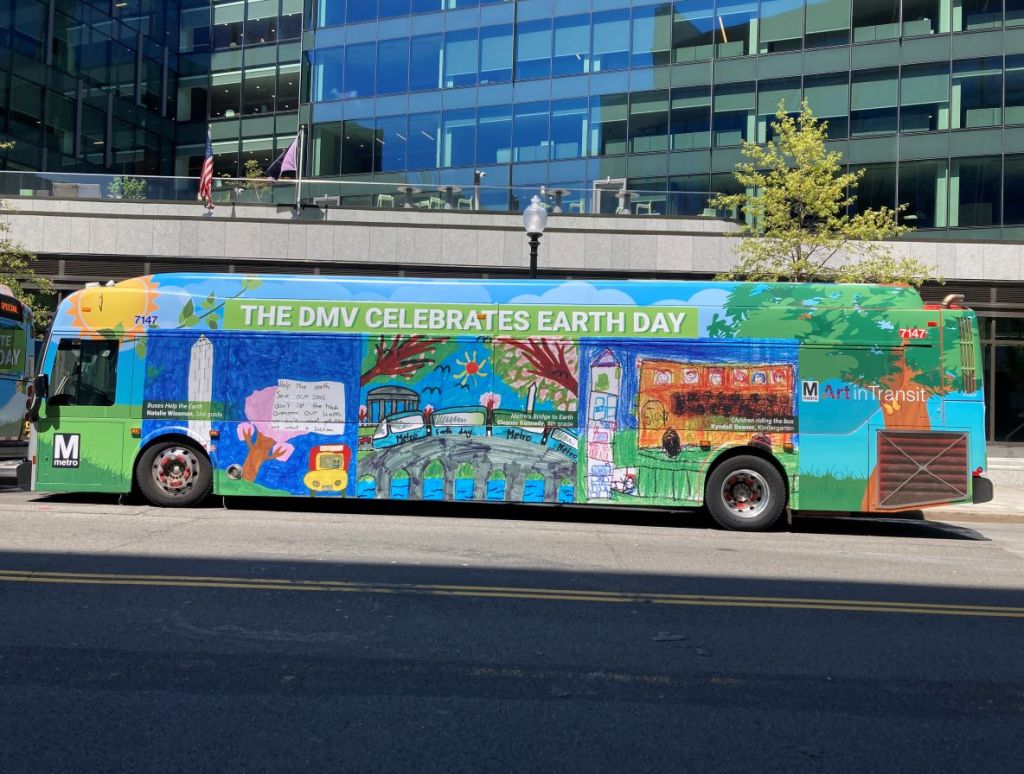
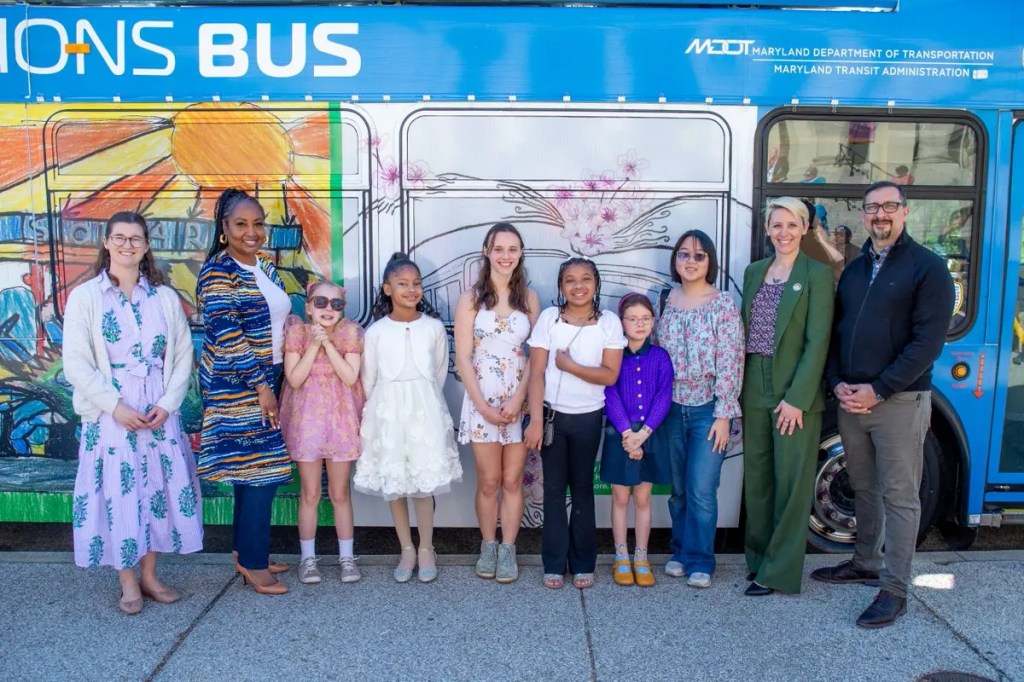
While a holiday, I wanted to give the Earth Day buses their own section. These were a little different from the other holiday wraps (festive and less festive) as they were organized and funded by Art in Transit. For more information on them, you can visit their website.
Earth Day 2023 (Slides 1 through 3)- WMATA revealed three Earth Day wrapped buses featuring artwork created by students in kindergarten to sixth grade. Maryland (Slide 1), Virginia (Slide 2), and D.C. (Slide 3) each had their own bus with the artwork corresponding to where the students lived.
Earth Day 2024 (Slides 4 through 6)- This was the second year WMATA showcased student artwork on wrapped buses for Earth Day. As before, Maryland (Slide 4), Virginia (Slide 5), and D.C. (Slide 6) has their own buses wrapped artwork by students from that area.
WMATA and Art in Transit chose to not wrap buses with student artwork in 2025. Instead, the organizations chose art from a student in Maryland, Virginia, and D.C. and hung it up in the corresponding WMATA offices. Digital animations of the artworks were also displayed on the screens at six Metro stations (Crystal City, Farragut North, NoMa-Gallaudet U, Gallery Place – Chinatown, L’Enfant Plaza, and Metro Center). I’m not sure why there was a departure from wrapping buses for Earth Day this year, but it’s nice that WMATA continued the tradition of showcasing student art.
While not WMATA, I did see that MDOT wrapped buses with student artwork in 2025 (Slide 7). This was their second time doing it, so I’m guessing they got the inspiration from WMATA after 2023. Here’s a video of them installing a wrap.
Cherry Blossom Season
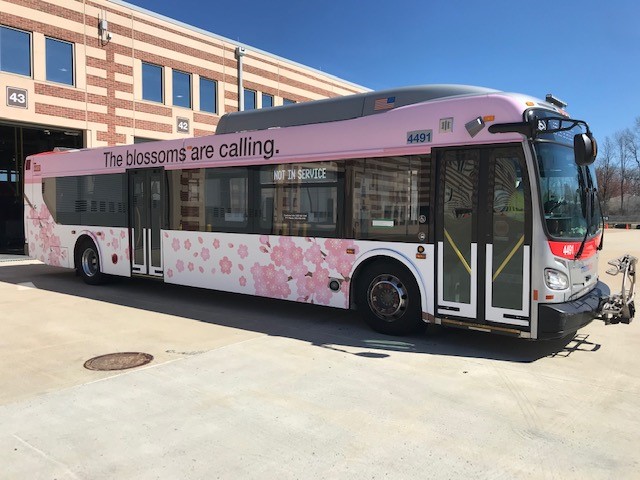
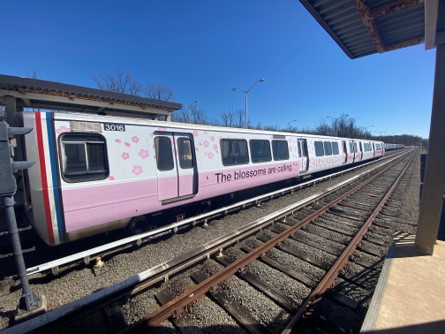
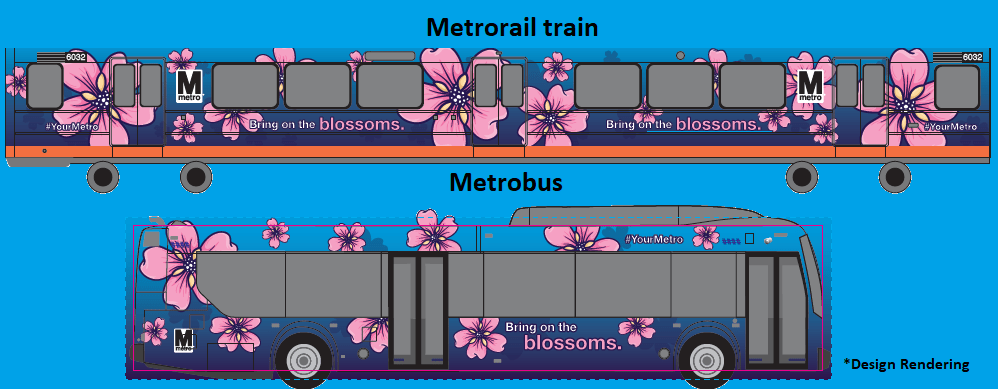
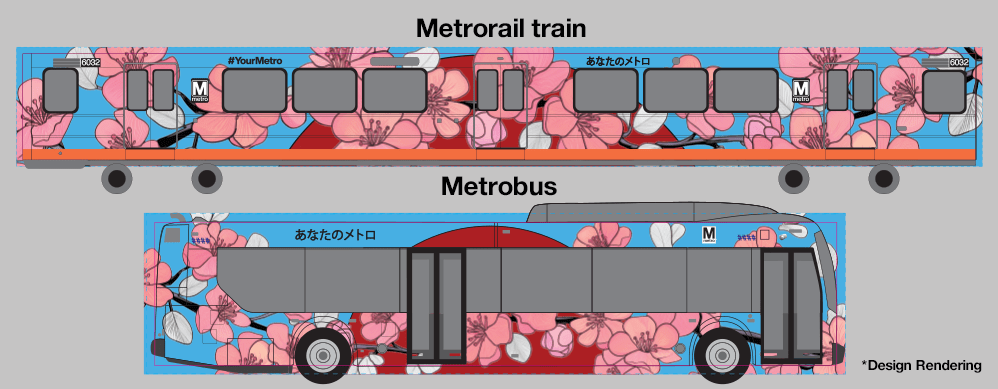
Cherry Blossom Season 2023 (Slides 1 and 2) – This appears to have been the first year WMATA wrapped a train and buses for cherry blossom season. As usual, they went with the default one six-car train and two buses. The idea of wrapping transit vehicles for cherry blossom season make sense as it is traditionally one of the highest ridership periods for Metro.
Cherry Blossom Season 2024 (Slide 3) – WMATA wrapped a six-car train and three(!) buses for cherry blossom season this year.
Cherry Blossom Season 2025 (Slide 4) – Finally, this is the most recent cherry blossom season wrap WMATA has released. The linked article also confirmed this was the third annual wrap, meaning the first one was in 2023.
Pride Month
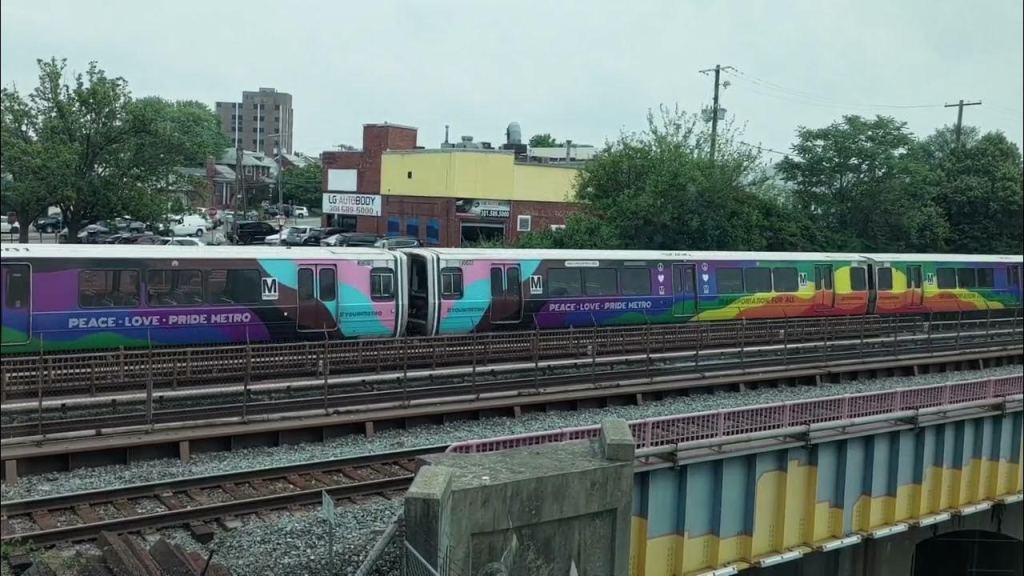

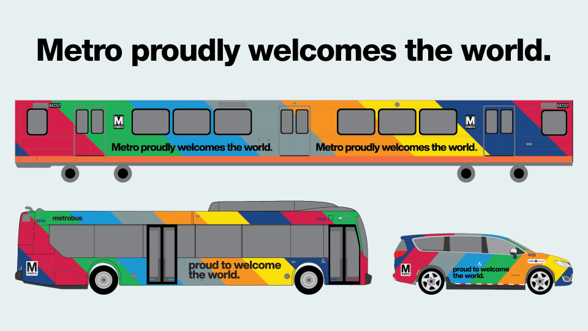
Pride 2023 – WMATA wrapped a six-car train and two buses for Pride for the first time in 2023. 600,000 people were expected to celebrate Pride in the area this year.
Pride 2024 – WMATA continued their annual Pride tradition in 2024. The theme for this year was “Be True. Be You.”
Pride 2025 – This was WMATA’s most recent Pride wrap. This one was especially special as D.C. hosted World Pride.
Miscellaneous
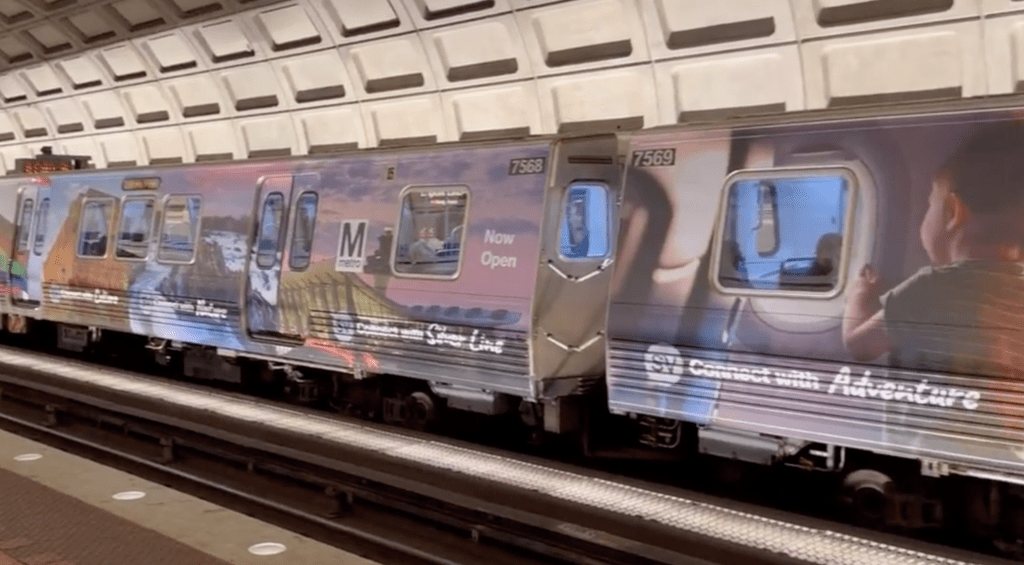
Silver Line Extension 2022 (Slide 1)- Metro opened the Silver Line extension in November 2022. However, it looks like this specially wrapped train wasn’t released until January 2023. It had pictures of pandas, Dulles Airport, the Lincoln Memorial, and more. I don’t quite understand the pandas being featured as those are at Woodley Park Zoo (which is on the Red line), but who am I to tell WMATA to stop using the pandas in their branding?
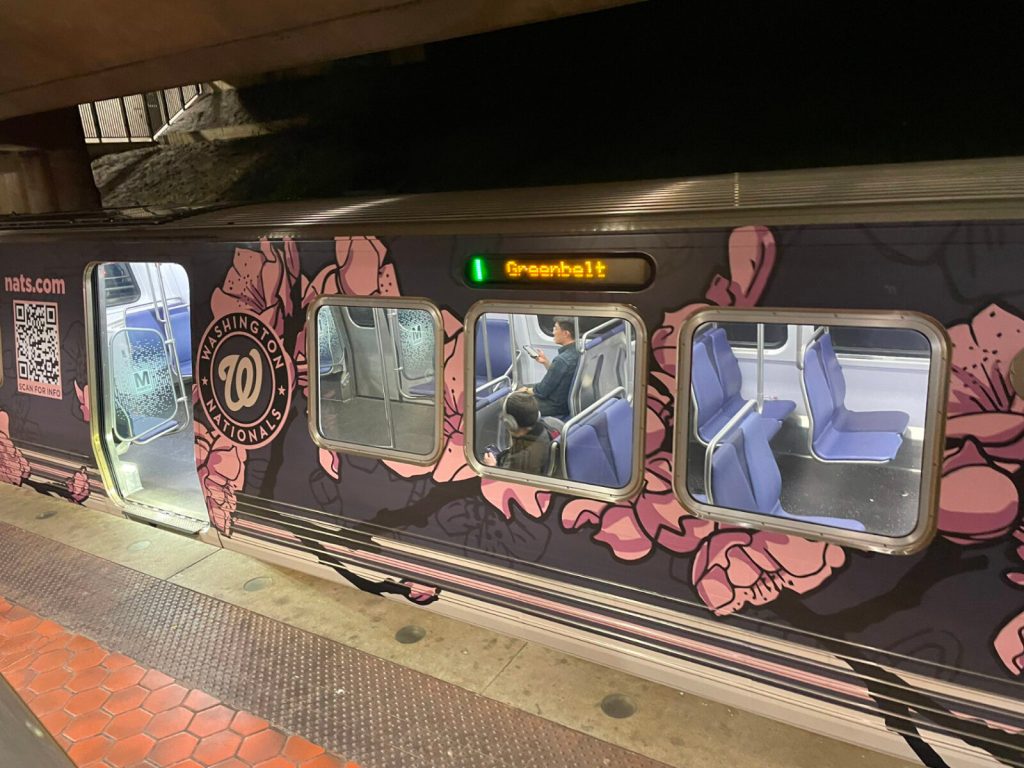
Nationals City Connect 2023 (Slide 2) – Not to be confused with one of the cherry blossom wrapped vehicles, this wrap was an advertisement for the Washington National’s special City Connect uniforms. The ad also had a QR code that led people to a schedule that had each date the special uniforms would be worn.
Bonus Reason – Making Old Cars Look New?
Something interesting I came across while researching for this post was WMATA’s attempt to make their trains “prettier”. In 2017, the agency announced that they were launching a pilot program to wrap the exteriors of older train cars (Series 3000 and 6000) to make them look similar to the Series 7000 trains as part of their Back2Good initiative. Other upgrades included changing the seat covers to blue and installing new floors.
WMATA said that wrapping trains was more environmentally and economically friendly than buying new trains or repainting older ones. They also said that making the trains visually appealing would attract more ridership.
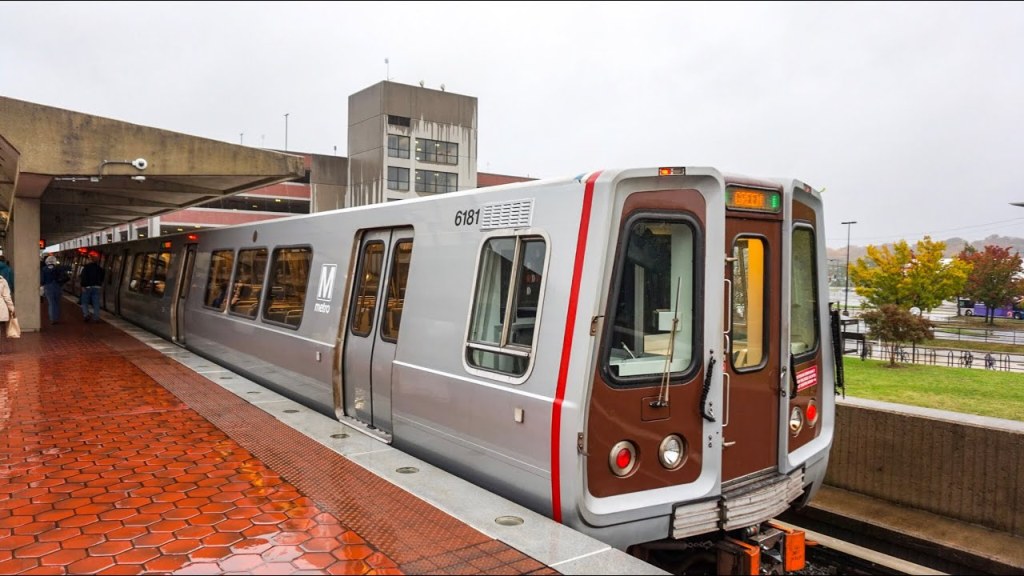
Here’s the corresponding video for the above Series 6000 wrapped car.
However, criticisms were thrown around. Some people said that if WMATA was concerned about the appearance of the older trains exteriors (specifically them looking dirty), they should just wash them more often rather than trying to cover it up. Riders were also concerned about WMATA choosing to spend money on wraps while they were facing budgeting issues.
I can’t say I disagree with these takes. I don’t think this was covered by OUTFRONT Media since it wasn’t really an advertisement or celebratory wrap. Also, some of the reasons WMATA originally gave for wrapping their older trains can be easily argued against. For example, I don’t think many people are riding the Metro exclusively based on how they look. Sure, a visually appealing car can make people feel more at ease while riding, but I feel like that could have also been achieved by keeping the older looking cars clean. Riders have also continuously expressed their number one expectation for transit systems is reliable and frequent service, and I don’t think this did much for that.
Other Systems
SEPTA (Philidelphia)
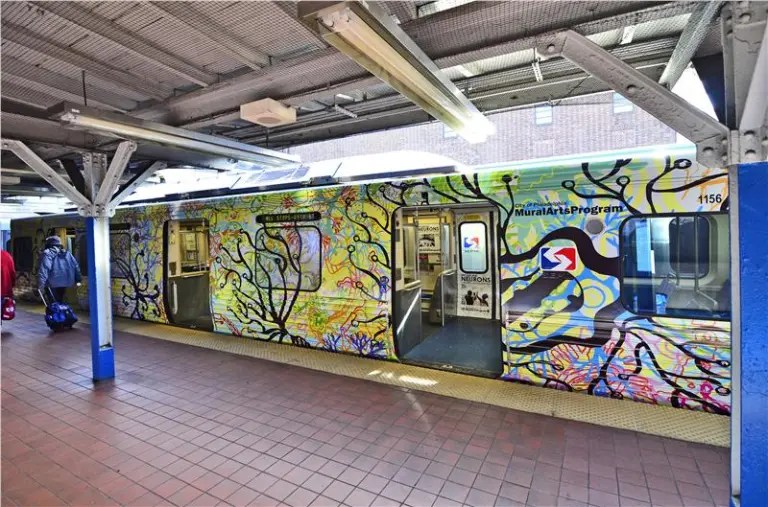

SEPTA BRAIN initiative/Volta Studio and Mural Arts LEAPs students 2013 (Slide 1) – During his State of the Union speech in 2013, President Obama discussed his support of an initiative mapping the human brain. Inspired by The BRAIN initiative, Volta Studio and Mural Arts Philadelphia’s LEAPs students partnered with artist Benjamin Volta to visualize their brains by drawing neurons. The drawings were collected and turned into a vinyl wrap for a train that ran down the Market-Frankford Line (Blue Line).
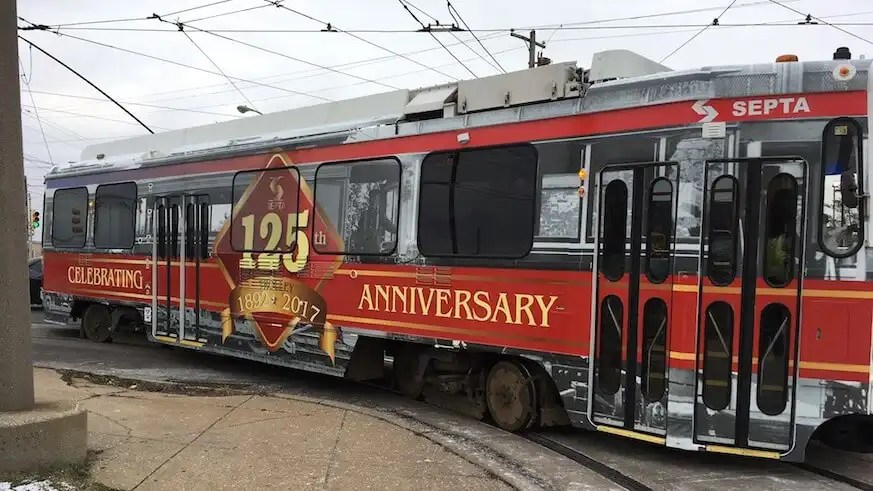
SEPTA 125th Anniversary Trolley 2017 (Slide 2) – The SEPTA trolley started service in 1892, making 2017 its 125th anniversary. SEPTA decided to celebrate that milestone by wrapping a trolley bus that ran down routes 11, 13, 34 and 36.
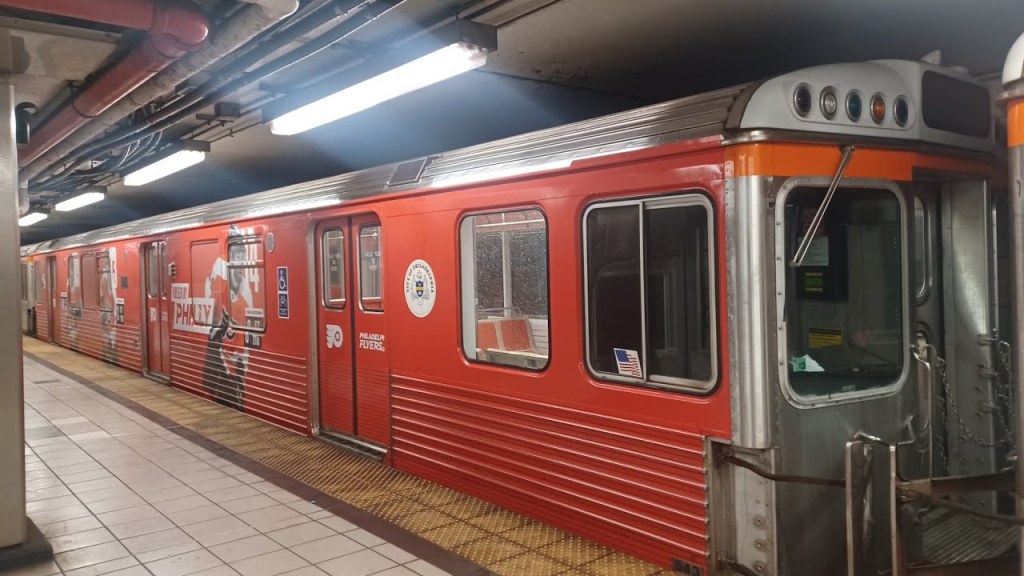
SEPTA Philidelphia Flyers Train 2022 (Slide 3) – I couldn’t find much context on this wrapped train, but if I were to hazard a guess, the Philadelphia Flyers hockey team paid for it to drum up excitement for their season. It also looks like SEPTA had increased service on the Broad Street Line (BSL) in 2022 to get fans to the games easier, so this wrap could have been a reaction to that.
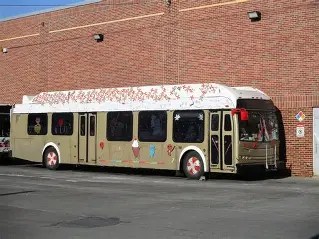
SEPTA Holiday 2017 Bus (Slide 4) – SEPTA holds a contest every year that allows SEPTA employees to decorate buses for the holidays. While not traditional vinyl wraps, I still wanted to include them because I liked the tradition and it achieves the same goal of getting people excited for the holidays by decorating transit vehicles.
SEPTA Wawa Station Bus 2022 (Slide 5) – Wawa paid SEPTA for exclusive naming rights of the new terminal station of the Media/Elwyn Line. This also resulted in the line being renamed the Media/Wawa line since SEPTA names its rail lines after the first and last stations. Wawa paid SEPTA $5.2 million for naming rights for ten years (through 2032) and was SEPTA’s fifth naming rights deal.
MTA (New York City)

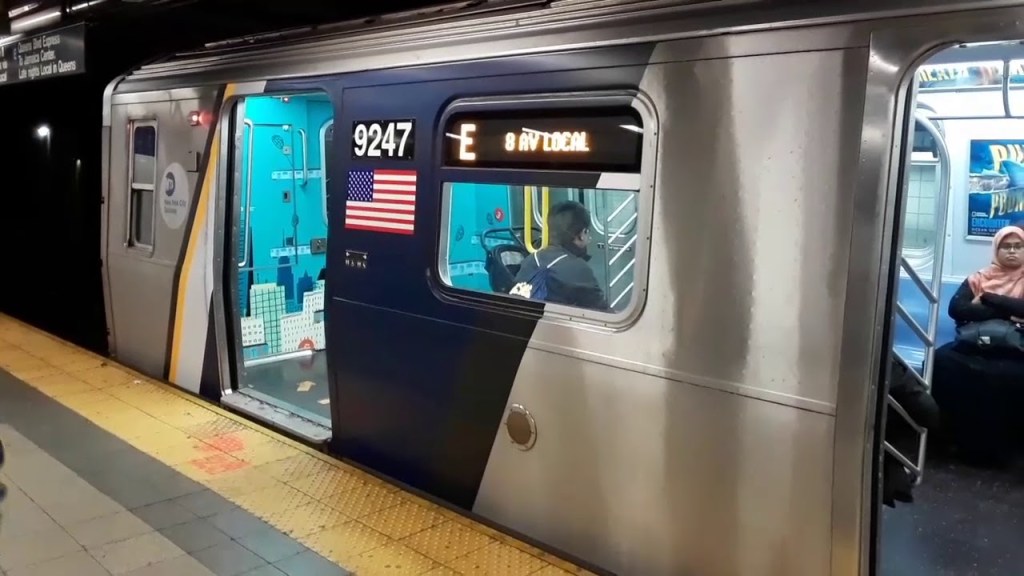


MTA Mets Wrap 2022 (Slide 1) – This wrap was released in October 2022 to celebrate the Mets making their first playoff run in six years. The specially wrapped train ran along the 7 train. These wraps and corresponding ads also had QR codes that led fans to the highlights and latest announcements about the postseason.
MTA Refurbished R16 Train 2017 (Slide 2) – Similarly to WMATA, the MTA wrapped some of their older trains to make them look newer and more “customer friendly”. I didn’t do a deep dive on the reaction to these trains, but I imagine it was taken about the same way as the DMV did when WMATA tried it.
MTA Kate Spade Wrapped Train 2022 (Slide 3) – Kate Spade paid to wrap multiple MTA trains in different signature patterns. These trains went between Times Square and Grand Central Station, which I imagine is an expensive line to advertise on. This is also one of the many wrapped MTA trains I saw that had full wraps on the inside of the car as well, which isn’t something I’ve seen on the D.C. metro.
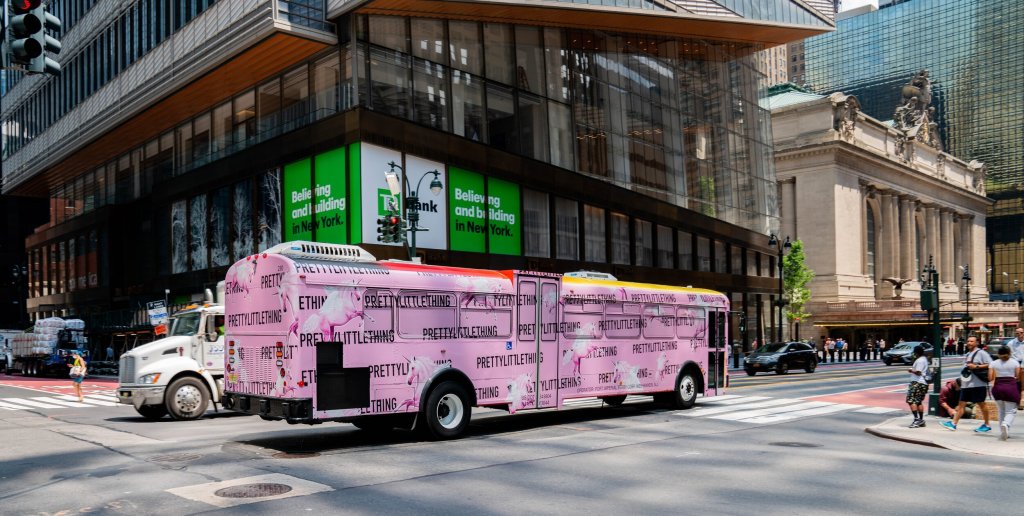
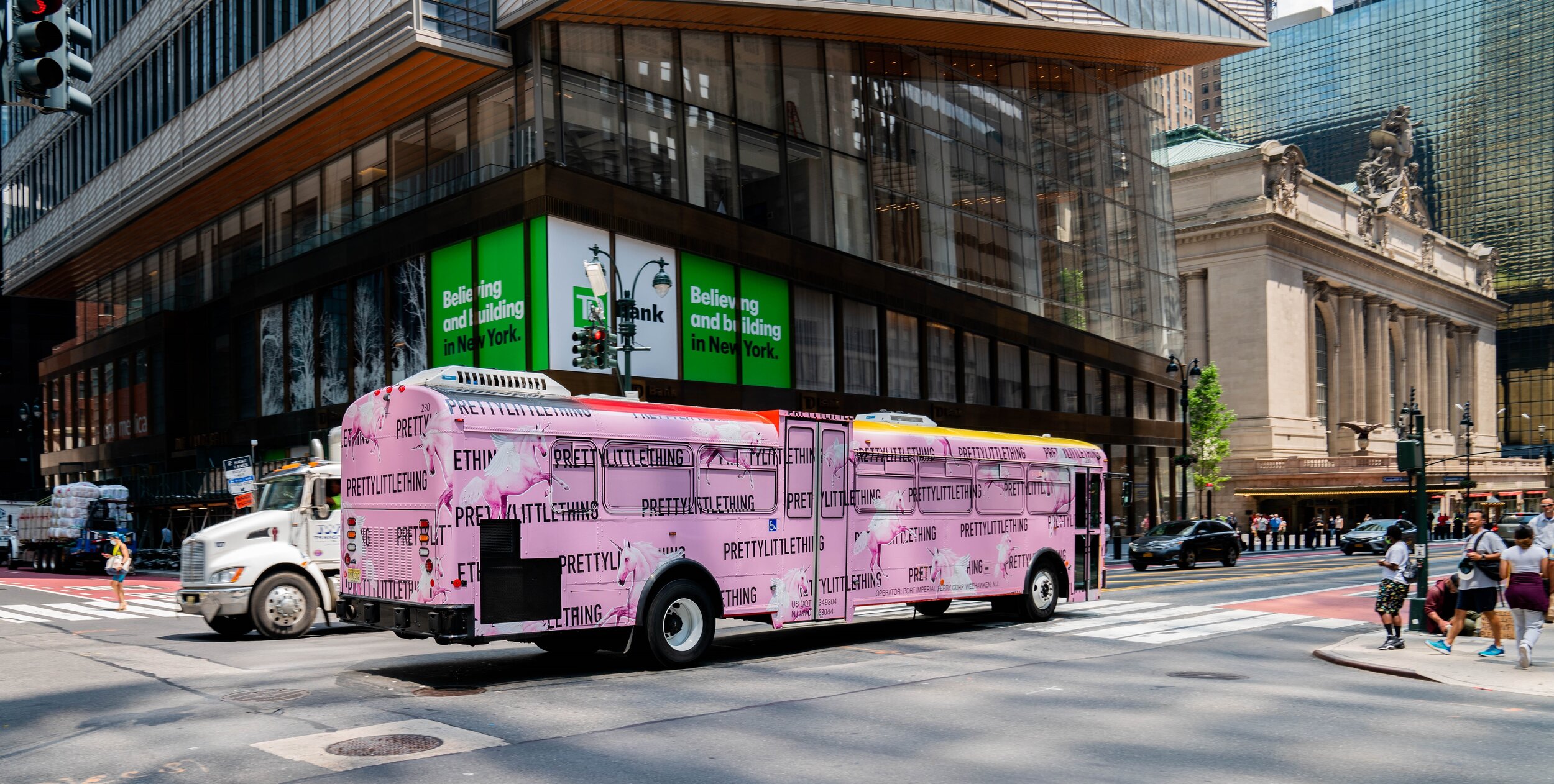
MTA Pretty Little Thing Wrapped Bus 2021 (Slide 4) – I just had to include this one because of how aggressively pink it was. I don’t think anyone could miss it. They wrapped 36 buses for this campaign that ran all around the city. This link will take you to a LinkedIn post with more information and a fun video of the bus whipping around the streets.
MTA Beverly Hills Cop Wrapped Ferry 2024 (Slide 5) – Not a train or bus, but had to include it because I didn’t think I’d see something like this! They also wrapped buses for this promotion, but I already had enough of those on here.
CTA (Chicago)
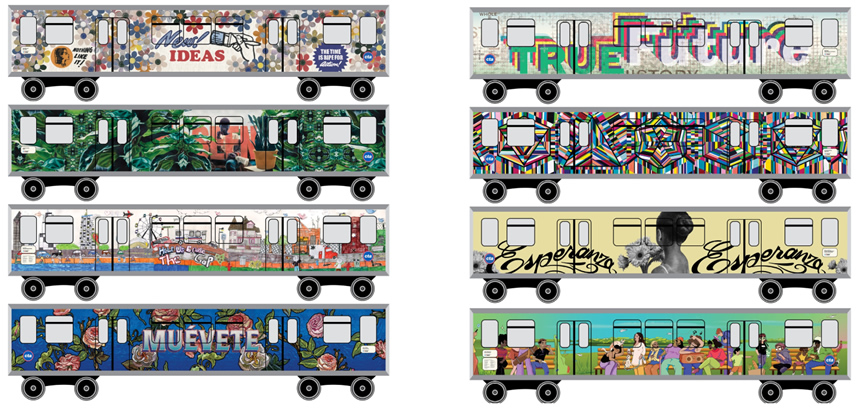

CTA Track(ed) Changes: Democracy runs through our neighborhoods 2024 (Slide 1) – The Chicago Department of Cultural Affairs and Special Events (DCASE) Public Art team and the CTA partnered to create these special train wraps for the Blue, Green, and Orange Lines, which featured artwork done by several different Chicago-based artists. Participating artists included Brandon Breaux, Bob Faust, Kristoffer McAfee, Noel Mercado, Carlos Rolón, Esperanza Rosas, and youth artists with Territory (facilitated by Nicole Castro) and Urban Gateways (Nitya Mehrotra, lead designer).
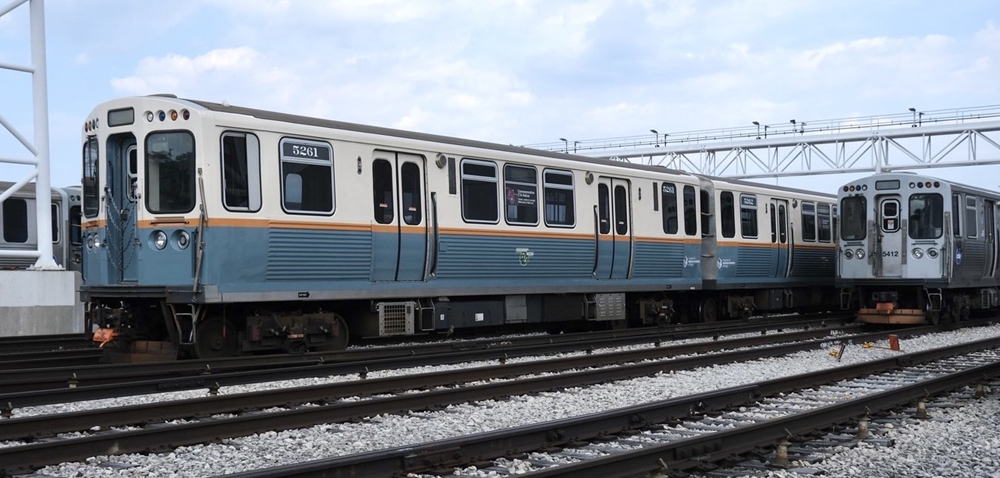
CTA 1950s Wrapped Train 2022 (Slide 2) – As part of a celebration of its 75th anniversary, the CTA covered several railcars with vinyl wraps emulating the paint schemes of the trains between the 1950s and 1980s. The picture included on this post emulated a 1950s train. Chicago’s Museum of Science and Industry and Butcher Boy Cooking Oils sponsored the wraps.
CTA Pride Train 2022 (Slide 3) – Similar to WMATA, Chicago has been wrapping trains for Pride, with their sixth year being in 2022. 2022’s train ran on the Red line. However, this wrap specifically (and potentially others done for pride) was sponsored. The above wrap was sponsored by ViiV Healthcare and their “ReThinkPrEP.com” campaign.
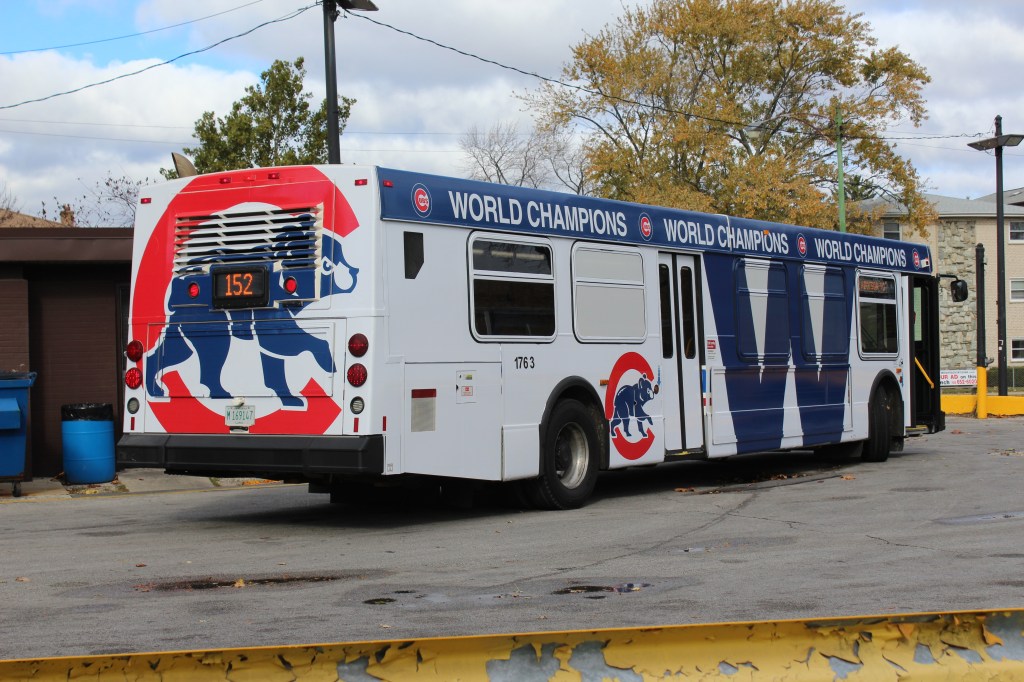
CTA Cubs World Series Bus 2016 (Slide 4) – The CTA wrapped four rail cars and a CTA bus with complete exterior designs featuring the famous blue “W” and Cubs logos to celebrate the first Cubs World Series victory since 1908. The train ran on the Red line, which includes the Addison station near Wrigley Field.
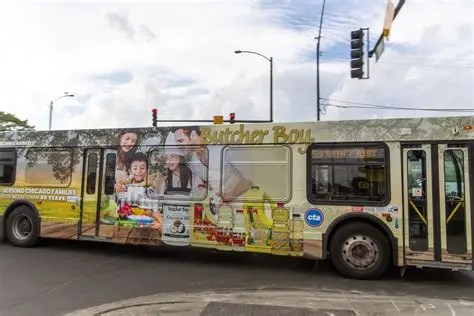
CTA Butcher Boy Bus Year Unknown(Slide 5) – Butcher Boy was no stranger to transit wraps when they sponsored the CTA’s 75th anniversary train wraps. Here’s a picture of a bus wrap they did that is definitely more of an actual ad.
Auckland Transport (New Zealand)
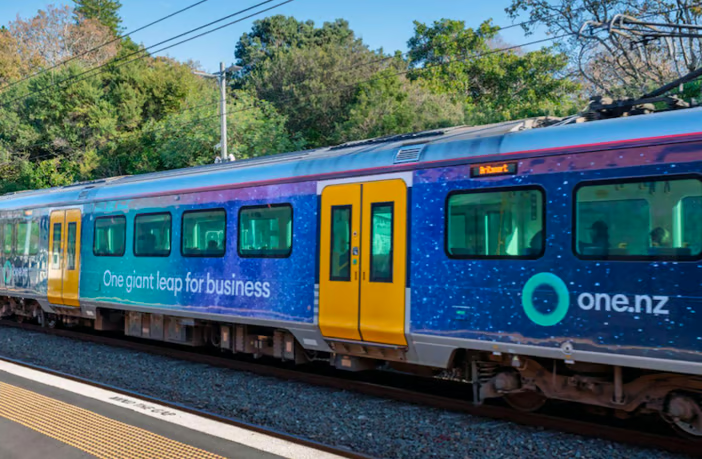
Aukland Transport One NZ 2023 (Slide 1) – This was New Zealand’s first commercial train wrap. MediaWorks (an independent broadcaster and advertiser) helped launch this campaign and had worked with Aukland transit for several years before this. Both MediaWorks and Aukland Transit had been working for years to implement train wraps.
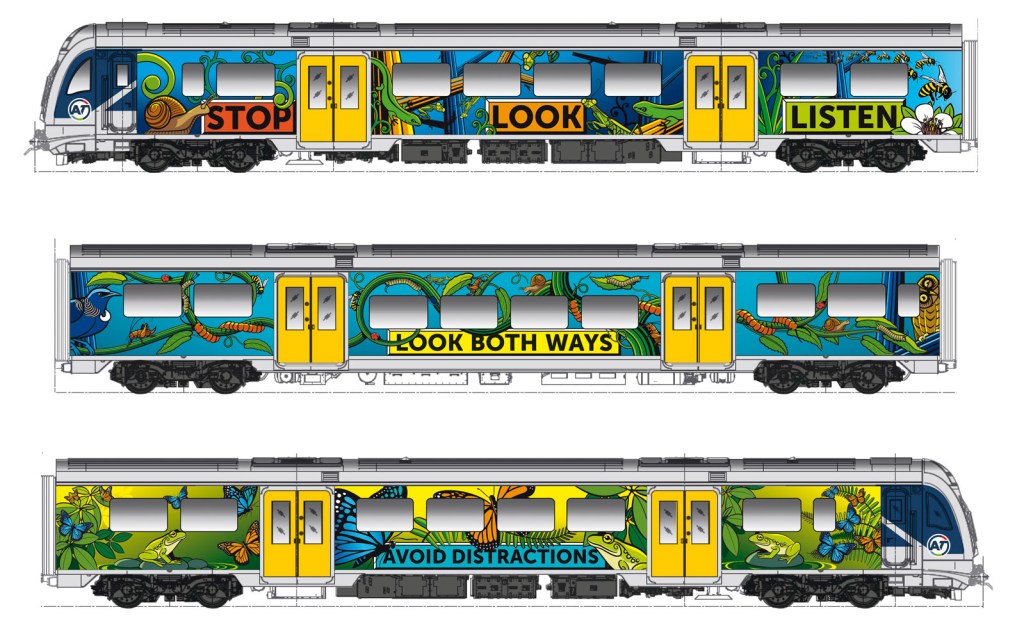
Aukland Transport Safety Messages for Being Around Trains 2022 (Slide 2) – Aukland Transport commissioned Malcome White (a New Zealand based graphic artist) to design a wrap to cover a commuter train. The ask was to reinforce safety messages when around trains.
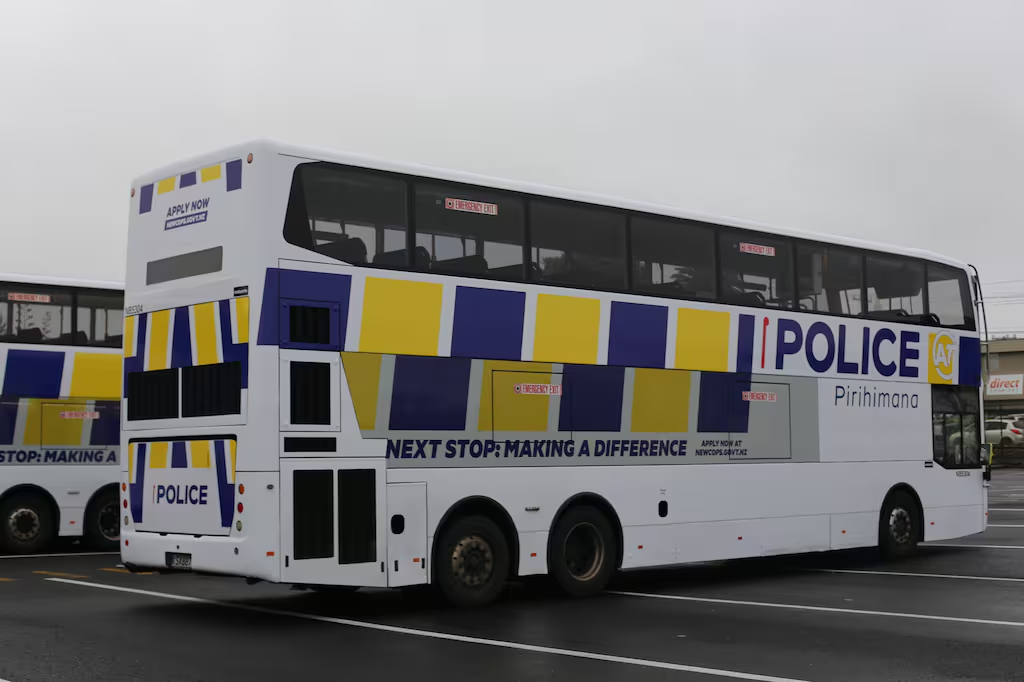
Aukland Transport Police Recruitment Bus 2025 (Slide 3) – Five Auckland Transport buses were wrapped in New Zealand Police’s blue, yellow, and white colors in an attempt to increase police officer recruitment. These buses can seat 500 people (I’m guessing total between the five), which is the number of new officers the police force is trying to recruit. We’ll have to see how close they are able to get to that goal by November, which is when the campaign is supposed to end.
Mexico City Metro (Mexico)
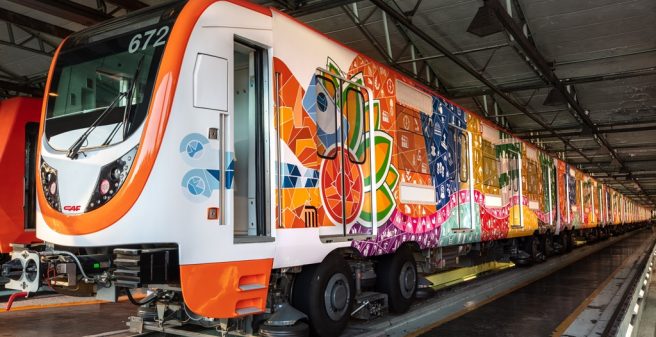
Mexico City Metro 50th Anniversary Train 2019 (Slide 1) – Mexico City’s first metro line was officially opened on September 4, 1969, making September 2019 its 50th anniversary. This was also when they introduced the new NM-16 trains, making it the perfect time to install a wrap. The illustration depicts Aztec deity “Quetzalcoatl”.
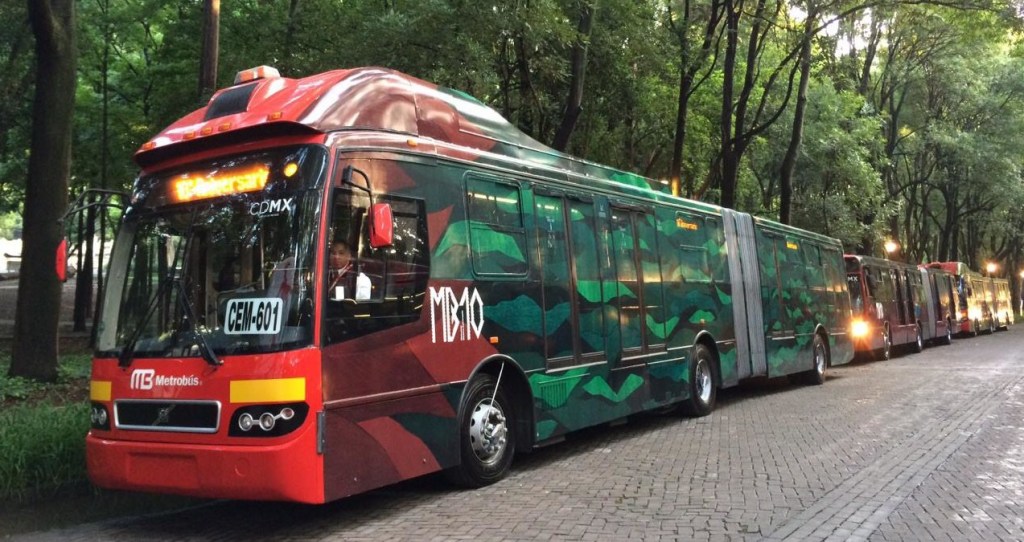
Mexico City Metro Metrobus 10th Anniversary Bus 2015 (Slide 2) – As like other cities, Mexico City celebrated the 10th anniversary of their Metrobus system in 2015 by wrapping buses. There was some criticism of the system after it was started in 2005, but overall, it has been a benefit to riders.
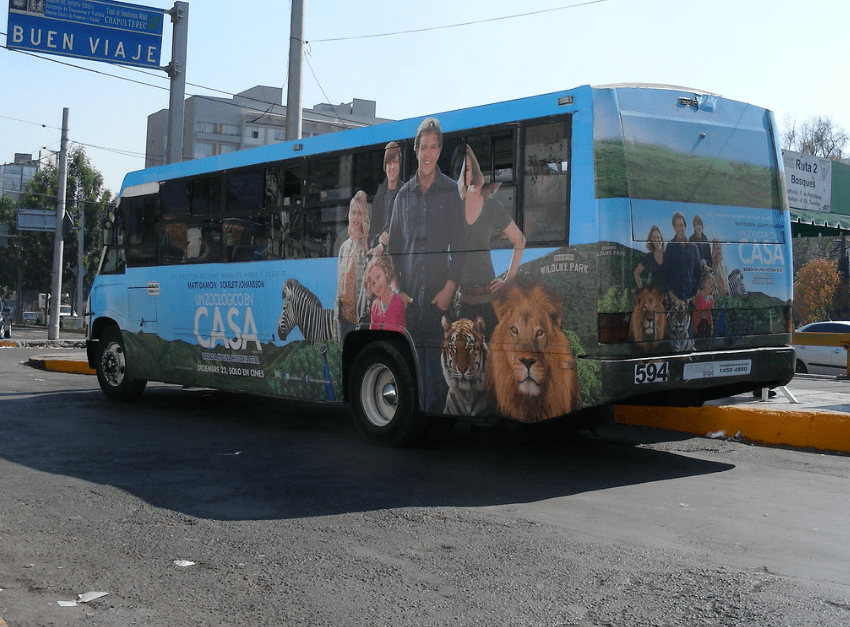
Mexico City Metro We Bought a Zoo Advertisement Bus 2011 (Slide 3) – Mexico City transit is also no stranger to full bus wrap advertising. I don’t know if any of you remember or watched We Bought a Zoo, but it’s definitely one of those movies for me that I forgot existed.
It’s not just local public transit – Amtrak does it too!
Amtrak has had several wraps over the years. Below are a few examples.
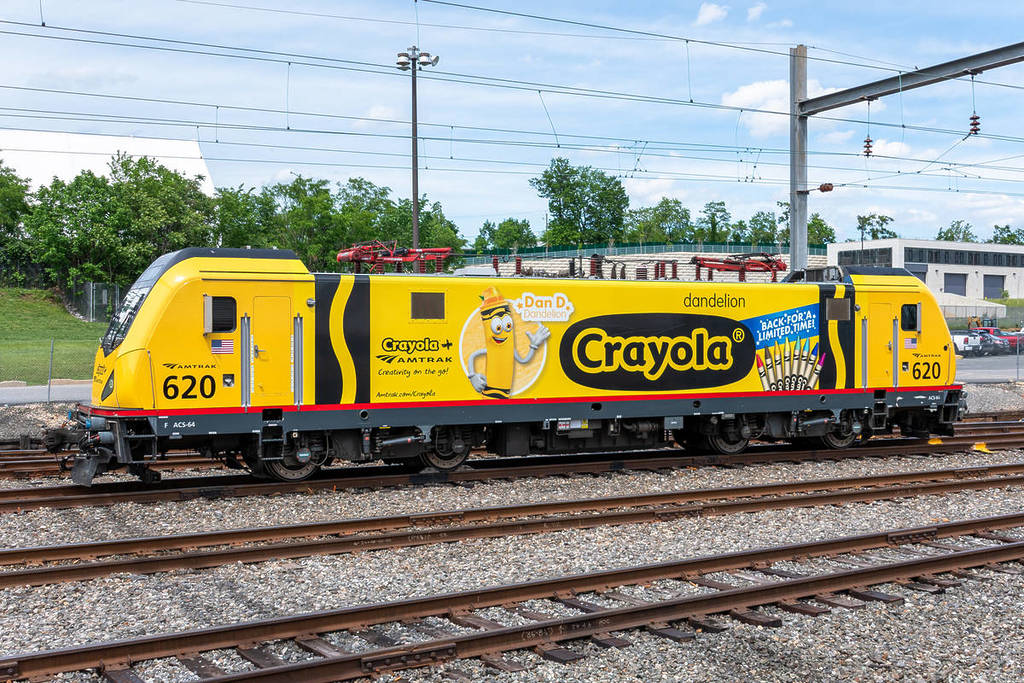
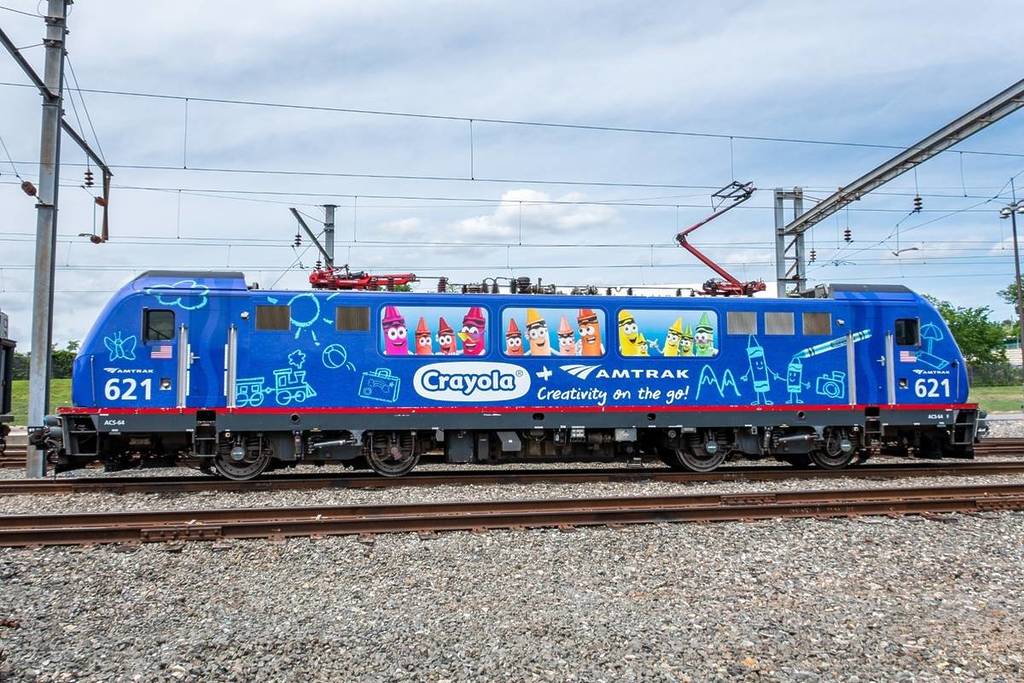
Amtrak Crayola Trains 2025 (Slides 1 and 2) – Amtrak partnered with Crayola this year, which resulted in two different wrapped trains that run along the East Corridor. This includes the yellow wrap (Slide 1) that features eight crayon colors that are coming back for a limited time and the blue wrap (Slide 2). In addition, children can ride the Amtrak Auto Train for free until August 25, 2025 (in any accommodation!) These free tickets can also get the children into several of the Crayola Experiences for free until September 30, 2025.
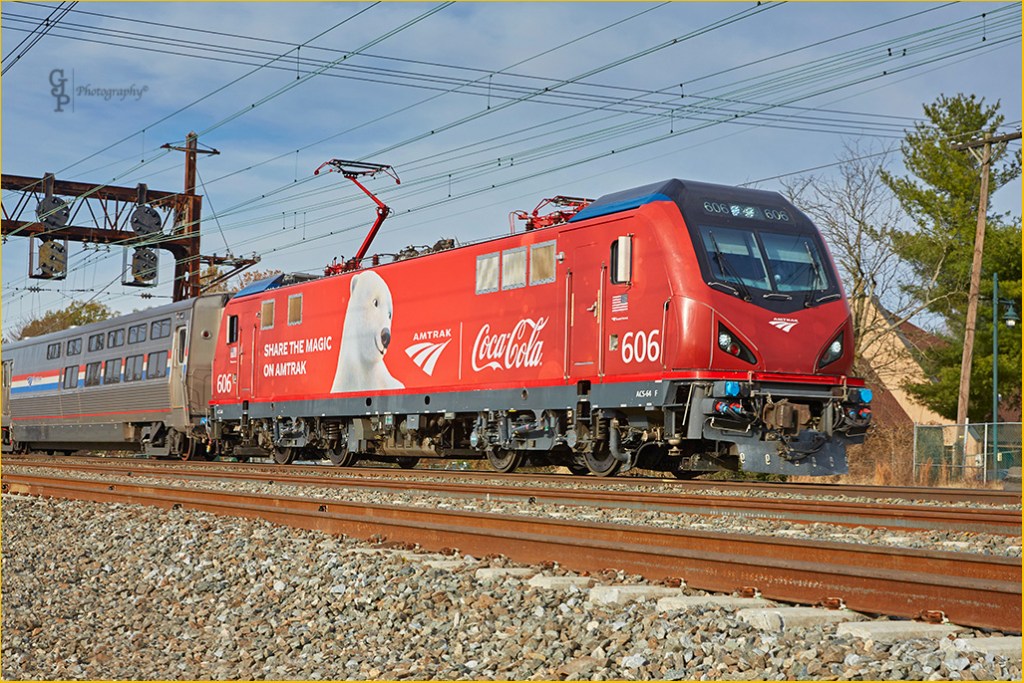
Amtrak Coca-Cola 2019 (Slide 3)- I know it’s another ad, but this one is cool because it marked the end of Amtrak partnering with Pepsi for on-board drinks in 2019. I’m sure Pepsi was aware of the change before this train came out, but somehow it still feels a little harsh. It’s kind of like posting a picture with your new boyfriend or girlfriend on Instagram right after you break up with your last one.
Amtrak Toyota Tundra 2004 (Slide 4)- This one threw me for a bit of a loop because why would Amtrak encourage people to buy cars and be less inclined to use their service. However, I do understand that ad revenue is ad revenue. This wrapped train ran along the Texas Eagle route, which makes sense for obvious reasons. Toyota was also building a Tundra plant in San Antonio at the time.
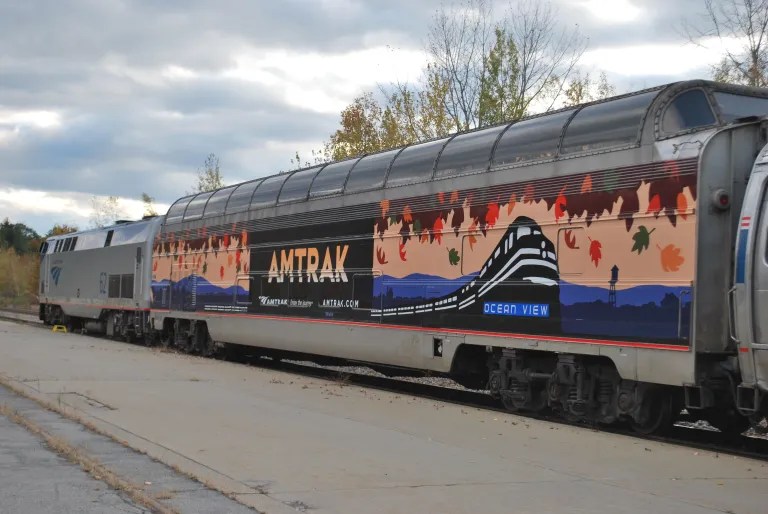
Amtrak Fall Train 2010 (Slide 5) – Amtrak wrapped an Ocean View train in a fall theme wrap in 2010. This was partly due to how popular it was on the Adirondak route between Montreal and Albany during leaf peeping season.
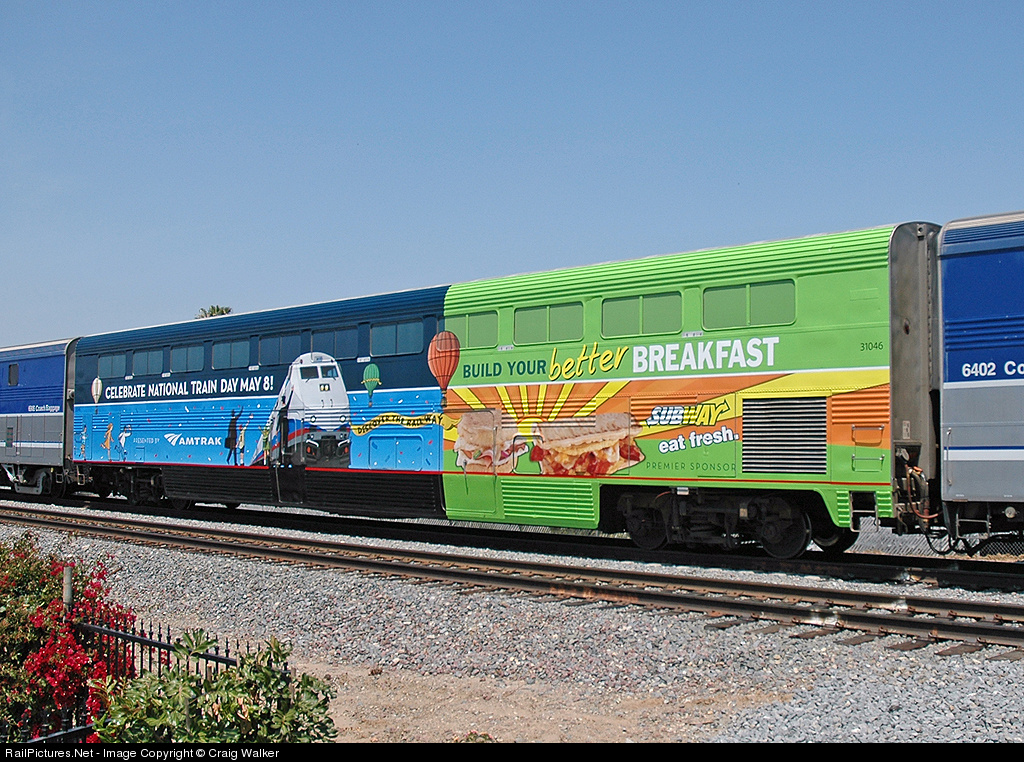
National Train Day 2010 (Slide 6) – National Train Day is celebrated annually on the Saturday closest to May 10th. Apparently, Amtrak started it in 2008 to spread awareness about the history of railway networks in the U.S. and why more people should use this mode of transport Amtrak and Subway partnered together for this commemorative wrap in 2010. With a name like “Subway”, it only makes sense that the company is a transit fan.
Katy’s Thoughts
As you could probably guess, I am pro transit vehicle wrapping and I especially appreciate when an agency uses them to highlight local or large-scale community events. As previously mentioned, while I understand that transit is ultimately a utility to get people from point A to point B while keeping personal car traffic at a minimum, it’s hard to argue that city dwellers don’t and shouldn’t take some sort of pride in their specific system. And I think train and bus wraps help achieve just that.
That said, I recognize the economic importance of advertisement wraps. They provide vital revenue, keeping fares low and service robust. But during my research, I noticed that there were far more ad-wrapped vehicles than event-themed ones. It’s understandable as transit agencies are historically strapped for cash and quick to seize ad revenue over what they may see as “nonessential” expenditures. But who wouldn’t appreciate being advertised at less and celebrated more? And while I’m no marketing professional, it seems like the more advertisers you let introduce themselves in a single space, the more people will learn to ignore.
All that said, my final warning to transit agencies would be to try not to wrap vehicles too much. Too much of a good thing isn’t good, and I wouldn’t want riders to get too used to the specially wrapped trains. Besides, if trains and buses are always specially wrapped, is it really special anymore?
 Commute Curios
.JPG.58991c123f26bf1ec1894f5b7dbec5e7.JPG)
Leave a comment